The "intermediate state" is the condition of human beings between death and resurrection.
Paul and James emphasize that justification before God comes through faith alone, independent of works. This faith, granted to the ungodly who believe, eliminates boasting.
Eternity in Scripture reflects God's eternal nature, unbound by time, and addresses human destiny. He grants eternal life or consigns to loss, as seen in Ecclesiastes 3:11. This study examines the concept of eternity in both Testaments, God's eternality, and the believer's everlasting future.
Scripture makes a distinction popular religion often misses: doubt — the believer's struggle, questions, and wavering within a real relationship with God — and unbelief — the settled refusal to trust Him.
No doctrine is more pervasively asserted in the New Testament than the personal, bodily, visible return of Jesus Christ — referenced hundreds of times across nearly every book.
The "rapture" is the event in which living believers are suddenly transformed and caught up together with the resurrected dead in Christ to meet the Lord at His coming.
Pride and humility are not two virtues on a list; they are the two postures beneath every other virtue and vice — the creature's stance toward its Creator.
"The tribulation" designates the unparalleled period of distress Scripture places immediately before the return of Christ — Daniel's "time of distress such as never occurred" (Daniel 12:1), Jeremiah's "time of Jacob's distress" (Jeremiah 30:7), and Jesus' "great tribulation" (Matthew 24:21).
"Justice and righteousness" is one of the Old Testament's most frequent word-pairs, a virtual hendiadys for rightly-ordered life.
Biblical sexual ethics is design-shaped: male and female made in God's image, joined by God into a public, permanent, one-flesh covenant that celebrates sex within and excludes it without — because the union means something (covenant) that porneia falsifies.
The church acknowledges the Son's presence in the older covenant, as He was born as Jesus, fulfilling the promise to save His people from their sins when the fullness of time came (Galatians 4:4; Matthew 1:21).
Jesus makes numerous appearances throughout the Old Testament, but he does not appear in the same manner or by the same name as he does in the New Testament. Nevertheless, He is present in the Old Testament.
The Bible's hope for the dead is not the soul's escape from the body but the body's resurrection from the grave.
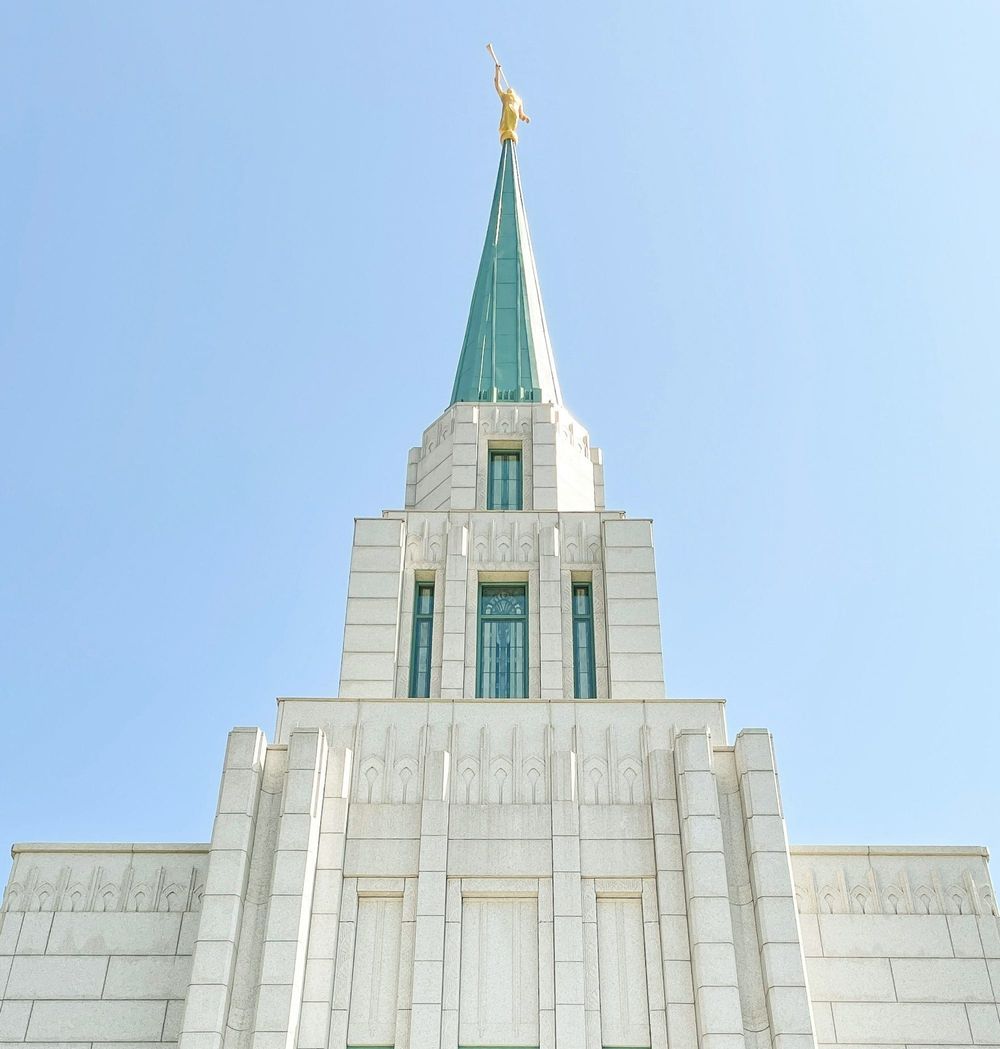
A restorationist movement founded by Joseph Smith in 1830, now roughly 17 million members worldwide. Everything turns on one claim: that the true church, its priesthood, and essential doctrine were entirely lost after the apostles, and restored through Smith beginning in 1820.
Jehovah's Witnesses are a restorationist movement that developed from the Adventist background of late nineteenth-century America, established by Charles Taze Russell. Currently, they are overseen by the Governing Body of the Watch Tower Bible and Tract Society, located in Warwick, New York.
Hebrew Israelism — commonly called the Black Hebrew Israelite movement — is not a single denomination but a family of movements sharing one core conviction: race.
Scripture stacks images for what God does with forgiven sin: removed east-from-west, cast into the sea's depths, behind His back (Isaiah 38:17), wiped like a cloud (Isaiah 44:22), remembered no more — not amnesia but the covenant choice never to bring it into account again (Jeremiah 31:34)
The decisive issue is the **identity of God**, because every other doctrine follows from it. If God has always been the only God — never formed, never a man, never one of many — then the Mormon account of eternal progression cannot be true
Jehovah's Witnesses stand out among Christian movements for their strong emphasis on in-depth Bible study, which shapes their beliefs and practices and highlights their commitment to biblical teachings.
Scripture starts by highlighting God's action: "In the beginning God created." It assumes His existence, stating that the universe is neither eternal nor born of chance, but rather the intentional act of a personal God who existed before creation.
The royal covenant narrows the Abrahamic promise to a single line: an eternal dynasty, throne, and kingdom through David. From Nathan's oracle to Gabriel's announcement to Mary, Scripture traces one thread to the Son who receives the throne of His father David forever.
The New Covenant, established by Jesus Christ's death and resurrection, fulfills all previous covenants: the Seed crushing the serpent (Adamic), blessing all nations (Abrahamic), law written on hearts (Mosaic), and an eternal throne (Davidic).
The Abrahamic Covenant is the hinge of redemptive history — the source of the covenant people, the covenant land, the blessing of all nations, and the Messiah Himself. Every covenant that follows, Mosaic through New, builds on and unfolds the promises first made to Abraham.
The first covenant Scripture actually names — berit appears here for the first time. After the Flood, God binds Himself never again to destroy the earth by water, and hangs His war-bow in the clouds as the sign of a promise made to all flesh.
The national covenant given at Sinai is the most extensive in Scripture, structured like an ancient suzerain-vassal treaty — and unlike the Abrahamic royal grant, it is conditional. Paul explains what it was for: a tutor leading to Christ, not a way to be counted righteous.
Before Israel, before Abraham, God bound Himself to humanity in Eden — with a command, a condition, and after the fall, a promise. Genesis 3:15 is the first announcement of the gospel: a Seed of the woman who would crush the serpent's head at cost to Himself.
The return of Christ is not the *end of creation* but its *glorification*. The new creation is the consummation of God's original creative intent — creation restored, humanity perfected, all things renewed.
Showing 50 of 127 total posts
Stay up to date with curated collection of our top stories.