Who are the Mormons?
A restorationist movement founded by Joseph Smith in 1830, now roughly 17 million members worldwide. Everything turns on one claim: that the true church, its priesthood, and essential doctrine were entirely lost after the apostles, and restored through Smith beginning in 1820.
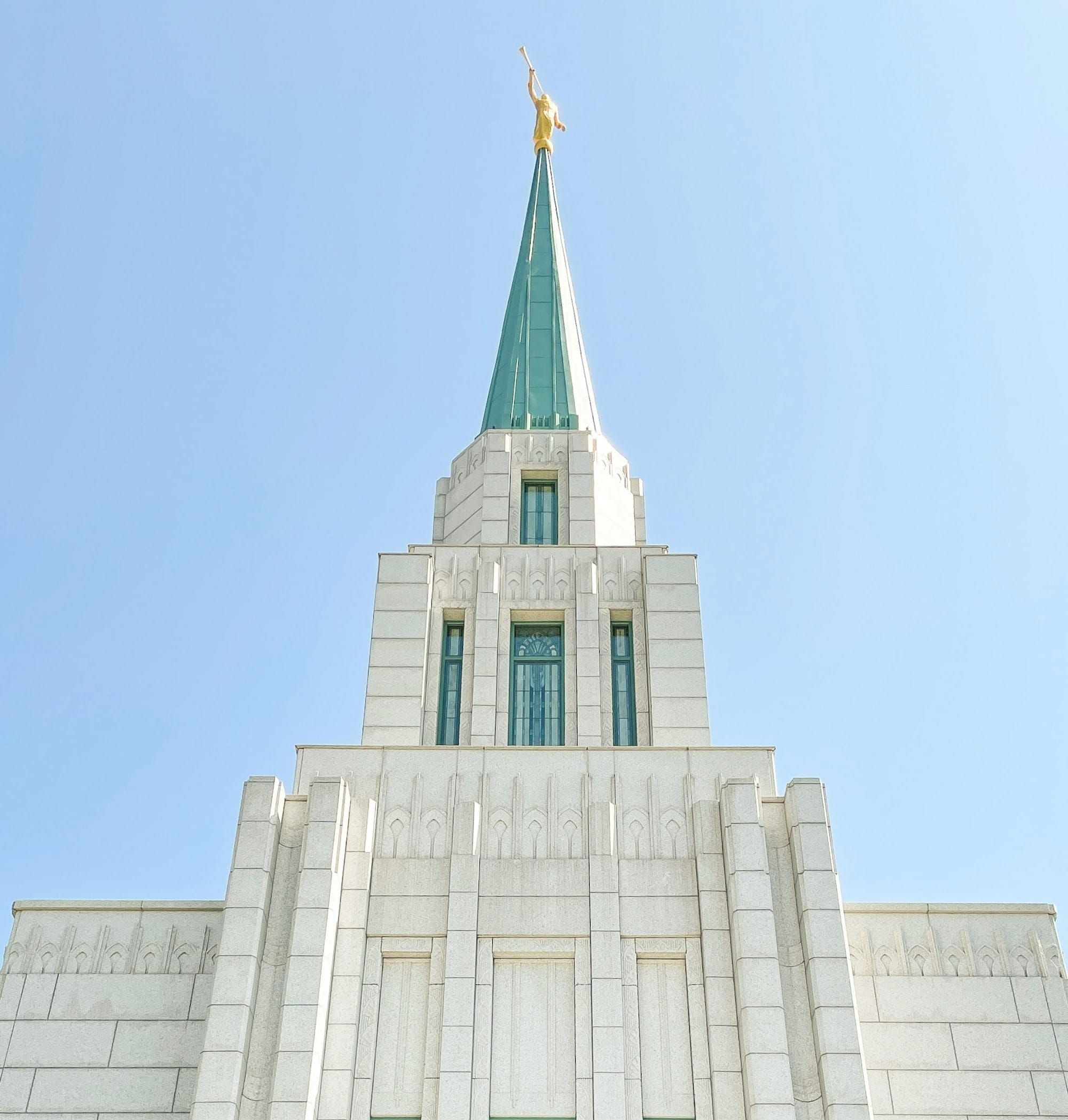
Mormonism — officially The Church of Jesus Christ of Latter-day Saints (LDS Church) — is a restorationist religious movement founded by Joseph Smith Jr. in upstate New York in 1830. It reports roughly 17 million members worldwide, is headquartered in Salt Lake City, Utah, and is governed by a First Presidency and Quorum of the Twelve Apostles whose president is regarded as a living prophet, seer, and revelator.
The defining claim of Mormonism is the Great Apostasy and the Restoration: that after the death of the original apostles, the true church, its priesthood authority, and essential doctrines were entirely lost from the earth, and that God restored them through Joseph Smith, beginning in 1820. This claim is the hinge on which everything else turns. If the historic church had never apostatized, the Restoration would have been unnecessary; if it had, a new prophet, new scripture, and new priesthood authority would have been required. Consequently, Mormonism does not present itself as one Christian denomination among many but as the restored church — a claim that necessarily implies all other Christian bodies are, at minimum, incomplete.
This post describes Mormon history and doctrine as the LDS Church itself presents them, drawing on its own scriptures (the Book of Mormon, Doctrine and Covenants, and the Pearl of Great Price), its Articles of Faith, and its official publications at churchofjesuschrist.org. Latter-day Saints are, in general, sincere, family-centered, and morally serious people, and nothing here is intended to demean them personally. The purpose is accurate description: to state what Mormonism actually teaches, in its own words, so that its doctrines can be understood and — weighed against Scripture. Because the LDS Church denies the historic doctrine of the Trinity, teaches that God the Father is an exalted man with a body of flesh and bone, and holds that faithful humans may become gods, historic Christianity has consistently regarded Mormonism as a separate religion rather than a branch of Christianity, notwithstanding its use of Christian vocabulary.
Historical Origins
The First Vision and the Founding Narrative (1820–1830)
Joseph Smith Jr. (1805–1844) was born in Sharon, Vermont, and raised in Palmyra, New York, in the "burned-over district" — a region so named for the repeated waves of revivalism that swept it during the Second Great Awakening. Competing Methodist, Baptist, and Presbyterian revivals created exactly the religious confusion Smith later described.
According to the account canonized in the Pearl of Great Price (Joseph Smith—History 1:15–20), in the spring of 1820 the fourteen-year-old Smith retired to a grove to ask God which church to join, and received a visitation of two personages — God the Father and Jesus Christ — who told him to join none of them, "for they were all wrong," their creeds "an abomination," and their professors "all corrupt." This First Vision is the foundational event of Mormonism and the origin of its claim to apostasy. Historians note that Smith produced multiple accounts of the vision between 1832 and 1842, which differ in significant details (the number and identity of the personages, his age, and his motive); the LDS Church has published these side by side in its Gospel Topics essay "First Vision Accounts", treating the variations as complementary rather than contradictory.
Smith reported that in 1823 an angel named Moroni appeared and revealed the location of golden plates buried in a hill near Palmyra, containing the record of ancient American peoples. He said he obtained them in 1827 and translated them by the gift and power of God — in practice, according to multiple contemporary witnesses, largely by placing a seer stone in a hat and dictating (a method the LDS Church acknowledges in its essay "Book of Mormon Translation"). The Book of Mormon was published in March 1830, and the Church of Christ (later renamed) was organized on April 6, 1830, in Fayette, New York.
Migration, Persecution, and Nauvoo (1831–1844)
The young church moved successively to Kirtland, Ohio; Jackson County, Missouri; and Nauvoo, Illinois, driven each time by a mixture of missionary expansion and severe conflict with neighbors. Tensions in Missouri escalated into open violence, culminating in Governor Lilburn Boggs's 1838 "Extermination Order" and the Haun's Mill massacre — episodes in which Latter-day Saints were genuinely and grievously persecuted. In Nauvoo, which grew to rival Chicago in size, Smith served simultaneously as mayor, chief judge, and lieutenant general of the Nauvoo Legion.
It was at Nauvoo that Mormonism's most distinctive doctrines emerged: temple endowment ceremonies and baptism for the dead, eternal marriage, plural marriage (practiced privately), and the doctrine of eternal progression articulated in the King Follett discourse of April 7, 1844 (see below). In June 1844, after the Nauvoo city council ordered the destruction of the Nauvoo Expositor — a dissident newspaper that had publicized plural marriage — Smith was arrested and jailed at Carthage, Illinois, where on June 27, 1844, a mob stormed the jail and killed him and his brother Hyrum. Latter-day Saints regard Smith as a martyr.
Succession, the Utah Migration, and Consolidation (1844–present)
Smith's death produced a succession crisis. The majority followed Brigham Young and the Quorum of the Twelve, migrating west beginning in 1846–47 and settling the Salt Lake Valley. Others followed different claimants; the largest surviving alternative body is the Community of Christ (formerly the Reorganized Church of Jesus Christ of Latter Day Saints), which followed Smith's son, rejected plural marriage and the distinctive Nauvoo doctrines, and has developed in a broadly mainline Protestant direction — a reminder that "Mormonism" is not monolithic.
Two later developments reshaped the LDS Church. In 1890, President Wilford Woodruff issued the Manifesto (canonized as Official Declaration 1), suspending new plural marriages, a change that made Utah statehood possible in 1896; fundamentalist splinter groups that continued the practice are not affiliated with the LDS Church and are excommunicated by it. In 1978, President Spencer W. Kimball announced a revelation (Official Declaration 2) extending priesthood ordination to men of all races, ending a ban on Black members holding the priesthood that had been in force since the mid-1800s; the church's essay "Race and the Priesthood" now disavows the theories once advanced to justify it.
Sacred Texts and Authority
Mormonism holds four books as scripture, collectively the Standard Works:
1. The Bible. Article of Faith 8 states: "We believe the Bible to be the word of God as far as it is translated correctly; we also believe the Book of Mormon to be the word of God." The qualifying clause is doctrinally significant — it establishes a principle by which any biblical text conflicting with LDS teaching may be attributed to transmission error. The LDS Church explains that "translated" in Joseph Smith's usage was broad, and that the deeper claim is that "many plain and precious things" were removed from the biblical record (see the church's own explanation of Article of Faith 8; cf. 1 Nephi 13:26–29). The King James Version is the official English Bible, and Smith also produced the Joseph Smith Translation, an inspired revision.
2. The Book of Mormon, subtitled "Another Testament of Jesus Christ." It purports to be the record of Israelite migrations to the Americas (c. 600 BC), their civilizations (Nephites and Lamanites), and a post-resurrection visit of Jesus Christ to the New World (3 Nephi 11). Smith called it "the most correct of any book on earth, and the keystone of our religion."
3. Doctrine and Covenants (D&C), a collection of Smith's revelations and later official declarations. Much distinctive doctrine resides here — including the three degrees of glory (D&C 76), eternal marriage and plural marriage (D&C 132), the Word of Wisdom (D&C 89), and baptism for the dead (D&C 128).
4. The Pearl of Great Price, containing the Book of Moses, the Book of Abraham, Joseph Smith—Matthew, Joseph Smith—History, and the Articles of Faith. The Book of Abraham is the most contested: Smith said he translated it from Egyptian papyri acquired in 1835. Portions of those papyri were rediscovered in 1966, and Egyptologists — including LDS scholars — identify them as ordinary Egyptian funerary texts (Book of Breathings) bearing no relation to Smith's rendering. The church addresses this in its essay "Translation and Historicity of the Book of Abraham", proposing that "translation" may have meant revelatory expansion rather than literal rendering.
Continuing revelation. Above and alongside the Standard Works stands the living prophet. Article of Faith 9: "We believe all that God has revealed, all that He does now reveal, and we believe that He will yet reveal many great and important things pertaining to the Kingdom of God." In practice, this means the current prophet's counsel carries decisive authority, and doctrine can develop or change (as with plural marriage and the priesthood ban).
Core Doctrines
God and the Godhead
Mormonism rejects the Trinity as defined by historic Christianity — one God eternally existing in three co-equal, co-eternal Persons of one essence. In its place, it teaches that the Godhead consists of three wholly separate beings — God the Father (Elohim), Jesus Christ (Jehovah), and the Holy Ghost — who are "one" in purpose, unity, and glory rather than in substance. D&C 130:22 states that "The Father has a body of flesh and bones as tangible as man's; the Son also; but the Holy Ghost has not a body of flesh and bones, but is a personage of Spirit."
Two further teachings distinguish Mormon theology sharply from historic Christian monotheism:
God the Father was once a man. In the King Follett discourse (April 7, 1844), Joseph Smith taught: "God himself was once as we are now, and is an exalted man, and sits enthroned in yonder heavens!" — adding that if the veil were rent, God would be seen to be "like a man in form." The discourse is preserved on the church's own site (see "King Follett Discourse" and the 1971 Ensign text). The corresponding couplet from President Lorenzo Snow — "As man now is, God once was: as God now is, man may be" — became the classic summary. The modern church has noted that little has been revealed about God's state prior to this, and tends to emphasize the second half of the couplet.
Exaltation: humans may become gods. Worthy Latter-day Saints who receive the ordinances and endure faithfully may attain the highest degree of the celestial kingdom, be sealed in eternal marriage, and progress to godhood, becoming "gods, even the sons of God" (D&C 132:19–20). The church's essay "Becoming Like God" affirms this doctrine of divine potential while framing it in terms of Christian theosis language.
Pre-mortal existence and the two brothers. All human beings existed before birth as spirit children of Heavenly Father (and, in common LDS teaching, a Heavenly Mother). In the pre-mortal council, Jesus Christ — the Father's firstborn spirit son — and Lucifer both presented plans; Lucifer rebelled and became Satan. Thus in Mormon theology Jesus and Satan are, in origin, spirit brothers — not because Mormonism equates them morally, but because all spirits, including theirs, are the Father's offspring (see Moses 4:1–4; Abraham 3:22–28).
Jesus Christ
Latter-day Saints affirm that Jesus is the Son of God, the Savior, that He atoned for sin, died, and rose bodily. But the underlying metaphysics differ from historic Christianity: He is the Father's firstborn spirit child, a distinct being from the Father, who attained divinity — not the eternally existent second Person of one divine essence. He is Jehovah of the Old Testament, while the Father is Elohim.
The Atonement in LDS thought is often located especially in Gethsemane and on the cross, and it accomplishes two things: it grants universal resurrection to all humanity unconditionally, and it makes exaltation available conditionally, upon obedience to the gospel's laws and ordinances.
Salvation, Grace, and Works
Mormonism distinguishes salvation (universal resurrection and immortality, given to nearly all through Christ's atonement) from exaltation (eternal life in the highest heaven, in family units, progressing toward godhood — available only through faith, repentance, baptism by proper priesthood authority, receiving the Holy Ghost, temple ordinances, and enduring in obedience).
The classic LDS text on grace is 2 Nephi 25:23: "for we know that it is by grace that we are saved, after all we can do." The historic LDS reading — reflected in church curricula — is that human effort is required to receive the fullness of grace; some contemporary LDS scholars argue the phrase means grace operates "in spite of" all we can do (see the BYU Religious Studies Center treatment). Either way, the operative system links exaltation to ordinances and continuing worthiness, assessed in periodic interviews for a temple recommend.
Three degrees of glory (D&C 76): nearly all people inherit one of three kingdoms — celestial, terrestrial, or telestial. Only the openly rebellious ("sons of perdition") suffer outer darkness. Hell in the historic Christian sense is therefore drastically narrowed.
Salvation for the dead. Because ordinances are necessary and most people died without them, Latter-day Saints perform proxy baptisms and other ordinances for the deceased in temples (1 Corinthians 15:29 is the standard proof-text; see D&C 128). This drives the church's extensive genealogical work through FamilySearch.
Priesthood, Temples, and Ordinances
Authority is central. Mormonism teaches two priesthoods restored by heavenly messengers: the Aaronic (restored by John the Baptist, 1829) and the Melchizedek (restored by Peter, James, and John). Worthy males are ordained from age 11–12 upward; women do not hold priesthood office but participate in temple ordinances and lead auxiliary organizations such as the Relief Society.
Temples are distinct from ordinary meetinghouses and are open only to members holding a current recommend. There, the endowment, eternal marriage sealings, and proxy ordinances for the dead are performed. Temple sealing is required for the highest exaltation.
The Word of Wisdom (D&C 89) prohibits alcohol, tobacco, coffee, and tea; adherence is a condition of temple worthiness. Tithing (a full 10%) is likewise required for a temple recommend.
Humanity, Sin, and the Afterlife
Article of Faith 2 states: "We believe that men will be punished for their own sins, and not for Adam's transgression." Mormonism rejects inherited original sin and guilt; children are born innocent and are baptized at age eight, the "age of accountability." The Fall is viewed positively — a necessary step enabling mortality, procreation, and progression: "Adam fell that men might be; and men are, that they might have joy" (2 Nephi 2:25).
At death, spirits enter the spirit world (paradise or spirit prison), where the gospel continues to be preached, and proxy ordinances may be received. After resurrection and judgment, nearly all inherit a degree of glory. Families sealed in the temple may continue eternally — the doctrine of eternal families, one of Mormonism's most emotionally powerful teachings.
Practice, Culture, and Organization
Latter-day Saints meet in local wards (congregations) grouped into stakes, led by unpaid lay clergy — a bishop leads a ward, a stake president a stake. There is no professional local ministry. Worship consists of a sacrament meeting (bread and water, not wine) and classes.
The church operates one of the world's most extensive missionary programs: young men typically serve 2 years beginning at 18; young women, 18 months from 19; self-funded; in assigned fields worldwide — accounting for much of its growth. It maintains a substantial welfare and humanitarian system, Brigham Young University, and a large genealogical archive.
Cultural distinctives include emphasis on family home evening, chastity before marriage and fidelity within it, modesty, sobriety, temple garments worn by endowed members, and strong communal support networks. These are, by most measures, socially beneficial patterns, and account for much of the movement's admirable reputation for family stability and civic reliability.
Timeline
| Year | Event |
|---|---|
| 1805 | Joseph Smith Jr. born in Sharon, Vermont |
| 1820 | Reported First Vision in the Sacred Grove |
| 1823 | Reported visitation of the angel Moroni |
| 1827 | Smith says he received the golden plates |
| 1830 | Book of Mormon published; church organized April 6 |
| 1831–38 | Kirtland, Ohio and Missouri periods; severe persecution |
| 1838 | Missouri "Extermination Order"; Haun's Mill massacre |
| 1839–44 | Nauvoo period; temple ordinances, plural marriage, King Follett discourse |
| 1844 | Joseph and Hyrum Smith killed at Carthage Jail (June 27) |
| 1846–47 | Brigham Young leads migration to the Salt Lake Valley |
| 1890 | Manifesto suspending plural marriage (Official Declaration 1) |
| 1896 | Utah statehood |
| 1978 | Priesthood extended to all worthy males regardless of race (Official Declaration 2) |
| 2013–now | Gospel Topics essays publicly address contested historical issues |
Where Mormonism Diverges from Historic Christianity
The differences are not peripheral or merely denominational. They concern the identity of God, the nature of Christ, the source of authority, and the mechanism of salvation:
- God: historic Christianity confesses one eternal, immaterial, unchanging God in three Persons (Deuteronomy 6:4; Isaiah 43:10; John 4:24; Malachi 3:6); Mormonism teaches three separate beings, a Father with a physical body who was once a man, and a plurality of gods.
- Christ: eternally God, of one essence with the Father (John 1:1; Colossians 2:9; Hebrews 1:3) versus the Father's firstborn spirit child who became divine.
- Humanity's destiny: creatures glorified and conformed to Christ, forever distinct from the Creator (Romans 8:29; Isaiah 44:6) versus exaltation to godhood.
- Scripture: a closed, sufficient canon (Jude 3; 2 Timothy 3:16–17; Revelation 22:18–19) versus an open canon with additional scripture and continuing prophetic revelation.
- Salvation: justification by grace through faith apart from works (Ephesians 2:8–9; Romans 3:28; Titus 3:5) versus exaltation conditioned on ordinances and continuing worthiness.
Each of these is examined passage by passage, with the LDS reading stated fairly before the biblical response, in this post Christianity vs Mormonism.
Author

Raised in a Christian home, I came to faith later in life. A family crisis in 2019 drove me to study Scripture deeply, and by 2021 I answered my calling to ministry and teaching God's Word.