Noahic Covenant
The first covenant Scripture actually names — berit appears here for the first time. After the Flood, God binds Himself never again to destroy the earth by water, and hangs His war-bow in the clouds as the sign of a promise made to all flesh.
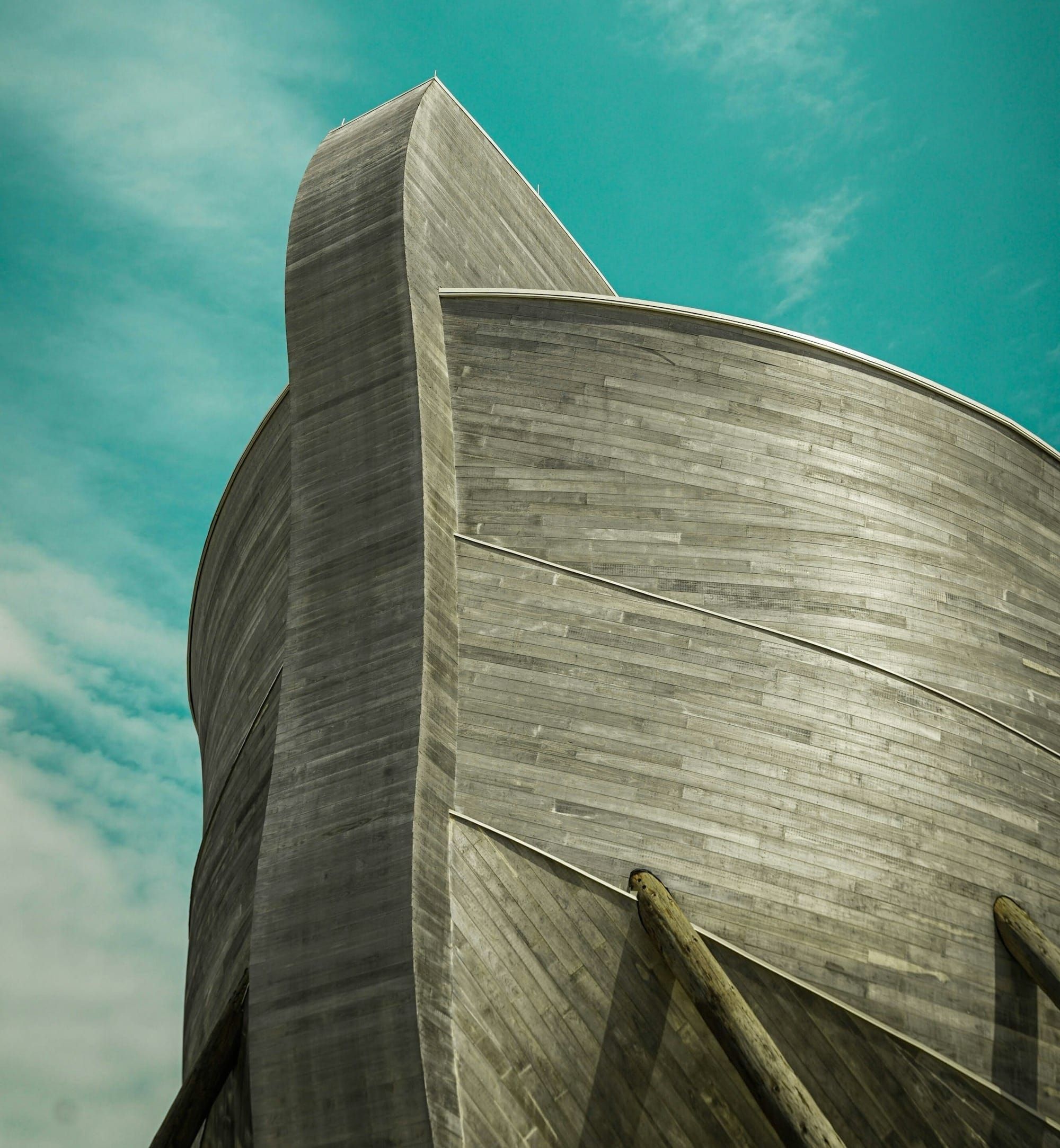
"I establish My covenant with you; and all flesh shall never again be cut off by the water of the flood, nor shall there again be a flood to destroy the earth."
— Genesis 9:11 (NASB)
The First Explicit Covenant
The Noahic Covenant is the first use of the word bĕrît (covenant) in all of Scripture (Genesis 6:18). While the Adamic covenant is structurally covenantal, the Noahic covenant is where God names the relationship with this term — making it the official beginning of the covenant sequence in Scripture.
Context: The Judgment of the Flood
The Noahic Covenant comes in the context of the most catastrophic divine judgment in human history before the final judgment: the Flood. Humanity had so thoroughly corrupted itself that "every intent of the thoughts of his heart was only evil continually" (Genesis 6:5) — the deepest possible description of moral bankruptcy. God "was grieved... to His heart" (v. 6) — the same word (ʿāṣab, BDB 780; HALOT 861, "to be pained, grieved") used of human anguish.
Dr. Michael S. Heiser (Reversing Hermon: Enoch, the Watchers, and the Forgotten Mission of Jesus Christ, Defender Publishing, 2017) notes that the Flood narrative is directly connected to the Genesis 6:1-4 episode of the "sons of God" who took human wives and produced the Nephilim — a supernatural rebellion that preceded and contributed to the comprehensive human corruption of the pre-Flood era. The Flood was thus not merely a response to individual human sin but to a multidimensional corruption involving supernatural rebellion.
Key Characteristics of the Noahic Covenant
Universal Scope: Unlike the Abrahamic or Mosaic covenants, the Noahic covenant is made with "all flesh" — every living creature, not just Israel or believers. It is a covenant with humanity as a whole and with all creation.
Unconditional Character: No condition is placed on Noah or humanity. God does not say "as long as you..." — He simply pledges "never again." This makes the Noahic covenant a unilateral, royal grant — God's sovereign pledge, not a bilateral agreement.
Permanent Sign: The rainbow (qešet, BDB 905; HALOT 1139) functions as the sign — not to remind humans but to remind God ("when I see the rainbow... I will remember", v. 15). This humanlike language emphasizes God's commitment to keep His word.
Genesis 6:17–18 — The Covenant Announced Before the Flood
"Now behold, I Myself am bringing a flood of water upon the earth, to destroy all flesh in which there is the breath of life, from under heaven; everything that is on the earth shall perish. But I will establish My covenant with you; and you shall enter the ark—you and your sons and your wife, and your sons' wives with you."
The First Appearance of Bĕrît
וַהֲקִמֹתִי אֶת בְּרִיתִי אִתָּךְ (wahăqimōtî ʾet bĕrîtî ʾittāk, "I will establish My covenant with you")
הֵקִים (hēqîm, "establish, confirm"; from קוּם, qûm; BDB 877; HALOT 1079) — the verb used for formally establishing or confirming an already-existing arrangement. This suggests the Noahic covenant builds on and confirms what God had already committed to in the Adamic covenant: the protection of the redemptive line through which the promised Seed would come.
אֵת (ʾēt, direct object marker before bĕrîtî, "My covenant") — the covenant is specifically God's covenant — He is the primary party. This is consistently the character of biblical covenants: they are divine initiatives, not human negotiations.
The IVP Bible Background Commentary [1] notes: "Genesis 6:18 is the first appearance of bĕrît in Scripture, but it is introduced without ceremony or extended definition — suggesting the concept was understood. God's covenant with Noah is presented as a natural extension of His ongoing relationship with humanity's faithful remnant."
The announcement of the covenant before the Flood (6:18) reveals God's purpose: the covenant is not a concession wrung from God by human survival — it is God's sovereign provision for His redemptive plan. Noah and his family are preserved because of the covenant, not vice versa.
Genesis 8:20–22 — Noah's Worship and God's Promise
"Then Noah built an altar to the LORD, and took of every clean animal and of every clean bird and offered burnt offerings on the altar. The LORD smelled the soothing aroma; and the LORD said to Himself, 'I will never again curse the ground on account of man, for the intent of man's heart is evil from his youth; and I will never again destroy every living thing, as I have done. While the earth remains, Seedtime and harvest, And cold and heat, And summer and winter, And day and night Shall not cease.'"
The First Altar in Post-Flood History
מִזְבֵּחַ (mizbaḥ, "altar"; BDB 258; HALOT 596) — from זָבַח (zābaḥ, "to sacrifice"). Noah's first act upon leaving the ark is worship through sacrifice — establishing the pattern that covenantal renewal follows. Before building shelter, before planting fields, before organizing society, Noah worships.
"The LORD Smelled the Soothing Aroma":
רֵיחַ הַנִּיחֹחַ (rêaḥ hanniḥōaḥ, "soothing aroma/fragrance of rest") — a standard OT expression for the acceptability of an offering to God (cf. Leviticus 1:9; Numbers 28:2). The humanlike language communicates: God was pleased with Noah's worship.
"I Will Never Again Curse the Ground"
God's inner resolve (v. 21) is not a covenant per se — it is the disposition behind it. Remarkably, God gives as His reason for the pledge: "for the intent of man's heart is evil from his youth" — the very condition that had caused the judgment now becomes the reason for forbearance! This reveals the character of divine grace: it is not conditioned on human improvement but on God's sovereign resolve.
The six-fold cosmic regularity of v. 22 — "seedtime and harvest, cold and heat, summer and winter, day and night" — establishes what theologians call "common grace" (God's universal benevolence to all creation, not just the redeemed). Every season, every harvest, every sunrise is a fulfillment of the Noahic covenant promise. Acts 14:17: "He did not leave Himself without witness, in that He did good and gave you rains from heaven and fruitful seasons."
Genesis 9:1–17 — The Noahic Covenant in Full
"God blessed Noah and his sons and said to them, 'Be fruitful and multiply, and fill the earth... I now establish My covenant with you and with your descendants after you, and with every living creature that is with you... I set My rainbow in the cloud, and it shall serve as a sign of a covenant between Me and the earth.'" (vv. 1, 9, 13)
Four Components of the Noahic Covenant
1. The Renewed Dominion Mandate (vv. 1–3):
The Noahic covenant opens with a re-commissioning that echoes Genesis 1:28: "Be fruitful and multiply, and fill the earth." Creation is being restarted; humanity's original mandate is reaffirmed. However, post-Fall conditions are acknowledged: the natural world now has "the fear of you" upon it — the harmonious dominion of Eden is modified by the reality of the cursed world.
2. The Sanctity of Human Life (v. 6):
"Whoever sheds man's blood, By man his blood shall be shed, For in the image of God He made man."
כִּי בְּצֶלֶם אֱלֹהִים עָשָׂה אֶת הָאָדָם (kî bĕṣelem ʾĕlōhîm ʿāśāh ʾet hāʾādām) — This verse is foundational: the image of God that was not destroyed by the Fall remains the ground of human dignity and the reason murder carries the ultimate penalty. The Noahic covenant is the first legal framework establishing capital punishment — revealing that God takes human life with the utmost seriousness because every human bears His image.
3. The Universal, Eternal Pledge (vv. 9–11):
הִנְנִי מֵקִים אֶת בְּרִיתִי (hinĕnî mēqîm ʾet bĕrîtî, "I now establish My covenant") — The parties are comprehensive: Noah, his descendants, and every living creature. The scope is cosmic. The pledge is absolute: "never again shall all flesh be cut off by the water of a flood." This is the most universally inclusive covenant in Scripture.
4. The Rainbow Sign (vv. 12–17):
אֶת קַשְׁתִּי נָתַתִּי בֶּעָנָן (ʾet qaštî nātattî beʿānān, "I set My rainbow in the cloud")
קֶשֶׁת (qešet, "rainbow, bow"; BDB 905; HALOT 1139) — The same word used for a warrior's bow — an instrument of war. The rainbow is God's bow pointed away from the earth, hung in the clouds as the sign of His covenant faithfulness. The warrior has laid down His weapon. Every rainbow in every culture of the world is, from a biblical perspective, a reminder of God's covenant faithfulness.
The rainbow as sign is unique among biblical covenant signs in that it functions primarily as a reminder to God, not to humanity. The covenant language of 'I will remember' emphasizes that the primary guarantor of the covenant is God Himself — His own memory and integrity sustain it.
Isaiah 54:9–10 — God Remembers Noah's Covenant
"For this is like the days of Noah to Me, When I swore that the waters of Noah Would not flood the earth again; So I have sworn that I will not be angry with you Nor will I rebuke you. For the mountains may be removed and the hills may shake, But My lovingkindness will not be removed from you, And My covenant of peace will not be shaken,' Says the LORD who has compassion on you."
God explicitly invokes the Noahic covenant as a model for the permanence of His covenant with Israel: "As I swore concerning the days of Noah" — the Noahic pledge becomes the standard for measuring covenant faithfulness. If God kept the Noahic pledge (no more floods), He will keep His pledge of ḥesed (lovingkindness) toward His people.
"Covenant of Peace" (bĕrît šĕlômî) — The Noahic covenant is here called a covenant of peace — shalom not merely in the sense of the absence of conflict but in the sense of wholeness, completeness, wellbeing. God's covenant with creation is ultimately a covenant of shalom — the restoration of the harmony that sin disrupted. This anticipates the New Covenant (Hebrews 13:20: "the eternal covenant"), and ultimately the new creation.
Isaiah 54:9-10 uses the Noahic covenant as the paradigm of divine unconditional faithfulness. As God's word about the flood is irrevocable, so His word of covenant love (ḥesed) to His people is irrevocable. The argument moves from cosmic stability to covenantal stability.
2 Peter 3:5–7 — The Noahic Covenant and Future Judgment
"For when they maintain this, it escapes their notice that by the word of God the heavens existed long ago and the earth was formed out of water and by water, through which the world at that time was destroyed, being flooded with water. But by His word the present heavens and earth are being reserved for fire, kept for the day of judgment and destruction of ungodly people."
Peter's argument is important for understanding the Noahic covenant: the scoffers who deny future judgment point to creation's apparent stability as evidence that "nothing has changed." Peter's counterargument: the stability of the present order rests on the Noahic covenant's specific, limited pledge — "not by water again." The pledge excluded water as the instrument of ultimate judgment, not judgment itself. The final judgment will be by fire, which the Noahic covenant did not preclude.
The theological implication: The Noahic covenant gives the world present stability (no more universal water destruction) precisely in order to allow God's redemptive purposes to unfold — more time for repentance (2 Peter 3:9). The covenant is not a permanent reprieve but a divinely orchestrated space of grace within the larger arc of history moving toward final judgment.
Conclusion
1. The Noahic Covenant Is Universal and Unconditional
It encompasses all humanity, all living creatures, and the created order itself — with no conditions attached. It is the most universally inclusive covenant in Scripture, demonstrating that God's providential care extends beyond His covenant people to all of creation.
2. Common Grace Is Covenantally Grounded
Every sunrise, every harvest, every season is a fulfillment of the Noahic covenant. God's universal benevolence to all humanity — the "common grace" that sustains life, enables civilization, and delays final judgment — is rooted in His Noahic covenant pledge.
3. Human Life Is Protected by Covenant
Genesis 9:6 grounds the prohibition of murder in the image of God — establishing that human dignity has a covenantal basis, not merely a moral one. The protection of human life is built into the foundational covenant of post-Flood humanity.
4. The Noahic Covenant Points Forward
The covenant's pledge ("never again by water") creates the space for the full unfolding of God's redemptive plan — from Abraham to Moses to David to Christ. Without the Noahic covenant's guarantee of cosmic stability, redemptive history could not proceed to its appointed climax.
Walton, Matthews, Chavalas, p. 41 ↩︎
Author

Raised in a Christian home, I came to faith later in life. A family crisis in 2019 drove me to study Scripture deeply, and by 2021 I answered my calling to ministry and teaching God's Word.


