Where Did Demons Come From?
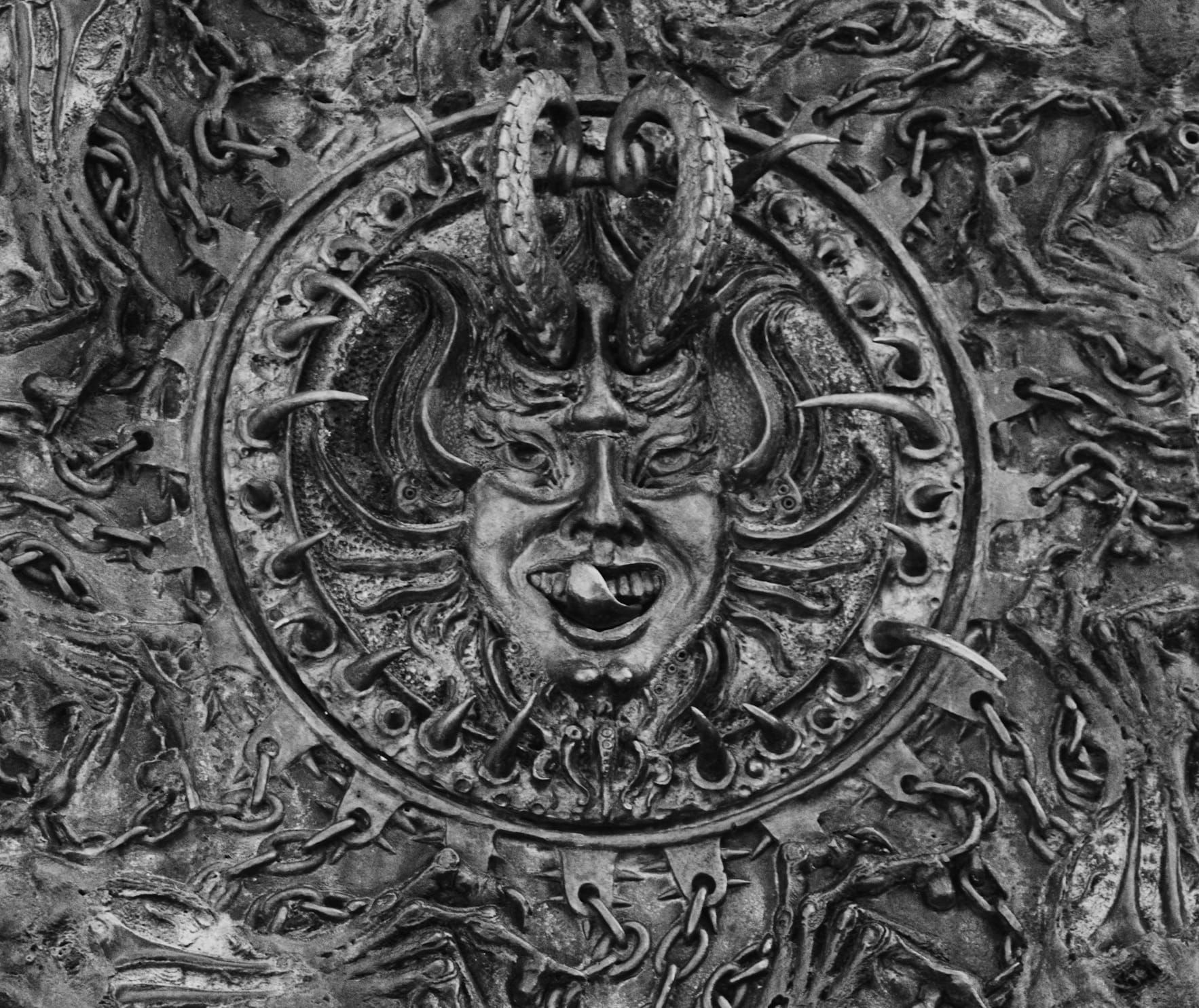
"For if God did not spare angels when they sinned, but cast them into hell and committed them to pits of darkness, reserved for judgment."
— 2 Peter 2:4 (NASB95)
Most people assume the Bible answers this question somewhere in the opening chapters: Satan fell, took a third of the angels with him, and those angels are the demons. It is a tidy account. It is also not what Scripture says. No biblical text describes a mass angelic fall alongside Satan, and no text equates fallen angels with the "unclean spirits" Jesus casts out in the Gospels.
Scripture does answer the question. It just answers it somewhere unexpected — in four dense verses before the Flood that most readers skim on their way to Noah.
The Passage Everyone Skips
Genesis 6:1–4 (NASB95): "Now it came about, when men began to multiply on the face of the land, and daughters were born to them, that the sons of God saw that the daughters of men were beautiful; and they took wives for themselves, whomever they chose. Then the LORD said, 'My Spirit shall not strive with man forever, because he also is flesh; nevertheless his days shall be one hundred and twenty years.' The Nephilim were on the earth in those days, and also afterward, when the sons of God came in to the daughters of men, and they bore children to them. Those were the mighty men who were of old, men of renown."
Four verses, dropped in without explanation, immediately before the verdict that "the wickedness of man was great on the earth" (Genesis 6:5) and the decision to send the Flood. The placement is not accidental. Something happened here that the narrator treats as the tipping point.
Who Are the "Sons of God"?
Three readings have competed since antiquity: that the "sons of God" are heavenly beings, that they are divinized kings practicing royal polygamy, or that they are the godly line of Seth intermarrying with the ungodly line of Cain.
The decisive evidence is internal, and it can be checked without leaving the Bible. The Hebrew phrase bĕnê hāʾĕlōhîm — "sons of God" — appears elsewhere in the Old Testament only of members of God's heavenly court:
- Job 1:6 — "the sons of God came to present themselves before the LORD"
- Job 2:1 — the same scene repeated
- Job 38:7 — "when the morning stars sang together and all the sons of God shouted for joy", at creation, before any human being existed
- Psalm 29:1 and Psalm 89:7 — heavenly beings summoned to ascribe glory to the LORD
Job 38:7 is the one that settles it. The sons of God are present and rejoicing at the founding of the world. Whatever else they are, they are not descendants of Seth, who had not been born.
The Sethite reading also fails a simpler test: Scripture never once calls the line of Seth "sons of God." The designation has to be imported. And the royal-polygamy reading has to explain why a group of kings would be given divine sonship, a usage without parallel in the ancient world, where such language attaches to individual monarchs.
The plain reading — that heavenly beings crossed a boundary God had set — is the one the text supports, and the one the New Testament assumes.
The Ancient Background That Makes Sense of the Polemic
Modern readers find these verses strange partly because we have lost the conversation they were written into. Michael Heiser's study of the passage draws attention to the Mesopotamian apkallu tradition: seven antediluvian "sages" who, in cuneiform sources, mingled with the created order and transmitted forbidden divine knowledge — omens, magic, medicine — to humanity before the Flood. Post-flood apkallu are explicitly described in Akkadian texts as "of human descent," one of them "only two-thirds apkallu" — hybrid divine-human offspring, language that maps onto the Nephilim, likewise described as giants and "men of renown." The Akkadian term maṣṣarē, "watchers," is used in ritual texts of warding off apkallu figures, matching the Aramaic ʿyryn, "the wakeful ones," used later of both angels and the fallen Watchers.[1]
Read against that background, Genesis 6:1–4 is a deliberate polemic. Mesopotamia told a story in which divine beings gave civilization its gifts. Genesis takes the same event and recasts it as a horrific transgression of creaturely boundaries — and then immediately reports that human wickedness had become total. Ancient readers heard the connection. We have to be told it is there.
Nephilim: The Fallen Ones
Nĕpîlîm (נְפִלִים) is most plausibly read as a passive form — "fallen ones," those who were cast down — rather than an active "those who fall."
Their only other Old Testament appearance is Numbers 13:33, where the Anakim who terrified Israel's spies are said to descend "from the Nephilim." That lineage extends further: Deuteronomy 2:10–11 and Deuteronomy 3:11 connect the Anakim to the Rephaim, and to Og king of Bashan, "the last of the remnant of the Rephaim."
The Rephaim connection is the hinge, because in the Old Testament the rĕpāʾîm are also associated with the realm of the dead. That association is what Second Temple Jewish literature seized on to explain the origin of demons.
The Link Nobody Argues For — Because Everyone Assumed It
The clearest ancient statement is 1 Enoch 15, which addresses the Watchers directly about their offspring:
1 Enoch 15:8–12
And now, the giants, who are produced from the spirits and flesh, shall be called evil spirits upon the earth, and on the earth shall be their dwelling. Evil spirits have proceeded from their bodies; because they are born from men and from the holy Watchers is their beginning and primal origin; they shall be evil spirits on earth, and evil spirits shall they be called... And the spirits of the giants afflict, oppress, destroy, attack, do battle, and work destruction on the earth, and cause trouble: they take no food, but nevertheless hunger and thirst, and cause offences. And these spirits shall rise up against the children of men and against the women, because they have proceeded from them.
The logic is this: when the Nephilim died in the Flood, their bodies perished but their spirits did not. Those disembodied spirits became the evil spirits that afflict humanity.
That explains something otherwise odd about New Testament vocabulary. The Gospels' standard term for a demon is not "fallen angel" but "unclean spirit" (πνεῦμα ἀκάθαρτον, pneuma akatharton). "Unclean" is not primarily a statement about ritual contamination — it is a statement about origin. These spirits came from an unnatural mixture of categories, exactly as the Levitical law classified as unclean those animals that crossed category boundaries.[2]
1 Enoch is not Scripture, and nothing here rests on treating it as such. It is evidence of what first-century Jews believed — the interpretive air the New Testament writers and their readers breathed.
Peter and Jude Assume the Supernatural Reading
Two New Testament passages settle the question of how the apostles read Genesis 6, and both do it without arguing, which is the significant part.
Jude 6 (NASB95): "And angels who did not keep their own domain, but abandoned their proper abode, He has kept in eternal bonds under darkness for the judgment of the great day."
Angels. Who abandoned their assigned station. Held in chains for judgment. That is Genesis 6 read supernaturally, and Jude's phrasing tracks 1 Enoch 10:4, 6 closely — a dependence beyond dispute, since Jude quotes 1 Enoch 1:9 verbatim a few verses later (Jude 14–15).[3]
2 Peter 2:4 (NASB95): "For if God did not spare angels when they sinned, but cast them into hell and committed them to pits of darkness, reserved for judgment."
The word behind "cast them into hell" is ταρταρόω (tartaroō), a verb occurring only here in the New Testament, borrowed straight from the Greek account of the rebel Titans imprisoned in Tartarus — itself likely drawing on the same deep ancient Near Eastern tradition that produced the apkallu material.[4]
Neither writer pauses to defend the reading. Both treat the Genesis 6 rebellion as historical, supernatural, and already understood by the audience. That only makes sense if their readers took Genesis 6:1–4 as Second Temple Judaism did.
Why This Matters
Scripture does not present demons as a timeless, unexplained category of evil, and it does not present them as a species God made. They have a history. They are what certain beings became through a specific rebellion at a specific point, with consequences that outlasted the Flood.
That has three practical consequences.
It means evil is an intrusion, not an ingredient. Everything God made was good (Genesis 1:31). Nothing in the unseen order was created corrupt.
It means the demons' hostility is not arbitrary. They are the residue of a crossing of boundaries that God judged once by water and will judge finally by fire.
And it means their end is already fixed. The same passages that describe their origin describe their custody — "kept in eternal bonds under darkness for the judgment of the great day." They are not at large. They are on remand.
Michael S. Heiser, Demons: What the Bible Really Says About the Powers of Darkness (Lexham, 2020), ch. 5, drawing on the work of Annus and Greenfield on the apkallu tradition. ↩︎
Heiser, Demons, ch. 10, citing Wahlen: "Like unclean animals, these 'impure spirits' represent an anomalous mixture of categories." Heiser notes that the phrase "unclean spirit" appears in the Gospels and nowhere in Greco-Roman literature before the second century AD — "clear evidence that New Testament writers stood firmly in the Second Temple Jewish tradition regarding the origin of demons." ↩︎
Richard Bauckham, Jude, 2 Peter, Word Biblical Commentary 50 (Word, 1983), is the standard treatment of Jude's deliberate use of Enochic and other Second Temple literature as a resource shared with his readers rather than a private theology. ↩︎
Heiser, Demons, ch. 5. ↩︎
Author

Raised in a Christian home, I came to faith later in life. A family crisis in 2019 drove me to study Scripture deeply, and by 2021 I answered my calling to ministry and teaching God's Word.