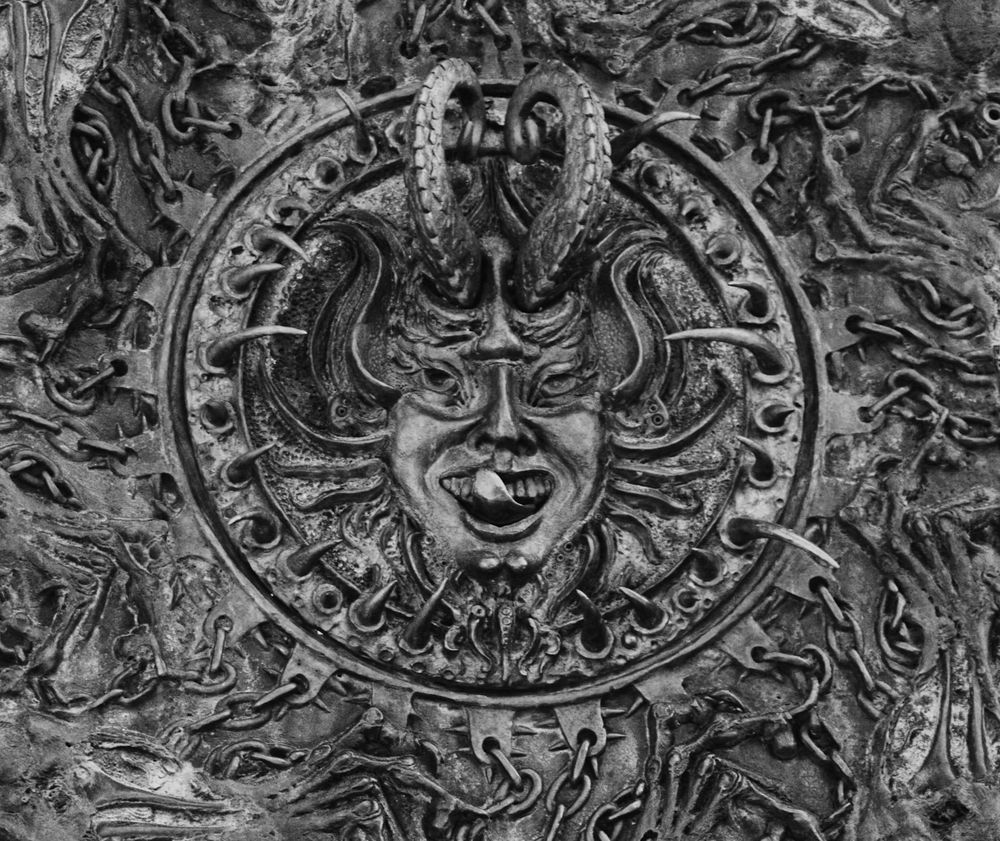
The End of the Demons - Chains, the Abyss, and the Eternal Fire
"Have You come to torment us before the time?" The demons do not ask whether they will be judged — only about the schedule. They believe the sentence is already passed. Scripture agrees: chains now, the abyss at the appointed hour, and a fire prepared for the devil and his angels.
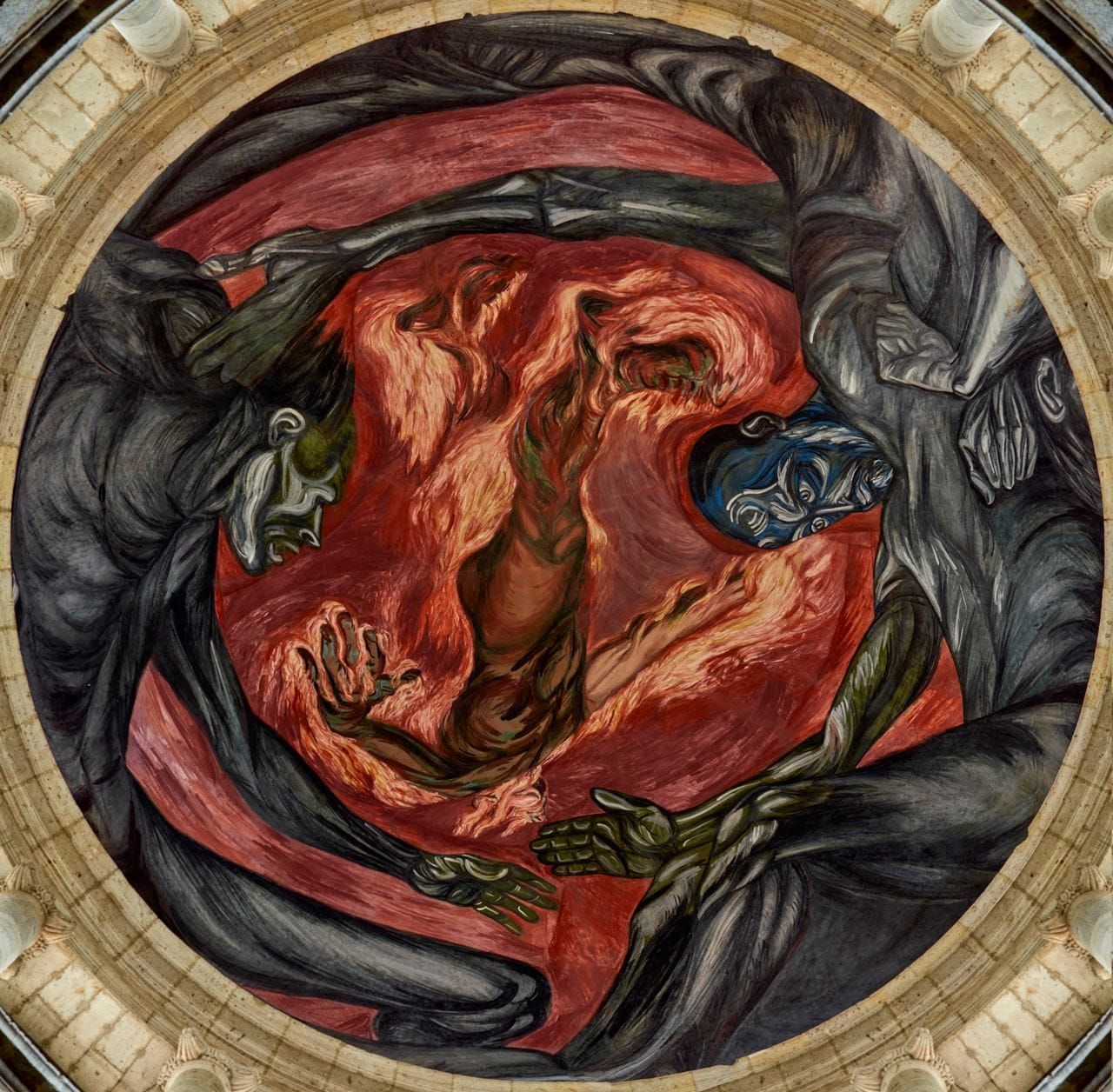
"Have You come here to torment us before the time?"
— Matthew 8:29 (NASB95)
Read that question again, because the demons have given away more than they intended.
They do not ask whether they will be tormented. They do not argue their case, protest their innocence, or dispute the court's jurisdiction. Their only question is about the schedule. They believe the sentence is already passed, and they think it is being carried out early.
Scripture agrees with them. Whatever else is uncertain about the powers of darkness, their end is not.
Already in Custody
Two passages describe the current status of the beings who rebelled, and both use the language of imprisonment.
2 Peter 2:4 (NASB95): "For if God did not spare angels when they sinned, but cast them into hell and committed them to pits of darkness, reserved for judgment."
Jude 6 (NASB95): "And angels who did not keep their own domain, but abandoned their proper abode, He has kept in eternal bonds under darkness for the judgment of the great day."
Both writers invoke "angels who sinned" as the paradigm case proving that God does not overlook rebellion — and both set it alongside the Flood generation and Sodom and Gomorrah (2 Peter 2:5–6; Jude 7). The logic is a fortiori: if God did not spare these beings, no one else should assume exemption.
Jude's wording is the more specific. "Did not keep their own domain, but abandoned their proper abode" describes a station departed from — and it tracks 1 Enoch 10:4, 6 closely enough that the dependence is not in doubt, since Jude quotes 1 Enoch 1:9 outright a few verses later (Jude 14–15).[1]
Peter's word is the more startling. "Cast them into hell" renders ταρταρόω (tartaroō), a verb appearing only here in the New Testament, borrowed directly from the Greek account of the rebel Titans imprisoned in Tartarus — itself likely drawing on the same ancient Near Eastern tradition behind the Genesis 6 rebellion.[2] Peter reaches for a word his Greek-speaking readers would recognize instantly and applies it to a real judgment.
Two things are true at once here, and holding both is essential. Some of the rebels are confined now. Others are plainly active now — the Gospels are full of them, and Paul tells the Ephesian church that the rulers and powers remain "our struggle" in the present tense (Ephesians 6:12). Scripture does not present the powers of darkness as uniformly locked away. It presents them as under a sentence already passed, with the execution staged.
The Abyss Opens
Revelation shows what happens when part of that confinement is temporarily lifted.
Revelation 9:1–3, 11 (NASB95): "Then the fifth angel sounded, and I saw a star from heaven which had fallen to the earth; and the key of the bottomless pit was given to him. He opened the bottomless pit, and smoke went up out of the pit, like the smoke of a great furnace; and the sun and the air were darkened by the smoke of the pit. Then out of the smoke came locusts upon the earth, and power was given them, as the scorpions of the earth have power… They have as king over them, the angel of the abyss; his name in Hebrew is Abaddon, and in the Greek he has the name Apollyon."
The abyss (ἄβυσσος, abyssos) is the same cosmic prison already met as Peter's Tartarus and Jude's "eternal bonds." It is the holding place. And the demonic locusts of Revelation 9 come out of that specific location, released by "a star from heaven which had fallen" — an image the Gospels use of Satan ("I was watching Satan fall from heaven like lightning," Luke 10:18).
Three constraints in the passage are easy to miss and worth naming, because they are the whole point.
The key is given. Passive voice. Satan does not hold the key to the abyss; it is handed to him, and it can only be handed by one authority.
The torment is limited in scope. The locusts may afflict only "those who do not have the seal of God on their foreheads" (v. 4). Even released, they operate inside a boundary they did not set.
The torment is limited in duration. Five months (v. 5), and the power granted is that of scorpions — torment, not death. This is a bounded episode, not an unleashing.
The imagery itself is Old Testament through and through: the locust plague of Joel 1–2 as covenant judgment, and behind that the plagues of Egypt. Revelation is not introducing an unprecedented horror. It is intensifying a judgment pattern Scripture has used before.
Then the name. The king of the horde is called Abaddon (אֲבַדּוֹן, "destruction") in Hebrew and Apollyon (Ἀπολλύων, "Destroyer") in Greek. Abaddon is not, in the Old Testament, a person — it is a place, paired with Sheol as a name for the realm of the dead (Job 26:6; Proverbs 15:11). That the horde's king carries the name of the grave rather than a personal name fits everything Scripture says about where these spirits come from and where they belong.
Prepared — and Not for You
The arc closes in a sentence from Jesus that most readers pass over while focused on the sheep and the goats.
Matthew 25:41 (NASB95): "Then He will also say to those on His left, 'Depart from Me, accursed ones, into the eternal fire which has been prepared for the devil and his angels.'"
Two words carry it.
"Prepared" (ἡτοιμασμένον) is a perfect passive participle — a settled, already-accomplished state. The fire is not a contingency awaiting a verdict. It exists, and it was made ready.
"For the devil and his angels." Not, originally, for human beings at all. In Jesus's own framing, human condemnation is a consequence of alignment with a rebellion whose judgment was already determined. That is a devastating thing to say gently, and He says it gently.
"His angels" here works as a summary label for everything the rest of Scripture has cataloged under different names: the Nephilim-derived unclean spirits of the Gospels, the šēdîm and territorial rulers of Deuteronomy and Paul, the imprisoned Watchers of 2 Peter and Jude. One organized rebellion, one head (Matthew 12:24), one already-determined destiny — narrated as accomplished fact for Satan himself in Revelation 20:10.
Why Scripture Tells Us This
There is a way of reading all this that produces fascination, and a way that produces sobriety. The New Testament clearly intends the second.
The powers are disarmed but not yet destroyed. At the cross Christ "disarmed the rulers and authorities and put them to open shame, by triumphing over them" (Colossians 2:15). Their claim is void. Their activity is not over. Both halves have to be held, or you get either paralysis or presumption.
Nothing about their fate is negotiable or uncertain. They are not free agents whose destiny hangs in the balance. They are convicts awaiting an appointed hour, and they know it better than we do.
And the warning is aimed at us. This is the part that Matthew 25 refuses to let go of. The fire was prepared for the devil and his angels — which means every human being who ends up there does so by taking their side, through unbelief and through the refusal to care for "the least of these" (Matthew 25:40, 45). The demons' sentence is fixed. Ours is not yet, and that is the mercy in the passage.
The demons asked whether the torment had come early. For them the answer was no, not yet. For everyone else, the question is still open — and the whole reason Scripture describes their end in such detail is so that no one drifts into sharing it.
Richard Bauckham, Jude, 2 Peter, Word Biblical Commentary 50 (Word, 1983), is the standard treatment of Jude's deliberate use of Enochic and other Second Temple literature. ↩︎
Michael S. Heiser, Demons: What the Bible Really Says About the Powers of Darkness (Lexham, 2020), ch. 5. ↩︎
Author

Raised in a Christian home, I came to faith later in life. A family crisis in 2019 drove me to study Scripture deeply, and by 2021 I answered my calling to ministry and teaching God's Word.