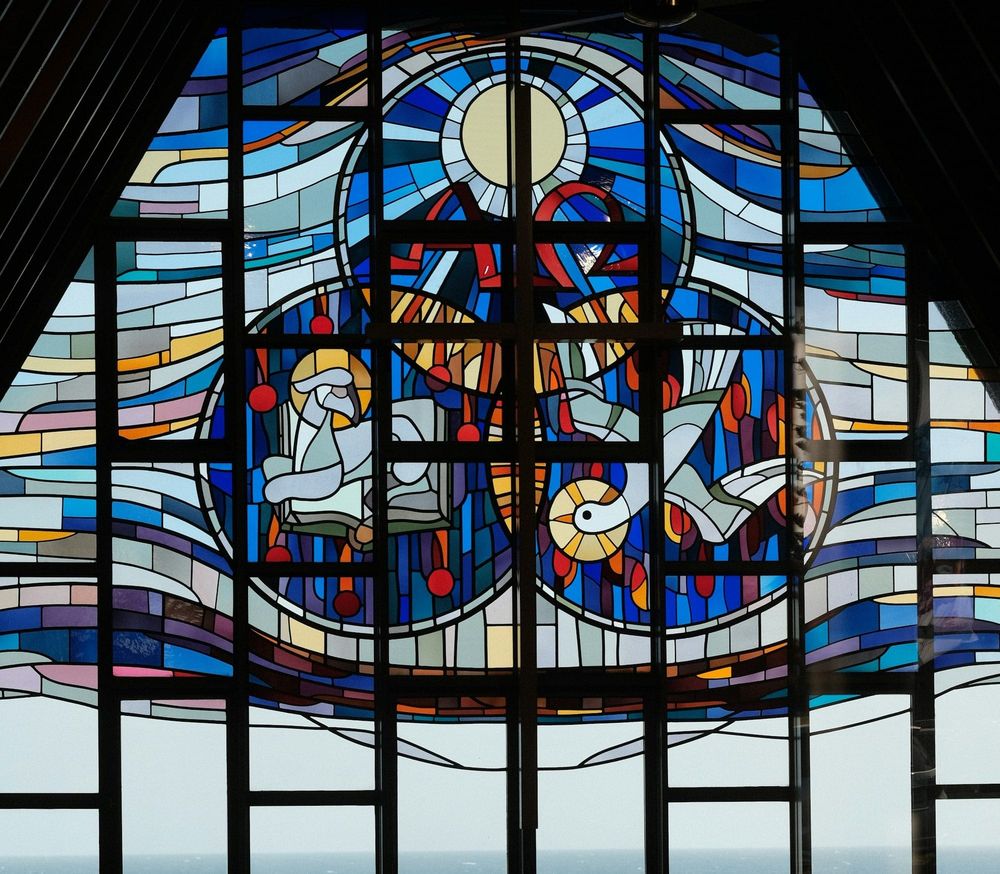
The Fall of Man
The Fall of Man is the central catastrophic event of human history. Everything that is wrong with the world — suffering, death, moral corruption, broken relationships, spiritual alienation — traces back to this moment.

"Therefore, just as through one man sin entered into the world, and death through sin, and so death spread to all mankind, because all sinned."
— Romans 5:12 (NASB)
The Fall of Man is the central catastrophic event of human history. Everything that is wrong with the world — suffering, death, moral corruption, broken relationships, spiritual alienation — traces back to this moment. Without the Fall, there is no adequate explanation for the gap between the world as it is and the world as it should be. With the Fall, the entire biblical narrative makes sense: creation is good, the Fall is real, redemption is necessary, and restoration is promised.
Historical Reality of the Fall
The biblical account of the Fall in Genesis 3 must be understood as literal, historical narrative — not myth, allegory, or parable. Several factors establish this:
- Paul's argument in Romans 5:12–19 treats Adam's sin as a historical act that has historical consequences for all of humanity — precisely the kind of legal and cosmic argument that depends on historical reality
- 1 Corinthians 15:21–22 contrasts Adam (historical figure) with Christ (historical figure) — the parallel requires both to be real
- Jesus himself speaks of Adam and Eve as historical persons (Matthew 19:4–5; Mark 10:6)
- Luke's genealogy traces Jesus' lineage back to Adam (Luke 3:38) — treating him as a historical ancestor
Dr. Martyn Lloyd-Jones (1899–1981) defends this position in Great Doctrines of the Bible, Vol. I [1]: "We approach the third chapter of Genesis as being literal, actual history... accepting it like that, let us examine Genesis 3 and see what it tells us." He goes on to emphasize: "the thing I am most anxious to emphasise is that there was nothing in man himself that produced that fall into sin. There was no physical cause. There was nothing sensual in man that brought it about. This temptation came to man entirely from the outside, and he had perfect free will to decide what to do with it. That is a most important point."
The ANE Background
The IVP Bible Background Commentary: Old Testament (Walton, Matthews, Chavalas; IVP Academic, 2000) notes that the Garden of Eden presents striking parallels to ancient Near Eastern concepts of sacred gardens, but with crucial differences: the Genesis garden is not the dwelling of the gods (as in Mesopotamian tradition) but the dwelling place prepared by God for human beings. The tree of the knowledge of good and evil has ANE analogues in texts about the pursuit of divine wisdom, but Genesis presents the tree not as an invitation but as a boundary — the one test of human faithfulness and trust.
Genesis 3:1–7 — The Temptation and the Fall
"Now the serpent was more crafty than any beast of the field which the LORD God had made; and he said to the woman, 'Indeed, has God said, "You shall not eat from any tree of the garden"?'... The woman said to the serpent, 'From the fruit of the trees of the garden we may eat; but from the fruit of the tree which is in the middle of the garden, God has said, "You shall not eat from it or touch it, or you will die."' The serpent said to the woman, 'You certainly will not die! For God knows that on the day you eat from it your eyes will be opened, and you will become like God, knowing good and evil.'... When the woman saw that the tree was good for food, and that it was a delight to the eyes, and that the tree was desirable to make one wise, she took some of its fruit and ate; and she also gave some to her husband with her, and he ate."
Verse 1 — "The Serpent Was More Crafty"
עָרוּם (ʿārûm, "crafty, shrewd, cunning"; BDB 791; HALOT 883)
The same root word appears positively in Proverbs as "prudent/wise" (Proverbs 12:23; Proverbs 13:16). In Genesis 3:1, the context is deceptive intelligence — wisdom corrupted and weaponized. The serpent uses genuine intelligence not for truth but for manipulation.
The serpent is identified in the NT as Satan: Revelation 12:9 — "the serpent of old who is called the devil and Satan, who deceives the whole world." Dr. Michael S. Heiser (The Unseen Realm, Lexham Press, 2015) argues that the nachash (serpent) in Genesis 3 is best understood as a divine being — one of the ʾĕlōhîm — who operates in the divine council and then rebels, consistent with Isaiah 14 and Ezekiel 28. Whether the serpent is a literal animal controlled by Satan or Satan appearing in serpentine form, the NT identification is explicit.
The Strategy of Doubt:
The serpent's first move is a question: "Indeed, has God said?" This is the first question in Scripture, and it is designed to introduce doubt about the word of God. The technique:
- Misrepresent God's word (implying God prohibited all trees, not just one)
- Invite re-evaluation of whether God's word is trustworthy
- Imply restriction — that God's command is unfair, limiting, suspicious
Victor Hamilton writes: "The serpent's opening gambit is brilliant in its subtlety. He does not begin with a denial of God's word. He begins with a question that implies it. The move from 'Has God said?' to 'God knows...' (v. 5) is the complete arc of temptation: introduce doubt, then offer the alternative narrative" [2].
Verse 4–5 — The Three Lies
Three specific lies constitute the serpent's counter-narrative:
- "You certainly will not die" — direct contradiction of God's word (Genesis 2:17)
- "God knows..." — imputation of impure motives to God; God is presented as withholding good from humanity
- "You will be like God" — the ultimate temptation: self-deification, autonomy from God
These three correspond precisely to the three elements John identifies in 1 John 2:16: the lust of the flesh (the tree "was good for food", v. 6), the lust of the eyes ("a delight to the eyes"), and the pride of life ("desirable to make one wise" — the ambition to be like God). Lloyd-Jones notes in Great Doctrines [3]: "In Genesis 3 there is the desire, and then seeing that the fruit was good to look upon — the lust of the eye; then this pride of life, the ambition to be great, to be marvellous and wonderful. The same elements! Indeed, as I have already suggested, they reappear throughout the Bible and are worked out everywhere."
Jesus faced these same three temptations in the wilderness and defeated them through the Word of God (Matthew 4:1–11) — demonstrating both the pattern of Satan's attack and the pattern of the proper response.
Verses 6–7 — The Act and Its Immediate Effect
וַתֹּאכַל וַתִּתֵּן גַּם לְאִישָׁהּ עִמָּהּ (wattōʾkal wattitten gam lĕʾîšāh ʿimmāh, "she took and ate; and also gave to her husband with her")
The act is described with stark simplicity — no dramatic music, no momentous pause. She took; she ate; she gave; he ate. The catastrophic nature of the moment stands in inverse proportion to its apparent ordinariness. Adam is described as "with her" (ʿimmāh) — he was present during the temptation and exchange, yet did not intervene. Paul's argument in 1 Timothy 2:14 and Romans 5:12 focuses primary responsibility on Adam: he sinned without being deceived — a deliberate, open-eyed transgression.
וַתִּפָּקַחְנָה עֵינֵי שְׁנֵיהֶם (wattippāqaḥnāh ʿênê šĕnêhem, "then the eyes of both of them were opened")
Their eyes were opened — the serpent's promise was technically fulfilled. But what they saw was not the divine wisdom they had been promised. They saw their own nakedness — vulnerability, shame, and the loss of the innocent self-transparency they had previously enjoyed (Genesis 2:25: "the man and his wife were both naked and were not ashamed"). The "knowledge of good and evil" they gained was not wisdom but experience of evil — the kind of knowledge that comes through transgression, not through obedience.
Genesis 3:8–13 — Hiding from God
"They heard the sound of the LORD God walking in the garden in the cool of the day, and the man and his wife hid themselves from the presence of the LORD God among the trees of the garden. Then the LORD God called to the man, and said to him, 'Where are you?'"
"Where Are You?"
The first question God asks of a human being in Scripture is not "Did you eat?" but "Where are you?" — not because God does not know but because He wants humanity to recognize the new reality: sin has created a distance between the human person and God that was not there before. The hiding of Adam and Eve is the first symptom of sin's effect on human consciousness: fear where there had been intimacy, concealment where there had been openness, separation where there had been communion.
Two patterns appear immediately after the Fall:
- Hiding from God — the natural response of a guilty conscience to the presence of holiness
- Blame-shifting — Adam blames Eve (and implicitly God: "the woman whom You gave to be with me", v. 12); Eve blames the serpent
These patterns persist in fallen humanity: the impulse to conceal guilt and deflect responsibility is universal and is the direct legacy of Adam's response in Genesis 3:12.
Genesis 3:14–19 — The Curse and Its Consequences
"Then the LORD God said to the serpent, 'Because you have done this, Cursed are you more than all cattle... Because you have listened to the voice of your wife, and have eaten from the tree about which I commanded you, saying, "You shall not eat from it"; Cursed is the ground because of you; In toil you will eat of it all the days of your life. Both thorns and thistles it shall grow for you... For you are dust, and to dust you shall return.'"
The Three-Fold Curse
The consequences of the Fall fall on three parties:
1. The Serpent (vv. 14–15):
- Cursed above all creatures
- Reduced to crawling on its belly
- Placed in permanent enmity with humanity and her seed
- Ultimate defeat promised (v. 15)
2. The Woman (v. 16):
- Greatly multiplied pain in childbearing
- Struggle in the marriage relationship ("Your desire will be for your husband, and he will rule over you" — the word תְּשׁוּקָה, tĕšûqāh; BDB 1003, "desire, longing" — can indicate either desire for domination or loving desire distorted by sin's effects on the relationship)
3. The Man and the Ground (vv. 17–19):
- The ground cursed because of him — human sin has cosmic effects
- Painful toil in work
- Thorns and thistles — resistance and frustration built into creation's response to human sin
- Return to dust ("for you are dust, and to dust you shall return")
Lloyd-Jones summarizes the immediate consequences in Great Doctrines [4]: "certain legal results happened at once. Man immediately came under condemnation and was punished by God... Spiritually, he immediately fell from his original righteousness. There was not a second's delay. The moment he sinned, he lost that uprightness, that correspondence with the moral character of God. And, equally, he was separated from God at once."
The Cosmic Scope of the Fall
עֲרוּרָה הָאֲדָמָה (ʾărûrāh hāʾădāmāh, "cursed is the ground"; BDB 76; HALOT 96)
The curse on the ground is staggering in its implications: human sin has disrupted the entire created order. The ground itself is cursed because of human sin. This explains Romans 8:19–22 where creation "groans" under its subjection to futility — the physical cosmos bears the marks of human transgression. The Fall is not merely a personal moral failure; it is a cosmic catastrophe.
Physical death:
עַד שׁוּבְךָ אֶל הָאֲדָמָה (ʿad šûbkā ʾel hāʾădāmāh, "until you return to the ground")
Physical mortality is a consequence of sin, not an original condition of human nature. The possibility of the Tree of Life (Genesis 2:9; 3:22–24) implies that God had designed a path to immortality for obedient humanity. The Fall closed that path — and death entered as the penalty for transgression (Romans 6:23: "the wages of sin is death").
Genesis 3:15 — The Protoevangelium: The First Gospel Promise
"And I will put enmity between you and the woman, and between your seed and her seed; He shall bruise you on the head, and you shall bruise him on the heel."
The First Announcement of Redemption
Genesis 3:15 is the theological hinge of the entire Bible. Embedded in God's curse on the serpent is the first promise of redemption — the declaration that the serpent's apparent victory will ultimately be reversed by a specific descendant of the woman who will deliver the decisive, lethal blow.
אֵיבָה (ʾêbāh, "enmity"; BDB 33; HALOT 38) — hostility, fundamental opposition. God sovereignly places this enmity: it is not a natural development but a divine decree. From this moment forward, there will be two competing "seeds" in conflict throughout history.
הוּא יְשׁוּפְךָ רֹאשׁ (hûʾ yĕšûpĕkā rōʾš, "He shall bruise/crush you on the head")
The singular הוּא (hûʾ, "He" — masculine singular) points to a specific individual, not the collective seed. This is the first messianic promise: a particular descendant of the woman will deal the death blow to the serpent. The crushing of the head (rōʾš) is lethal; the bruising of the heel (ʿāqēb) is painful but not fatal.
This is fulfilled in Christ:
- The bruised heel = the cross, where Christ suffered and died
- The crushed head = the resurrection and final defeat of Satan
Kenneth Mathews writes: "Genesis 3:15 is the Magna Carta of redemptive history. Everything from Genesis 4 to Revelation 20 is the unfolding story of this promised conflict and its promised resolution. The serpent's head is crushed at Calvary; the final crushing will be executed at the final judgment" [5]. See also Romans 16:20; Hebrews 2:14; 1 John 3:8.
Genesis 3:20–24 — Expulsion from Eden
"Now the man called his wife's name Eve, because she was the mother of all the living. The LORD God made garments of skin for Adam and his wife, and clothed them... He drove the man out; and at the east of the garden of Eden He stationed the cherubim and the flaming sword which turned every direction to guard the way to the tree of life."
Grace in the Midst of Judgment
גַּנּוֹת עוֹר (gannôt ʿôr, "garments of skin") — God makes adequate clothing to cover Adam and Eve's shame. This first act after the pronouncement of judgment is an act of grace: God provides what fallen humanity cannot provide for itself. The skins required the death of animals — the first blood shed in Scripture is shed for human covering. This anticipates the entire sacrificial system and ultimately the atoning death of Christ: what covers the shame of sin requires the shedding of blood (Hebrews 9:22; Leviticus 17:11).
הַכְּרֻבִים וְאֵת לַהַט הַחֶרֶב (hakkĕrubîm wĕʾet lahat haḥereb, "the cherubim and the flaming sword") — The cherubim guarding Eden are not decorative figures. They are the highest order of divine beings, now stationed as the guardians of sacred space — specifically preventing fallen humanity from accessing the Tree of Life and living forever in their fallen condition. God's mercy is present even in the expulsion: allowing fallen humanity to live forever in a fallen state would be a far greater cruelty than physical death. Death, paradoxically, becomes the door to redemption.
Romans 5:12–19 — Adam as Federal Head of Humanity
"Therefore, just as through one man sin entered into the world, and death through sin, and so death spread to all mankind, because all sinned... For if by the transgression of the one, death reigned through the one, much more those who receive the abundance of grace and of the gift of righteousness will reign in life through the One, Jesus Christ." (vv. 12, 17)
Overview
Romans 5:12–19 is Paul's most comprehensive theological interpretation of the Fall. He establishes Adam as the federal head (representative head) of all humanity — his act of sin has legal and cosmic consequences for all who are in him. This is not guilt by mere biological inheritance but a representational principle: as Adam stood for humanity in the garden, his choice became humanity's choice in its legal standing before God.
Verse 12 — "Through One Man Sin Entered"
δι' ἑνὸς ἀνθρώπου (di' henos anthrōpou, "through one man")
Ἁμαρτία (hamartia; BDAG 50, "sin") entered the world through one man — Adam. This establishes the singularity and historicity of the Fall event. It was not the gradual accumulation of human errors or the inevitable consequence of evolutionary development; it was a specific act by a specific person that changed the status of all humanity.
καὶ οὕτως εἰς πάντας ἀνθρώπους ὁ θάνατος διῆλθεν (kai houtōs eis pantas anthrōpous ho thanatos diēlthen, "and so death spread to all mankind")
Διέρχομαι (dierchomai; BDAG 244, "to spread through, permeate") — death spread through humanity like a disease through a body. The scope is total: "all mankind" (pantas anthrōpous) — no exceptions.
ἐφ' ᾧ πάντες ἥμαρτον (eph' hō pantes hēmarton, "because all sinned")
The phrase "because all sinned" is debated: does it mean (a) all sinned in Adam (federal/representative view), (b) all sinned in the sense that they each personally sin following Adam's pattern, or (c) both? The context (Romans 5:13–19) strongly supports the representational view — Paul's entire argument depends on the parallel between Adam's one act affecting all and Christ's one act affecting all. Douglas Moo writes: "Romans 5:12 teaches that Adam's sin is the reason all people are subject to death, but whether this is because all are legally counted as having sinned in Adam or because Adam's sin initiates a chain that leads all to personally sin is the central exegetical question. The parallel with Christ in vv. 15–19 favors the former: as Christ's righteousness is imputed to those in him without their personal action, so Adam's sin is imputed to those in him" [6].
Verses 18–19 — The Double Parallel
The parallel between Adam and Christ is the structure of Paul's argument:
| Adam | Christ |
|---|---|
| One man (v. 12) | One Man (v. 15) |
| One act of transgression (v. 18) | One act of righteousness (v. 18) |
| Condemnation for all (v. 18) | Justification of life for all (v. 18) |
| Through disobedience, many made sinners (v. 19) | Through obedience, many made righteous (v. 19) |
| Death reigned (v. 17) | Life reigns (v. 17) |
The Fall did not create an irreversible condition. It created a problem that God planned to solve through an equal and opposite act by the Last Adam — whose obedience reverses what Adam's disobedience created.
1 Corinthians 15:21–22 — In Adam All Die
"For since by a man came death, by a man also came the resurrection of the dead. For as in Adam all die, so also in Christ all will be made alive."
ἐν τῷ Ἀδάμ (en tō Adām, "in Adam") — ἐν τῷ Χριστῷ (en tō Christō, "in Christ")
The prepositional phrases "in Adam" and "in Christ" are the key to Paul's argument: they denote union and identification. Everyone who is "in Adam" (by natural birth — all of humanity) dies; everyone who is "in Christ" (by faith — those who receive Him) will be made alive. This is the representative headship principle applied to resurrection: just as one man's act brought death to all who were in him, one Man's resurrection brings life to all who are in Him.
This verse also confirms the historicity of Adam: Paul's argument for the resurrection of Christ depends on the literal death introduced by the literal Adam. If Adam is mythological, the argument collapses. The Fall is not a story about human nature in general; it is the account of a historical person whose historical act changed the course of human history.
Romans 8:19–22 — Creation Subjected to Futility
"For the anxious longing of the creation waits eagerly for the revealing of the sons of God. For the creation was subjected to futility, not willingly, but because of Him who subjected it, in hope that the creation itself also will be set free from its slavery to corruption into the freedom of the glory of the children of God. For we know that the whole creation groans and suffers the pains of childbirth together until now."
The Cosmic Scope of the Fall
ματαιότητι (mataiotēti, "futility, vanity, meaninglessness"; BDAG 621) — The entire created order was subjected to futility — purposelessness, frustration, the inability to achieve its intended goal. This is the direct consequence of Genesis 3:17–18: the cursing of the ground and the introduction of thorns and thistles. The Fall was not merely a personal moral failure; it disrupted the proper order of the cosmos.
συστενάζει καὶ συνωδίνει (systenazei kai synōdinei, "groans and suffers together") — The repeated "together" prefix (syn-) connects creation's groaning to humanity's groaning (v. 23): the entire creation is in solidarity with fallen humanity, awaiting the same redemption. Creation longs for "the revealing of the sons of God" (v. 19) — the moment when God's people are fully glorified and creation is "set free from its slavery to corruption."
This is the scope of biblical redemption: not merely the salvation of individual souls but the "renewal of all things" (Matthew 19:28) — a new heaven and a new earth (Revelation 21:1–5) in which the effects of the Fall are fully and finally undone. The Fall brought death and corruption to the cosmos; the redemption of Christ restores and transforms the cosmos.
1 Timothy 2:13–14 — The Order and the Deception
"For it was Adam who was first created, and then Eve. And it was not Adam who was deceived, but the woman being deceived, fell into transgression."
οὐκ ἠπατήθη (ouk ēpatēthē, "was not deceived"; from ἀπατάω, apataō; BDAG 98, "to deceive, lead astray")
Paul makes an important distinction: Eve was deceived by the serpent (2 Corinthians 11:3); Adam sinned without being deceived. He ate with full awareness of what he was doing. This makes Adam's guilt greater — he transgressed knowingly and deliberately. This is why Romans 5:12 holds Adam (not Eve) responsible for the entry of sin — his was the more culpable act.
This passage has generated significant theological and practical discussion. Without denominational bias: the context in 1 Timothy 2 concerns the ordering of authority in the church, which Paul grounds in the creation order and the Fall event. The point relevant to this study: the Fall account reveals both the serpent's strategy (targeting the one who would be more susceptible to deception) and the human failure to act in proper protection of the covenant community. Whether the context addresses general male-female roles broadly or specific church-office questions specifically, the historical grounding in Genesis 3 is the consistent anchor.
Summary
1. The Fall Was a Historical Event with Cosmic Consequences
The Fall is not myth or metaphor — it is the specific, historical act of a specific historical person whose transgression changed the legal and moral status of all humanity and disrupted the entire created order (Romans 5:12; Romans 8:19–22; 1 Corinthians 15:21–22).
2. The Fall Came from Without, Not Within
The temptation came entirely from the outside — from the serpent/Satan — not from anything intrinsic to human nature as God created it. Human nature was created good (Genesis 1:31); sin is an intrusion, not an inherent defect. This preserves both God's goodness as Creator and human responsibility as moral agents.
3. The Fall Was Chosen with Free Will
Both Adam and Eve made genuine, free choices in the Fall. They were not constrained by their nature to sin — they chose to sin against explicit divine command. This is the foundation of human moral accountability: had they been unable to obey God, they could not have been responsible for their disobedience.
4. The Consequences Are Legal, Spiritual, Physical, and Cosmic
The Fall's effects are comprehensive: legal condemnation before God, spiritual separation from God, distortion of human nature, physical mortality, and disruption of the created order. Nothing in human experience is untouched by the Fall.
5. The Fall Is Not the Final Word — The Gospel Reversal
Genesis 3:15 announces from the very moment of the Fall that God has a plan for reversal. The Last Adam (Christ) perfectly undoes what the first Adam broke: "As in Adam all die, so also in Christ all will be made alive" (1 Corinthians 15:22).
Author

Raised in a Christian home, I came to faith later in life. A family crisis in 2019 drove me to study Scripture deeply, and by 2021 I answered my calling to ministry and teaching God's Word.