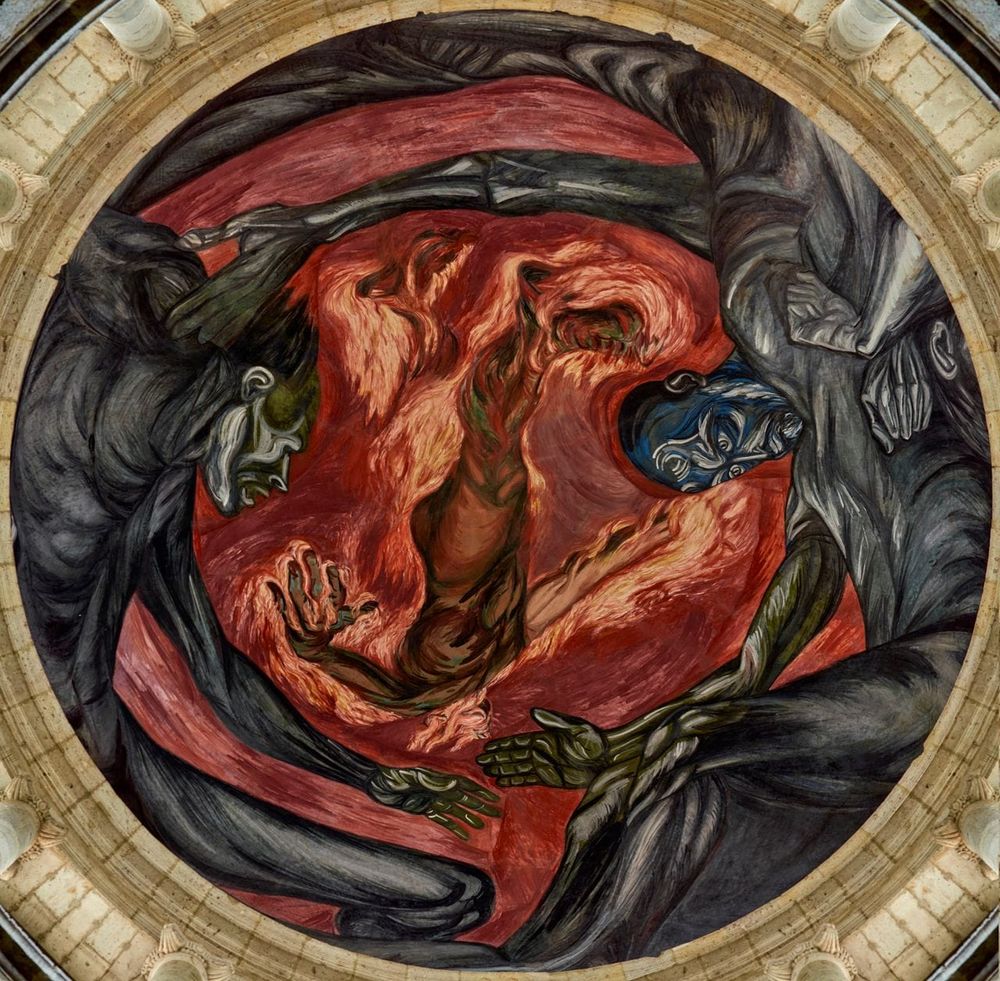
Hell and Eternal Separation

No biblical doctrine is more sobering, and none rests more directly on the recorded words of Jesus — who spoke of hell more than any other person in Scripture, and always as warning, never as relish.

Share
Hell and Eternal Separation
Photo by Marino Linic / Unsplash
Table of Content

"These will pay the penalty of eternal destruction, away from the presence of the Lord and from the glory of His power."
2 Thessalonians 1:9 (NASB95)

No biblical doctrine is more sobering, and none rests more directly on the recorded words of Jesus — who spoke of hell more than any other person in Scripture, and always as warning, never as relish. Precision requires sorting the vocabulary English Bibles have sometimes flattened into one word: שְׁאוֹל (sheʾôl, Strong's H7585) — the Old Testament realm of the dead generally; ᾅδης (hadēs, G86) — its Greek counterpart, the intermediate abode of the unrighteous dead; γέεννα (gehenna, G1067) — Jesus' word for final hell; ταρταρόω (tartaroō, G5020, 2 Peter 2:4) — the confinement of sinning angels; and the λίμνη τοῦ πυρός ("lake of fire," Revelation 20:14–15) — the final state, into which even Hades is thrown. This study works through the defining passages, states the alternative views fairly, and ends where Jesus aimed the doctrine: escape.

Passages studied: Mark 9:43–48; Luke 16:19–31; Matthew 25:41, 46; 2 Thessalonians 1:6–10; Revelation 20:10–15 with Revelation 14:9–11.

Key Passages

Mark 9:43–48 — Gehenna: Jesus' Word and Its History

Mark 9:43–48

NASB95 (vv. 43, 47–48): "If your hand causes you to stumble, cut it off; it is better for you to enter life crippled, than, having your two hands, to go into hell, into the unquenchable fire... where THEIR WORM DOES NOT DIE, AND THE FIRE IS NOT QUENCHED."

Gehenna transliterates גֵּי הִנֹּם (gêʾ hinnōm), the Valley of Hinnom south of Jerusalem — the site where Ahaz and Manasseh burned their sons to Molech (2 Chronicles 28:3; 33:6), desecrated by Josiah (2 Kings 23:10), and cursed by Jeremiah as "the valley of Slaughter" (Jeremiah 7:31–32; 19:6); by the Second Temple period it had become the fixed image of final judgment (the valley's geography is documented at Bible Odyssey / standard atlases). Jesus closes with Isaiah 66:24 — the undying worm, the unquenched fire — Isaiah's closing verse, describing the end of "the men who have transgressed against Me." The passage's logic is proportional surgery: any loss — hand, foot, eye — is rational against Gehenna; nothing in this life is worth keeping at that price (Matthew 10:28 — "fear Him who is able to destroy both soul and body in hell": the directive to fear God, not the devil, who is Gehenna's most famous prisoner-to-be, not its warden, Revelation 20:10).

Luke 16:19–31 — Hades: Conscious, Fixed, and Warned

Luke 16:19–31

NASB95 (vv. 25–26): "But Abraham said, 'Child, remember that during your life you received your good things, and likewise Lazarus bad things; but now he is being comforted here, and you are in agony. And besides all this, between us and you there is a great chasm fixed, so that those who wish to come over from here to you will not be able, and that none may cross over from there to us.'"

The rich man and Lazarus — whether parable or account (Jesus names Lazarus, unique in His parables) — teaches with His authority the intermediate state's realities: consciousness after death ("in agony in this flame," v. 24 — with memory, v. 25, and moral awareness, vv. 27–28); reversal by God's assessment rather than man's (the beggar in Abraham's bosom, the celebrated man in Hades); a fixed chasm — no post-mortem crossing, no second itinerary (contradicting both universalist hopes of eventual transfer and Rome's purgatory, for which Scripture gives no warrant — Hebrews 9:27: death, then judgment); and the sufficiency of Scripture for warning: "If they do not listen to Moses and the Prophets, they will not be persuaded even if someone rises from the dead" (v. 31) — a sentence history promptly verified twice over (John 11:45–53; Matthew 28:11–15). Hades itself is temporary — emptied and thrown into the lake of fire at the great white throne (Revelation 20:13–14).

Matthew 25:41, 46 — Eternal, and Not Designed for You

Matthew 25:41; Matthew 25:46

NASB95: "Then He will also say to those on His left, 'Depart from Me, accursed ones, into the eternal fire which has been prepared for the devil and his angels'... These will go away into eternal punishment, but the righteous into eternal life."

Two clauses of enormous weight. "Prepared for the devil and his angels": hell was never designed for humanity — those who enter it go against the intent of its preparation, following the rebel it was built for; correspondingly, the kingdom was "prepared for you from the foundation of the world" (v. 34) — destinies differ in designed intent, and God "takes no pleasure in the death of the wicked" (Ezekiel 33:11; 1 Timothy 2:4; 2 Peter 3:9). And v. 46's strict parallel: κόλασιν αἰώνιον... ζωὴν αἰώνιον — the same adjective αἰώνιος (aiōnios, G166) governing both punishment and life in a single sentence; whatever duration heaven has, hell has (the grammatical point conceded even by many who wish it otherwise). The separation formula recurs across Jesus' teaching — "depart from Me" (Matthew 7:23; 25:41), outer darkness, weeping and gnashing (Matthew 8:12; 22:13; 25:30) — hell as banishment from the Presence that is the source of every good (James 1:17).

2 Thessalonians 1:6–10 — Eternal Destruction, Away From the Presence

2 Thessalonians 1:6–10

NASB95 (v. 9): "These will pay the penalty of eternal destruction, away from the presence of the Lord and from the glory of His power."

Paul's most precise definition. The penalty is ὄλεθρον αἰώνιον (olethron aiōnion, "eternal destruction") — ὄλεθρος (G3639) meaning ruin/destruction in the sense of loss of everything that makes existence blessed, not annihilation of being (BDAG, s.v. "ὄλεθρος"; the same word describes the flesh's ruin in 1 Corinthians 5:5 — a person who remains alive): eternal ruining, not eternal ending — an ending would not need the adjective. Its content: "away from the presence of the Lord" — the eternal separation of this post's title, the final honoring of the sinner's own verdict (Romans 1:28 — "they did not see fit to acknowledge God"; John 3:19 — darkness preferred). The context is judicial and comforting at once: this is "just... retribution" rendered by the righteous Judge to unrepentant afflicters, and relief to the afflicted (vv. 6–7) — the doctrine of hell is, among other things, God's promise that persecutors do not get the last word.

Revelation 20:10–15 & 14:9–11 — The Lake of Fire and the Second Death

Revelation 20:10–15; Revelation 14:9–11

NASB95 (Revelation 20:10, 15): "And the devil who deceived them was thrown into the lake of fire and brimstone, where the beast and the false prophet are also; and they will be tormented day and night forever and ever... And if anyone's name was not found written in the book of life, he was thrown into the lake of fire."

The final state. The devil joins the beast and false prophet — who, note, are still there a thousand years after their casting in (Revelation 19:20 with 20:10) — and the torment formula is Scripture's strongest duration idiom: εἰς τοὺς αἰῶνας τῶν αἰώνων, "forever and ever," day and night — the same phrase used of God's own life (Revelation 4:9–10) and the saints' reign (22:5). Revelation 14:11 applies the smoke-and-no-rest imagery to human worshipers of the beast. This is "the second death" (20:14; 21:8) — death in Scripture consistently meaning separation (body from spirit, James 2:26; person from God, Ephesians 2:1), not cessation. The alternative views, stated fairly: annihilationism / conditional immortality (held by some evangelicals, and doctrinally by Seventh-day Adventists and Jehovah's Witnesses) reads the destruction-and-fire language as consuming — arguing "eternal punishment" means eternal result, not eternal process; its texts (Matthew 10:28 "destroy"; Malachi 4:1) are real, but the position strains against the conscious-torment formulas of Revelation 14:11 and Revelation 20:10, the parallel of Matthew 25:46, and degrees of punishment (annihilation admits no degrees — yet see Luke 12:47–48). Universalism (all eventually saved) reads the "all" texts (1 Corinthians 15:22; Colossians 1:20) against their contexts and founders on the fixed chasm, the unforgivable sin (Matthew 12:32 — "not... in this age or in the age to come"), and Jesus' word over Judas: "good... if he had not been born" (Matthew 26:24) — unintelligible if Judas' end is glory. The historic reading — eternal conscious separation — remains the one that lets every text speak.

The Justice and the Escape

Two protests deserve straight answers. Is eternal punishment proportionate to temporal sin? Scripture's logic: guilt is measured not by the clock but by the majesty of the one offended (treason outranks trespass); sin against the infinitely worthy God carries commensurate weight — and, more soberly, there is no evidence the lost cease sinning (Revelation 16:9, 11, 21 — men under final judgment still blaspheming, refusing repentance): the sentence continues, in part, because the rebellion does. How can a loving God send anyone there? The biblical frame inverts the picture: God, at infinite cost, constructed an escape — "He made Him who knew no sin to be sin on our behalf" (2 Corinthians 5:21); the Judge Himself bore the sentence (Isaiah 53:5–6); the gates of Gehenna are locked, as it were, only against those who refused the exit He died to open (John 5:40 — "you are unwilling to come to Me so that you may have life"; Matthew 23:37 — "I wanted... you were unwilling"). Hell is real; so is the cross that makes it evitable. "He who believes in the Son has eternal life; but he who does not obey the Son will not see life, but the wrath of God abides on him" (John 3:36).

Conclusion

Sheol/Hades holds the unrighteous dead consciously until the resurrection; Gehenna — the lake of fire, the second death — receives devil, beast, false prophet, and all not found in the book of life after the great white throne; the state is eternal ruin away from the Lord's presence, conscious, degreed, just, and designed for the rebellion's author rather than for man. Jesus taught it more than anyone, always with the same intent: that no one who heard Him need ever see it. The doctrine's proper effects are exactly Scripture's: fear of God rightly placed, urgency in evangelism (2 Corinthians 5:11 — "knowing the fear of the Lord, we persuade men"; Jude 23 — "save others, snatching them out of the fire"), comfort for the persecuted, and gratitude without bottom for the One who "rescues us from the wrath to come" (1 Thessalonians 1:10).

Subscribe to join the discussion.

Please create an account to become a member and join the discussion.

Already have an account? Sign in