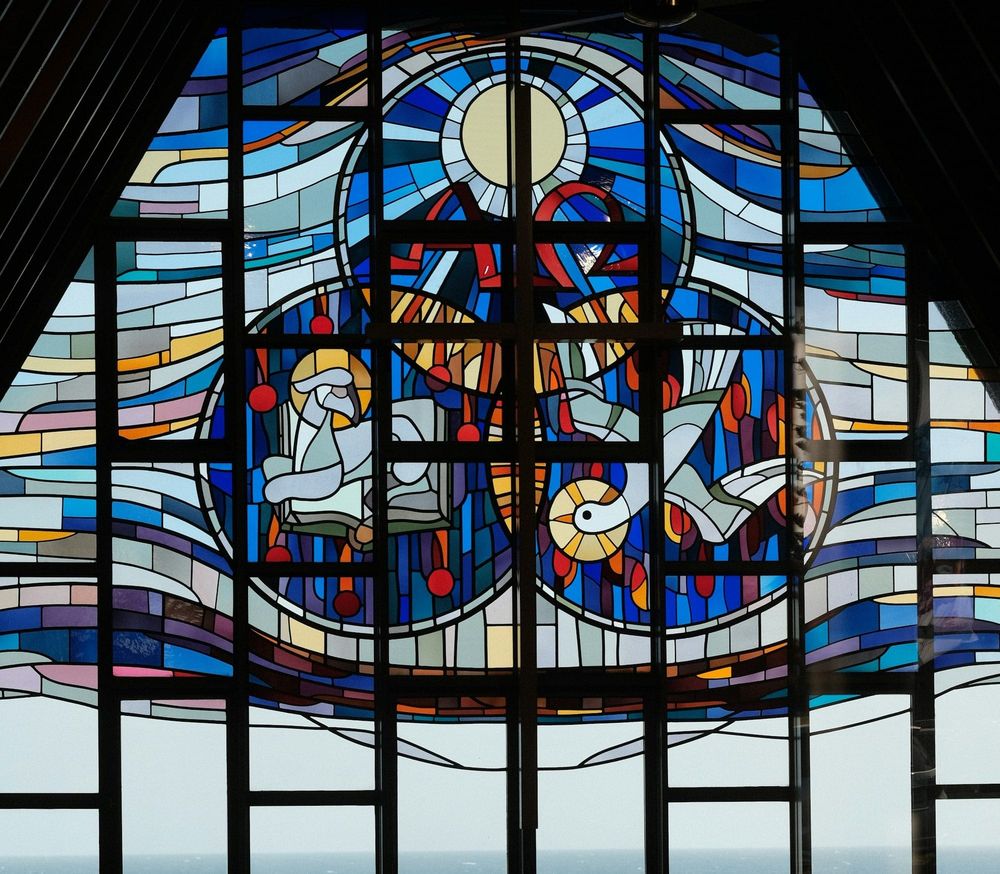
God as Sustainer - Provider
The purpose of divine provision is never merely personal comfort. Deuteronomy 8:10 calls the provided-for to bless the LORD; Psalm 104 turns provision into praise; 2 Corinthians 9:11 declares that God's supply produces thanksgiving to God.

Tags: God/God-as-Sustainer, God/Nature-Attributes-of-God, God/Names-of-God, Faith-Trust/The-Nature-of-Faith, Faith-Trust/Doubt-Unbelief, Prayer/Types-of-Prayer, Suffering-Trials/Hope-in-Suffering, Suffering-Trials/The-Purpose-of-Suffering, Worship, Worship/Worship-as-a-Lifestyle, Ethics-Morality/Money-Stewardship, Kingdom-of-God, Redemptive-History/Creation-Fall-Redemption-Restoration, Jesus-Christ/The-Life-Ministry-of-Jesus, Covenant, Redemptive-History, yahweh-jireh-lord-will, manna-daily-bread-heaven, water-rock, Faith-Trust/The-Purpose-of-Suffering, Scripture, forty-years-faithful-provision, elijah-brook-widow, lord-my-shepherd, god-provides-all-creation, opens-hand, strength-weary, new-every-morning, anxious, feeding-five-thousand, gods-witness-through-provision, spare-own-son, all-sufficiency-every-good, Jesus-Christ, my-god-will-supply, will-never-leave, casting-all-anxiety-him
"The eyes of all look to You, And You give them their food in due time. You open Your hand And satisfy the desire of every living thing."
— Psalm 145:15–16 (NASB)
The God who created all things does not abandon what He has made. Scripture's witness from Genesis to Revelation is consistent and clear: the Creator is also the Sustainer and Provider — the One who upholds, supplies, nourishes, and cares for every dimension of His creation. This doctrine is not peripheral; it is woven into the very fabric of biblical theology.
The distinction between creation and sustaining is important. Creation is God's act of bringing all things into existence from nothing (Genesis 1:1; Hebrews 11:3). Sustaining is God's ongoing act of upholding, preserving, and providing for what He has created. These two acts together reveal a God who is not the impersonal watchmaker of deism — who made the universe and stepped back — but the living, relational, ever-present LORD who actively governs and cares for His creation moment by moment. In Christ, "all things hold together" (Colossians 1:17); He "upholds all things by the word of His power" (Hebrews 1:3).
Dr. Martyn Lloyd-Jones, in Great Doctrines of the Bible, Vol. I [1], distinguishes ordinary from extraordinary providence: “in ordinary providence God works through second causes, in accordance with the laws which He has placed in nature. But in extraordinary providences, or miracles, God works immediately, directly, and without the secondary causes.” Whether God sustains through the ordinary rhythms of creation (rain, harvest, health) or through miraculous intervention (ravens feeding Elijah, manna in the wilderness), the Provider is always the same. Lloyd-Jones also specifically names Philippians 4:19 as an instance of divine providence: “My God shall supply all your need” is not an isolated promise but an expression of the universal providential care of God for His people.
God's provision extends across three dimensions in Scripture:
| Dimension | Description | Key Passages |
|---|---|---|
| Physical Provision | Food, water, clothing, shelter | Gen. 22:14; Ex. 16; Ps. 104:14–15; Matt. 6:25–34 |
| Spiritual Provision | Strength, guidance, peace, grace | Ps. 23; Isa. 40:28–31; Phil. 4:19; 2 Cor. 9:8 |
| Ultimate Provision | The gift of Christ for redemption | Rom. 8:31–32; John 6:35; Gen. 22:14 |
These dimensions are not separate — they are the unified expression of the character of a God whose very name announces His intent: יְהוָה יִרְאֶה (YHWH Yireh), "The LORD Will Provide" (Genesis 22:14).
Key Theological Affirmations
- God's provision is universal — He provides for all living things (Ps. 104:27–28; 145:15–16; Matt. 6:26; Acts 14:17)
- God's provision is personal — He knows the specific needs of each individual (Matt. 6:32; Phil. 4:19)
- God's provision is covenant-based — rooted in His faithfulness to His promises (Deut. 8:1–10; Lam. 3:22–23)
- God's provision is Christological — ultimately fulfilled and exemplified in Christ (John 6:35; Rom. 8:32)
- God's provision calls for faith and trust, not anxiety (Matt. 6:25–34; 1 Pet. 5:7)
Key Divine Names — God's Sustaining Identity
Before moving to specific passages, it is essential to understand the names and titles of God that express His sustaining and providing character. In the Hebrew tradition, names carry identity — they disclose the essential nature and purposes of the one who bears them.
### יְהוָה יִרְאֶה — YHWH Yireh — "The LORD Will Provide"
The name YHWH Yireh ("The LORD Will Provide" or "The LORD Will See") was first uttered by Abraham at the moment God provided a ram in place of Isaac. The root רָאָה (rāʾāh; BDB 906; HALOT 1161), "to see," carries in this context the sense of foreseeing and providing for a need. The name encapsulates the doctrine of providence: God sees the need before it is expressed and has already provided the means of its supply. This name becomes a permanent theological statement — "In the mount of the LORD it will be provided" — implying that the place where God meets His people in their greatest need is the place of His provision.
### יְהוָה רֹעִי — YHWH Roʿî — "The LORD is My Shepherd"
The image of God as shepherd (rōʿeh, from רָעָה, rāʿāh; BDB 944; HALOT 1238) is one of the richest relational metaphors in all of Scripture. The shepherd's role encompasses leading, feeding, protecting, guiding, and restoring. David's declaration "the LORD is my shepherd, I shall not want" is a comprehensive statement of trust in God's total provision. This divine shepherd-identity reaches its fulfillment in Jesus, who declares: "I am the good shepherd; the good shepherd lays down His life for the sheep" (John 10:11).
### אֵל שַׁדַּי — El Shaddai — "God Almighty" / "God All-Sufficient"
The name El Shaddai (BDB 994; HALOT 1421) is most likely derived from a root conveying "the Sufficient One" or "the Almighty One." It is the name by which God revealed Himself to the patriarchs as the God who is absolutely sufficient to fulfill every covenant promise — regardless of human impossibility (cf. Romans 4:17–21). It is a name that emphasizes God's capacity to provide what is humanly impossible. The connection between God's omnipotence and His provision is direct: because He is all-sufficient, He can provide all things.
Genesis 22:14 — Yahweh-Jireh: The LORD Will Provide
"Then they came to the place of which God had told him; and Abraham built the altar there and arranged the wood, and bound his son Isaac and laid him on the altar, on top of the wood. Abraham stretched out his hand and took the knife to slaughter his son. But the angel of the LORD called to him from heaven and said, 'Abraham, Abraham!' And he said, 'Here I am.' He said, 'Do not reach out your hand against the boy, and do nothing to him; for now I know that you fear God, since you have not withheld your son, your only son, from Me.' Then Abraham raised his eyes and looked, and behold, behind him a ram caught in the thicket by his horns; and Abraham went and took the ram and offered it up for a burnt offering in the place of his son. Abraham named that place The LORD Will Provide, as it is said to this day, 'In the mount of the LORD it will be provided.'"
Overview
Genesis 22 — the Akedah (the "binding" of Isaac) — is one of the most theologically charged narratives in the entire Bible. It is simultaneously the supreme test of Abraham's faith, the founding moment of the name YHWH Yireh, and one of the most powerful typological anticipations of the cross in all of Scripture. At its heart is the revelation of a God who sees the need and provides the sacrifice — not only for Abraham's moment of crisis, but ultimately for the crisis of all humanity.
Verse 8 — "God will provide for Himself the lamb"
When Isaac asks, "Where is the lamb for the burnt offering?" (Genesis 22:7), Abraham's answer — "God will provide for Himself the lamb for the burnt offering, my son" — is one of the most prophetically loaded statements in the Old Testament. Abraham speaks truer than he knows. His faith-statement becomes both the immediate answer to the crisis (the ram in the thicket, v. 13) and the ultimate answer to the human condition: God would provide, in Christ, the Lamb for the sin of the world (John 1:29; 1 Peter 1:18–19).
Victor Hamilton writes: "Abraham's answer to Isaac — 'God will see to the lamb' — is the key theological statement of the passage. It is, first, an expression of genuine faith in God's provision. But it reaches beyond the immediate situation to disclose the deepest logic of the biblical narrative: it is always God who provides the sacrifice" [2].
The verb יִרְאֶה (yirʾeh, "will provide/see") from רָאָה (rāʾāh; BDB 906; HALOT 1161) means literally "to see" but in this context carries the nuance of providential seeing — God perceives the need and acts. This is the origin of the divine name YHWH Yireh.
Verse 13 — "A ram caught in the thicket"
The ram — already present in the thicket before Abraham looked up — was not improvised in the moment. It was prepared in advance by God. This is the signature of divine providence: God's provision precedes the moment of need. The ram in the thicket becomes a permanent emblem of substitutionary provision — an animal provided by God, bearing the penalty in the place of the one who would have died. The New Testament makes the ultimate application explicit: "He who did not spare His own Son, but delivered Him over for us all, how will He not also with Him freely give us all things?" (Romans 8:32).
Kenneth Mathews notes: "The ram that God provided for Abraham prefigures the ultimate provision that God would make through His own Son. The mountain of Moriah — traditionally identified with Jerusalem — becomes the place where, centuries later, the final substitutionary sacrifice would be offered" [3].
Verse 14 — "YHWH Yireh... In the mount of the LORD it will be provided"
The name Abraham gives to the place — יְהוָה יִרְאֶה (YHWH Yireh, "The LORD Will Provide") — becomes a perpetual theological declaration embedded in the geography of Israel's story. The appended proverb, "In the mount of the LORD it will be provided," points forward: on this mountain, in this place, God provides for His people at the point of their greatest need. This foreshadows the cross, where on Calvary (in the same general region as Moriah) God provided His own Son as the ultimate sacrifice.
Exodus 16:1–18 — Manna: Daily Bread from Heaven
"Then the LORD said to Moses, 'Behold, I will rain bread from heaven for you; and the people shall go out and gather a day's portion every day, so that I may test them, whether or not they will walk in My instruction.'" (v. 4)
"Now the house of Israel named it manna, and it was like coriander seed, white, and its taste was like wafers with honey." (v. 31)
Overview
The provision of manna in the wilderness is one of the defining acts of God's sustaining grace in the entire Old Testament. For forty years, in a region incapable of supporting two million people, God rained down bread from heaven every morning — sufficient for each day, not to be hoarded or stored (except for the Sabbath portion). This event becomes a paradigmatic expression of divine provision, a theological touchstone that Jesus, the psalmists, and the apostolic writers return to repeatedly.
Verse 4 — "I will rain bread from heaven"
לֶחֶם מִן הַשָּׁמַיִם (leḥem min haššāmayim, "bread from heaven")
The word לֶחֶם (leḥem; BDB 537; HALOT 526), "bread" or "food," is the most basic word for sustenance in Hebrew. The phrase "bread from heaven" (leḥem min haššāmayim) establishes that this provision comes from the realm of God Himself — not from earth's natural resources, but from the divine storehouse above. Douglas Stuart notes: "The manna was not a naturally occurring substance that Israel stumbled upon. It was a direct, miraculous provision — bread from God's own realm, given precisely because Israel was in a place where earth could not supply what they needed" [4].
The theological purpose is stated explicitly: "so that I may test them, whether or not they will walk in My instruction." The provision of manna was simultaneously an act of grace and a school of discipleship. God withheld a surplus so that His people would learn to trust Him daily. The daily nature of provision is not God's limitation — it is God's pedagogy.
Verse 8 — The Lord Gives; He Hears
The manna and quail come in response to Israel's grumbling — not in response to their faith. This is critical: God's provision is rooted not in the worthiness of the recipients but in His own character of grace and compassion. Even when Israel murmured against Moses, God heard the complaint and provided. This establishes the pattern of divine generosity that runs through both Testaments: God provides not because we deserve it, but because of who He is (cf. Lamentations 3:22–23; Romans 5:8).
Verse 15 — "What is it?"
מָן (mān, "manna")
The word מָן (BDB 577; HALOT 601) is itself a question — "What is it?" or "What is this?" — preserved as the name for the substance. Israel did not even have a category for what God was giving them. The provision was so unprecedented, so outside the range of anything they had experienced, that the best they could do was name it after their own bewilderment. God's provision frequently transcends human categories and expectations: He gives "exceedingly abundantly beyond all that we ask or think" (Ephesians 3:20).
Deuteronomy 8:3 — The Theological Interpretation of Manna
The deepest meaning of the manna is given by Moses himself in Deuteronomy: "He humbled you and let you be hungry, and fed you with manna which you did not know, nor did your fathers know, that He might make you understand that man does not live by bread alone, but man lives by everything that proceeds out of the mouth of God." This is the verse Jesus quotes when tempted in the wilderness (Matthew 4:4), identifying Himself with Israel's wilderness experience and affirming that all true life — not merely physical but total human flourishing — flows from God's word. The manna was not just bread; it was a lesson in radical God-dependence.
Verse 18 — "So that there was no one who had too much and no one who had too little"
The manna in the wilderness operated according to an economy of sufficiency — an anticipation of the principle Paul applies in 2 Corinthians 9:8 (all sufficiency for every good work) and echoes in his description of the Macedonian church's generosity (2 Corinthians 8:15). God provides enough — not a self-indulgent surplus, and not an impoverishing deficit. His provision calibrates itself to genuine need. This principle confronts both the greed that hoards and the fear that doubts.
Exodus 17:1–7 — Water from the Rock
"The LORD said to Moses, 'Pass before the people and take with you some of the elders of Israel; and take in your hand your staff with which you struck the Nile, and go. Behold, I will stand before you there on the rock at Horeb; and you shall strike the rock, and water will come out of it, that the people may drink.' And Moses did so in the sight of the elders of Israel." (vv. 5–6)
Overview
Where the manna demonstrated God's provision of food, the water from the rock demonstrates His provision of life itself. Without water, the people would have died within days. Once again, God provides not through natural means but through direct miraculous intervention — and once again the setting is the wilderness, where human resources are exhausted and only God can supply.
Verse 6 — "I will stand before you there on the rock"
הִנְנִי עֹמֵד לְפָנֶיךָ שָׁם (hinĕnî ʿōmēd lĕpānêkā šām, "Behold, I will stand before you there")
This is an astonishing statement. God does not send His provision from a distance — He stations Himself at the point of need. The rock from which water flows is the very place where God stands. This is theologically significant: divine provision is not impersonal delivery but personal presence. God accompanies His provision.
The Apostle Paul draws out the full theological meaning in 1 Corinthians 10:4: "for they were drinking from a spiritual rock which followed them; and the rock was Christ." Paul identifies the sustaining presence in the wilderness — the source of life-giving water — as Christ Himself. The provision in the desert was Christological from the beginning.
The name Moses gives the place — מַסָּה (massāh, "testing") and מְרִיבָה (mĕrîbāh, "quarreling") — marks the double failure of Israel's faith: they tested God by demanding proof of His presence ("Is the LORD among us, or not?", v. 7). The irony is that the God whose presence they doubted was the very God standing on the rock before them. This becomes a warning in Psalm 95:8, Hebrews 3:7–11, and throughout the NT: do not harden your heart against the God who has proven His faithfulness.
Deuteronomy 8:1–10 — Forty Years of Faithful Provision
"You shall remember all the way which the LORD your God has led you in the wilderness these forty years, that He might humble you, testing you, to know what was in your heart, whether you would keep His commandments or not. He humbled you and let you be hungry, and fed you with manna which you did not know, nor did your fathers know, that He might make you understand that man does not live by bread alone, but man lives by everything that proceeds out of the mouth of God. Your clothing did not wear out on you, nor did your foot swell these forty years." (vv. 2–4)
Overview
Deuteronomy 8 is Moses' great retrospective sermon on God's provision in the wilderness — a sustained theological reflection on forty years of sustained sustaining. It is both a recollection and a warning: remember what God did, lest prosperity tempt you to forget Him. This passage is critical because it interprets the purpose of wilderness provision: it was not merely to keep Israel alive but to develop their character — to produce a generation that had learned to trust the word of God over the resources of the world.
Verse 2 — "That He might humble you, testing you"
עִנֹּתְךָ לְנַסֹּתְךָ (ʿinnōtĕkā lĕnassōtĕkā, "that He might humble you, testing you")
Two verbs define the dual purpose of the wilderness:
- עָנָה (ʿānāh; BDB 776; HALOT 853), "to humble, afflict" — the stripping away of self-reliance
- נָסָה (nāsāh; BDB 650; HALOT 702), "to test, prove" — the proving of what is truly in the heart
The wilderness was not a divine accident or punishment in itself — it was a curriculum. God designed the conditions of scarcity to expose and develop Israel's heart. Peter Craigie writes: "The wilderness became the classroom in which Israel learned the most important lesson of all: human beings are ultimately dependent not on their own resources, but on every word that comes from the mouth of God. The stripping away of natural supply was the creating of spiritual dependence" [5].
Verse 3 — "Man does not live by bread alone"
This verse is one of the most quoted in the entire Bible — by Jesus in the wilderness (Matthew 4:4; Luke 4:4), and by theologians across the centuries. The contrast is between לֶחֶם (leḥem, "bread") — physical sustenance — and כָּל מוֹצָא פִי יְהוָה (kol môṣāʾ pî YHWH, "everything that proceeds out of the mouth of the LORD"). Physical bread sustains the body; God's word sustains the whole person — body, soul, and spirit. Eugene Merrill observes: "This verse is not a denigration of physical needs — God was, after all, supplying the manna. Rather, it establishes the hierarchy of provision: the word of God is the ultimate sustaining force, and physical provision flows from and is subordinate to it" [6].
Verses 4 — "Your clothing did not wear out... nor did your foot swell"
This quiet detail reveals the comprehensive nature of God's sustaining care. Not just food and water — but clothing that did not deteriorate and bodies that did not break down under forty years of desert travel. God's provision extends to every mundane necessity of life. No need is too small for His attention. This is the Old Testament grounding for Jesus' teaching: "Your heavenly Father knows that you need all these things" (Matthew 6:32).
Verse 10 — "You shall bless the LORD your God"
The conclusion of God's provision is always the same in Scripture: blessing and praise of the Giver. The Hebrew בֵּרַכְתָּ (bēraktā, "you shall bless") from בָּרַךְ (bārak; BDB 138; HALOT 159) speaks of acknowledging and honoring God for what He has given. The receiver of provision is called to praise. This is the rhythm of the biblical life: need → prayer → provision → gratitude → worship.
1 Kings 17:1–16 — Elijah: The Brook and the Widow
"It shall be that you will drink of the brook, and I have commanded the ravens to provide for you there." (v. 4)
"For thus says the LORD God of Israel, 'The bowl of flour shall not be exhausted, nor shall the jar of oil be empty, until the day that the LORD sends rain on the face of the earth.'" (v. 14)
Overview
The two provision miracles in 1 Kings 17 — the ravens feeding Elijah at the brook Cherith (vv. 2–7) and the inexhaustible flour and oil for the widow of Zarephath (vv. 8–16) — stand together as one of the most dramatic demonstrations of God's sustaining provision in the historical books. Both occur during a time of severe famine brought on by Elijah's proclamation of drought. The backdrop of scarcity makes the provision all the more remarkable: when earth cannot supply, heaven intervenes.
Verses 4–6 — The Ravens
"It shall be that you will drink of the brook, and I have commanded the ravens to provide for you there... The ravens brought him bread and meat in the morning and bread and meat in the evening, and he would drink from the brook."
צִוִּיתִי (ṣiwwîtî, "I have commanded")
The word צָוָה (ṣāwāh; BDB 845; HALOT 1017), "to command, charge," is the same verb used when God commands the elements of creation to serve His purposes (cf. Psalm 33:9). God does not merely invite the ravens — He commands them. This reveals the breadth of God's sovereign authority over the created order in service of His people's provision: birds obey Him, just as waters, winds, and bread from heaven respond to His command. Paul House notes: "The raven episode is a deliberate demonstration that God's care for His servant operates through the full spectrum of creation. No agent is too unexpected, no means too unconventional, for the God who sustains His servant" [7].
The ravens themselves carry theological irony: ravens were unclean birds under the Mosaic law (Leviticus 11:15), yet God uses them as His provision agents. Divine provision does not conform to human religious expectations of propriety. God is not limited by categories that humans assign.
Verses 13–16 — The Inexhaustible Flour and Oil
"For thus says the LORD God of Israel, 'The bowl of flour shall not be exhausted, nor shall the jar of oil be empty, until the day that the LORD sends rain on the face of the earth.'"
לֹא תִכְלֶה (lōʾ tikleh, "shall not be exhausted") from כָּלָה (kālāh; BDB 477; HALOT 477), "to come to an end, be depleted." The divine promise is a negation of depletion: what God sustains, He sustains completely. The widow's resources, in human reckoning, were sufficient for one final meal. God's word transformed those resources into a perpetual supply. The miracle was not a one-time spectacular event — it was the quiet, daily sustaining of an otherwise-exhausted supply.
Jesus references this miracle in Luke 4:25–26 as an example of God's grace extending beyond the boundaries of Israel — to a Gentile widow in Sidon. The provision at Zarephath foreshadows the universality of God's sustaining grace that the gospel announces.
Psalm 23 — The LORD Is My Shepherd
"The LORD is my shepherd, I shall not want. He makes me lie down in green pastures; He leads me beside quiet waters. He restores my soul; He guides me in the paths of righteousness For His name's sake. Even though I walk through the valley of the shadow of death, I fear no evil, for You are with me; Your rod and Your staff, they comfort me. You prepare a table before me in the presence of my enemies; You have anointed my head with oil; My cup overflows. Surely goodness and lovingkindness will follow me all the days of my life, And I will dwell in the house of the LORD forever."
Overview
Psalm 23 is perhaps the most beloved and most quoted passage in all of Scripture on the theme of God's sustaining provision. In six verses, David moves through images of physical provision (green pastures, quiet waters), spiritual restoration (restoring soul, paths of righteousness), protection through danger (valley of the shadow of death), honor before enemies (a prepared table), and eternal security (dwelling in God's house forever). The psalm is structured around the central metaphor of the shepherd — the most intimate image of caring provision in the ancient world.
Verse 1 — "The LORD Is My Shepherd, I Shall Not Want"
יְהוָה רֹעִי (YHWH rōʿî, "The LORD is my shepherd")
The shepherd metaphor is far richer in its ancient context than modern readers typically appreciate. A shepherd in the ancient Near East was responsible for every dimension of a sheep's existence — finding pasture, securing water, protecting from predators, tending wounds, guiding the flock, and counting every sheep at day's end. To say "the LORD is my shepherd" is to entrust the entirety of one's life — every need, every danger, every tomorrow — into God's personal, attentive, skilled care.
רָאָה (rāʾāh; BDB 944; HALOT 1238), the verb "to shepherd" or "to tend," is the same root behind YHWH Yireh ("The LORD Will See/Provide"). The shepherd sees the flock — not with a distant or distracted glance but with focused, caring attention.
לֹא אֶחְסָר (lōʾ ʾeḥsār, "I shall not want")
From חָסֵר (ḥāsēr; BDB 341; HALOT 330), "to lack, be in need of." The negative declaration — "I shall not lack anything" — is not a claim that the believer will experience no hardship, but a theological confession that under the care of this Shepherd, nothing truly needed will be withheld. Allen Ross writes: "The statement 'I shall not want' is not a claim of personal comfort but a theological declaration of covenant sufficiency. Under the care of YHWH, no genuine need will go unmet. The confession anticipates need but trusts the Shepherd to meet it" [8].
A.W. Tozer (1897–1963), meditating on Psalm 23 in The Pursuit of God (ch. 1), writes: "Before the hill I cry was heard in heaven, before the prayer was formed on my lips, the Shepherd had already known my need and gone before me to prepare the way. The soul that knows God as its Shepherd lacks nothing that the Shepherd’s wisdom deems needful." Tozer identifies the Shepherd-relationship as the most intimate possible description of God’s provision — not impersonal providence but personal, watchful, loving care that anticipates every need before it is expressed. (CCEL: Tozer, The Pursuit of God)
The New Testament's fulfillment of this declaration comes from Jesus Himself: "I am the good shepherd; the good shepherd lays down His life for the sheep" (John 10:11) and "My God will supply all your needs according to His riches in glory in Christ Jesus" (Philippians 4:19).
Verse 2 — "He Makes Me Lie Down in Green Pastures"
בִּנְאוֹת דֶּשֶׁא (binĕʾôt dešeʾ, "in green pastures")
The word דֶּשֶׁא (dešeʾ; BDB 206; HALOT 229) refers to tender, fresh vegetation — young, lush, nourishing grass. Sheep do not rest on their own; a shepherd must make them lie down — which requires the sheep to be free of fear, free from hunger, free from conflict within the flock, and free from parasites. The very ability of the sheep to rest is itself a gift of the shepherd's care. God does not merely provide food — He creates the conditions for rest and nourishment.
עַל מֵי מְנֻחוֹת (ʿal mê mĕnûḥôt, "beside quiet waters")
מְנֻחָה (mĕnûḥāh; BDB 629; HALOT 600), "rest, resting place, calm." Sheep will not drink from rushing, turbulent water. The shepherd leads them to still waters. This is a picture of God's provision calibrated to the nature of the recipient: He does not force His provision upon us with overwhelming force, but leads us gently to places where we can receive what He gives.
Verse 3 — "He Restores My Soul"
יְשׁוֹבֵב נַפְשִׁי (yĕšôbēb napšî, "He restores my soul")
The verb שׁוּב (šûb; BDB 996; HALOT 1427), "to return, restore," in the Polel form (intensive) means to bring back, revive, refresh. The soul (nepeš; BDB 659; HALOT 712) is the whole person — the entirety of one's inner being. A sheep that has become exhausted, injured, lost, or "cast" (lying on its back and unable to right itself) must be restored by the shepherd's direct intervention. In the same way, God actively restores what is depleted, exhausted, or broken in His people. This is not passive neglect followed by occasional intervention — it is continuous, watchful care. Cf. Isaiah 40:31: "Those who wait for the LORD will gain new strength."
Verse 4 — "Even Though I Walk Through the Valley of the Shadow of Death"
גֵּיא צַלְמָוֶת (gêʾ ṣalmāwet, "the valley of the shadow of death")
The compound noun צַלְמָוֶת (ṣalmāwet; BDB 853; HALOT 1029) combines shadow (ṣēl) and death (māwet), painting an image of the deepest, most threatening darkness. The crucial point is the verb: "Even though I walk through" — the Hebrew does not say the psalmist is stopped or destroyed in the valley, but that he walks through it. God's sustaining presence does not always remove the valley — it accompanies His people through it.
The shift from third person ("He leads me," "He guides me") to second person ("You are with me") in this verse is emotionally significant: when the darkness deepens, the relationship becomes more immediate and intimate. In the valley, God is not about us but with us. Cf. Isaiah 43:2: "When you pass through the waters, I will be with you."
שִׁבְטְךָ וּמִשְׁעַנְתֶּךָ (šibṭĕkā ûmišʿantekā, "Your rod and Your staff")
The rod (šēbeṭ; BDB 986; HALOT 1384) was used for protection from predators; the staff (mišʿenet; BDB 1044; HALOT 651) was used for guiding and supporting the flock. Together they represent the full range of the shepherd's care: protection from external threat and guidance through the journey. Peter Craigie [9] observes: "The rod and staff are not instruments of punishment but of pastoral care. Their presence is itself a source of comfort — they are the tangible signs of the shepherd's active, protective presence."
Verse 5 — "You Prepare a Table Before Me"
תַּעֲרֹךְ לְפָנַי שֻׁלְחָן (taʿărōk lĕpānay šulḥān, "You prepare a table before me")
The metaphor shifts here from shepherd to host. God is now pictured as the generous Host who prepares a feast — not in a place of safety, but "in the presence of my enemies." The table set in enemy territory is a statement of God's sovereign confidence: His provision is so complete, His care so encompassing, that He can spread a banquet for His guest even while opponents look on powerlessly. This picture reaches its fullest expression in the Lord's Supper — the table that the risen Christ prepares for His people in the midst of a hostile world (Luke 22:19–20; Revelation 19:9).
Verse 6 — "Surely Goodness and Lovingkindness Will Follow Me"
חֶסֶד (ḥesed, "lovingkindness/steadfast love")
This is one of the most theologically rich words in the entire Hebrew Bible. חֶסֶד (BDB 338; HALOT 336) denotes the loyal, covenant love that God pledges to His people — a love that is not conditional on performance but flows from the character and commitment of the Covenant Lord. Psalm 23:6 closes with a declaration that this ḥesed does not merely accompany the psalmist for a season but will "follow" (rādap, "pursue") him all the days of his life. God's loyal love is not passive — it pursues His people. Cf. Lamentations 3:22–23 and Romans 8:38–39.
Psalm 104:14–28 — God Provides for All His Creation
"He causes the grass to grow for the cattle, And vegetation for the labor of man, So that he may bring forth food from the earth, And wine which makes man's heart glad, So that he may make his face glisten with oil, And food which sustains man's heart." (vv. 14–15)
"They all wait for You To give them their food in due season. You give to them, they gather it up; You open Your hand, they are satisfied with good." (vv. 27–28)
Overview
Psalm 104 is the great creation-praise hymn of the Old Testament, and its central movement is the picture of God as the universal Provider — sustaining every creature in every ecosystem. From cattle to ravens, from the cedars of Lebanon to the tiny creatures of the sea, God provides the conditions for life and the sustenance to maintain it. The psalm reveals that God's role as Sustainer is not limited to His covenant people but extends to the entire scope of the created order.
Verses 14–15 — "He Causes the Grass to Grow"
מַצְמִיחַ חָצִיר לַבְּהֵמָה (maṣmîaḥ ḥāṣîr labbĕhēmāh, "He causes the grass to grow for the cattle")
The participial form מַצְמִיחַ (from צָמַח, ṣāmaḥ; BDB 855; HALOT 1040, "to sprout, spring up") indicates ongoing, continuous activity. God does not cause grass to grow once and step back — He is the ever-active, ever-present source of the natural processes by which creation is sustained. The connection between God's sustaining activity and the visible processes of nature is direct: what appears to be "nature" is, at its source, God's continuous creative-sustaining action.
The progression from cattle (v. 14a) to agricultural labor and human needs (vv. 14b–15) reveals the comprehensive scope of divine provision: God cares for the whole food chain, from the animals that do not work to the human beings who work the ground. This is the theological foundation for Jesus' argument in Matthew 6:26: "Look at the birds of the sky, that they do not sow, nor reap nor gather into barns, and yet your heavenly Father feeds them."
Verses 27–28 — "You Open Your Hand, They Are Satisfied with Good"
תִּפְתַּח יָדְךָ (tiptaḥ yādĕkā, "You open Your hand")
This powerful image — God opening His hand — is the same expression used in Psalm 145:16. It conveys generous, deliberate liberality: the open hand is the posture of giving, as opposed to the closed fist of withholding. God's sustaining provision flows from a deliberately, freely opened hand. The entire created order waits on this one gesture.
יִשְׂבְּעוּן טוֹב (yiśbĕʿûn ṭôb, "they are satisfied with good")
The verb שָׂבַע (śābaʿ; BDB 959; HALOT 1302), "to be satisfied, filled," speaks of complete sufficiency — not merely survival but genuine satisfaction. God's provision is not stingy or minimalist; it satisfies. The word טוֹב (ṭôb, "good") recalls the creation narrative (Genesis 1:31) — God provides with the same quality with which He creates: good.
Psalm 145:13–16 — He Opens His Hand
"Your kingdom is an everlasting kingdom, And Your dominion endures throughout all generations. The LORD is faithful in all His words And kind in all His deeds. The LORD supports all who fall And raises up all who are bowed down. The eyes of all look to You, And You give them their food in due time. You open Your hand And satisfy the desire of every living thing."
Overview
Psalm 145 is an acrostic hymn of praise to God's greatness, goodness, and faithfulness. The passage here stands at its theological center: God's kingdom rule is expressed not primarily through military power or political dominance but through faithful, generous provision for every living creature. The God of the universe opens His hand to satisfy the needs of creation.
Verse 13 — "The LORD Is Faithful in All His Words"
נֶאֱמָן יְהוָה בְּכָל דְּבָרָיו (neʾĕmān YHWH bĕkol dĕbārāyw, "The LORD is faithful in all His words")
The word נֶאֱמָן (neʾĕmān; BDB 52; HALOT 64), from the root אָמַן (ʾāman) — the root of our word "amen" — means "trustworthy, reliable, faithful." God's provision is not hit-or-miss; it flows from a character of absolute reliability. What He has promised, He performs. What He has spoken, He does. The entire foundation of trust in God's provision rests on this: He is faithful in all His words. Cf. Lamentations 3:23: "Great is Your faithfulness."
Verses 15–16 — "The Eyes of All Look to You"
עֵינֵי כֹל אֵלֶיךָ יְשַׂבֵּרוּ (ʿênê kol ʾēleykā yĕśabbērû, "The eyes of all look to You")
The verb שָׂבַר (śābar; BDB 960; HALOT 1302), "to wait, hope, look expectantly," pictures the posture of all living things before God: eyes upward, expectant, trusting. The entire created order is, in a sense, always looking to God for its sustenance. This is what sustaining providence means — not that God wound up the world and it runs on its own, but that every breath, every meal, every moment of life involves creatures actively dependent on the One who gives. Allen Ross observes: "The posture of 'looking to God' is the universal condition of all creatures. Whether they know it or not, every living being depends on God for every moment of its existence. The psalm simply makes visible what is always true" [10].
פּוֹתֵחַ אֶת יָדֶךָ (pôtēaḥ ʾet yādekā, "You open Your hand")
This image of the open hand is one of the most beautiful in all of Scripture. The open hand is the posture of generous, unhurried giving — as opposed to the reluctant fist that yields only under pressure. God's provision is characterized by willing generosity. He is not coerced into providing; He opens His hand — freely, gladly, consistently. Paul echoes this in 2 Corinthians 9:8: God is able to make all grace abound — the open hand of Psalm 145 becomes the abounding grace of the New Covenant.
Isaiah 40:28–31 — Strength for the Weary
"Do you not know? Have you not heard? The Everlasting God, the LORD, the Creator of the ends of the earth Does not become weary or tired. His understanding is inscrutable. He gives strength to the weary, And to him who lacks might He increases power. Though youths grow weary and tired, And vigorous young men stumble badly, Yet those who wait for the LORD Will gain new strength; They will mount up with wings like eagles, They will run and not get tired, They will walk and not become weary."
Overview
Isaiah 40:28–31 is the capstone of the great creation-comfort chapter addressed to Israel in exile. Having established God's incomparable greatness as Creator (vv. 12–27), the prophet now applies that greatness to the personal, sustaining provision of strength for the weary. The argument is: because God is the inexhaustible Creator, He is also the inexhaustible Sustainer of those who trust in Him.
Verse 28 — "He Does Not Become Weary or Tired"
לֹא יִיעַף וְלֹא יִיגָע (lōʾ yîʿap wĕlōʾ yîgāʿ, "He does not become weary or tired")
Both verbs — יָעַף (yāʿap; BDB 419; HALOT 421, "to be faint, weary") and יָגַע (yāgaʿ; BDB 388; HALOT 386, "to toil, be exhausted") — describe the terminal depletion of finite resources. Humans grow weary and collapse. Even the strongest youths stumble (v. 30). But God has no limit, no ceiling, no capacity for depletion. His energy is inexhaustible — infinite. John Oswalt writes: "The contrast between God's inexhaustibility and human exhaustion is the very foundation of the passage's pastoral argument. The God who never grows faint is precisely the One qualified to give strength to those who do. He cannot give what He does not possess; because His supply is infinite, so is His capacity to give" [11].
Verse 29 — "He Gives Strength to the Weary"
נֹתֵן לַיָּעֵף כֹּחַ (nôtēn layyāʿēp kōaḥ, "He gives strength to the weary")
כֹּחַ (kōaḥ; BDB 470; HALOT 470), "strength, power, capacity." The participle נֹתֵן (nôtēn, "He gives") is present-continuous: this is not an occasional divine gift but an ongoing, present-tense provision. God is continuously giving strength to the weary. And to those who have no might of their own — וּלְאֵין אוֹנִים עָצְמָה יַרְבֶּה (ûlĕʾên ʾônîm ʿāṣmāh yarbeh, "to him who has no might He increases power") — He provides not a supplement to existing strength but a replacement for what is entirely absent. This is divine provision at its most radical: not adding to what people have, but supplying from the outside what they have completely lost. Gary Smith observes: "The exiles had nothing left — no strength, no resources, no hope. Isaiah announces that this is precisely the condition in which God's power is most operative. His strength is perfected in human emptiness" [12]. Cf. 2 Corinthians 12:9–10: "My grace is sufficient for you, for power is perfected in weakness."
Verse 31 — "Those Who Wait for the LORD Will Gain New Strength"
וְקוֹיֵ יְהוָה יַחֲלִיפוּ כֹחַ (wĕqôwê YHWH yaḥălîpû kōaḥ, "Those who wait for the LORD will gain new strength")
The verb קָוָה (qāwāh; BDB 875; HALOT 1082), "to wait, hope, look for," is the same root used in Psalm 145:15 ("look to You"). It describes an active, expectant, trusting orientation toward God — not passive resignation but deliberate, hopeful dependence. יַחֲלִיפוּ (yaḥălîpû, "will gain new strength/renew") from חָלַף (ḥālap; BDB 322; HALOT 318) means "to change, exchange, renew." The imagery is of exchanging one's depleted strength for God's inexhaustible strength — as a traveler might exchange worn-out sandals for new ones.
The three expressions of renewed strength move from the extraordinary to the ordinary — from soaring like eagles (miraculous moments), to running (sustained effort), to walking (the faithful, unglamorous daily plod). The greatest promise is the last: "they will walk and not become weary." Ordinary faithfulness, sustained over a lifetime, is the most profound expression of God's sustaining grace.
Lamentations 3:22–23 — New Every Morning
"The LORD's acts of mercy indeed do not end, For His compassions do not fail. They are new every morning; Great is Your faithfulness."
Overview
These two verses stand at the very center of the book of Lamentations — a book of raw, agonized grief over the destruction of Jerusalem. Their placement is therefore staggering: in the deepest darkness, in the ruins of everything, the prophet reaches the bedrock of God's character and finds that it holds. This is not triumphalistic denial of suffering — the same chapter is filled with lament (3:1–18) — but a faith-declaration wrung out of the worst human circumstances imaginable. God's mercies sustain even when everything else has failed.
Verse 22 — "His Compassions Do Not Fail"
חַסְדֵּי יְהוָה (ḥasdê YHWH, "the LORD's acts of mercy/lovingkindness")
The plural חַסְדֵּי (ḥasdê) speaks of God's ḥesed — His loyal, covenant love — expressed in multiple, repeated acts of mercy. The declaration לֹא תָמּוּ (lōʾ tāmmû, "do not end/cease") from תָּמַם (tāmam; BDB 1070; HALOT 1744, "to be finished, come to an end") says that these mercies have a property unique among all created things: they do not run out. Human compassion is limited, finite, exhaustible. God's covenant mercy is inexhaustible.
רַחֲמִים (raḥămîm, "compassions") from רָחַם (rāḥam; BDB 933; HALOT 1218), "womb-love" — the tender, instinctive love of a mother for the child of her own body. God's compassion is not cold, professional care but visceral, intimate, maternal tenderness (cf. Isaiah 49:15: "Can a woman forget her nursing child... even these may forget, but I will not forget you").
Verse 23 — "They Are New Every Morning"
חֲדָשִׁים לַבְּקָרִים (ḥădāšîm labĕqārîm, "new every morning")
The word חָדָשׁ (ḥādāš; BDB 294; HALOT 294), "new, fresh," declares that God's mercies do not carry over from yesterday diminished by the demands of the day before. Each morning they are fresh — as inexhaustible on day one thousand as on day one. This is the Old Testament foundation for the Lord's Prayer: "Give us this day our daily bread" (Matthew 6:11). God's sustaining provision is calibrated to the rhythm of each day — new every morning.
גָּדוֹל אֱמוּנָתֶךָ (gādôl ʾĕmûnātekā, "Great is Your faithfulness")
אֱמוּנָה (ʾĕmûnāh; BDB 53; HALOT 65), "faithfulness, steadfastness, reliability." God's provision is not random or sporadic — it is faithful. The declaration is personal ("Your faithfulness") and absolute ("great"). This is the verse that inspired Thomas Chisholm's beloved hymn "Great Is Thy Faithfulness" — itself a testament to how this declaration of God's sustaining faithfulness has sustained believers across centuries of hardship.
Matthew 6:25–34 — Do Not Be Anxious
"For this reason I say to you, do not be worried about your life, as to what you will eat or what you will drink; nor for your body, as to what you will put on. Is life not more than food, and the body more than clothing? Look at the birds of the sky, that they do not sow, nor reap nor gather into barns, and yet your heavenly Father feeds them. Are you not worth much more than they?... But seek first His kingdom and His righteousness, and all these things will be provided to you." (vv. 25–26, 33)
Overview
Matthew 6:25–34 is Jesus' most extensive teaching on anxiety and divine provision. It is set within the Sermon on the Mount, immediately after His teaching on treasures and masters (6:19–24). The argument flows directly: if your heart is fixed on God as your true Treasure and Master, then anxiety about physical needs becomes logically inconsistent — because the God who is your Treasure is also the God who provides for every bird of the sky.
Verse 25 — "Do Not Be Worried About Your Life"
μὴ μεριμνᾶτε (mē merimnaté, "do not be worried/anxious")
The verb μεριμνάω (merimnaō; BDAG 632) means "to be anxious, to worry, to be pulled in different directions" — the word itself conveys fragmentation, a mind divided and pulled apart by multiple fears. The present imperative with the negative particle is a command to stop an ongoing action: "Stop being anxious." This is not a dismissal of genuine difficulty; it is a call to redirect the energies of anxiety toward trust in the Father's care. R.T. France writes: "The prohibition of anxiety is not an appeal to optimism or to stoic self-sufficiency. It is grounded entirely in the character of the Father. The reason not to worry is not that things will necessarily turn out well by natural circumstances, but that the One who provides for birds provides even more certainly for His children" [13].
John Wesley (1703–1791) preached on this passage in Sermon 77, "Spiritual Worship" (1780), applying Matthew 6:25–34 to the practice of daily trust: "Our Lord's command is plain: Take no anxious thought. Not that He forbids reasonable caution and diligence in the use of means; but the anxious, tormenting care which springs from unbelief, from not trusting the Father who knoweth that we have need of all these things. He who trusts God fully will find that God provides fully." Wesley consistently taught that anxiety was a practical failure of faith in the God who had demonstrated His care in creation and covenant. (CCEL: John Wesley, Sermons on Several Occasions)
Verses 26, 28–29 — The Birds and the Lilies
Jesus points to two categories of created beings that receive God's provision without anxiety:
The birds (πετεινὰ τοῦ οὐρανοῦ, "birds of the sky") — who neither sow, reap, nor gather into barns — are "fed" (τρέφει; BDAG 1017, "to nourish, provide food for") by the heavenly Father. The present tense of trefei indicates continuous, ongoing provision.
The lilies of the field — which neither labor nor spin — are clothed by God in splendor exceeding Solomon's glory. τοῦ ἀγροῦ (tou agrou, "of the field") — these are wildflowers, not cultivated plants. Even uncultivated creation that has no farmer to tend it is clothed by God's provision.
The argument is a fortiori (from lesser to greater): if God provides so carefully for creatures of so much lesser worth, "Are you not worth much more than they?" (Matthew 6:26). The logic of God's provision is calibrated to the worth of the recipient, and Jesus declares that His people are worth much more than birds and flowers. D.A. Hagner comments: "The argument from nature is not an appeal to observe a general principle of natural provision. It is an appeal to recognize the personal, attentive, evaluative care of the heavenly Father who assigns worth and provides accordingly" [14].
Verse 32 — "Your Heavenly Father Knows"
οἶδεν γὰρ ὁ πατὴρ ὑμῶν ὁ οὐράνιος (oiden gar ho patēr hymōn ho ouranios, "for your heavenly Father knows")
The verb οἶδεν (oiden, from oida; BDAG 693, "to know, be aware of") in the perfect form conveys complete, settled knowledge — not progressive learning but absolute awareness. God already knows what His people need — before they ask, before they feel the lack, before they articulate the need. This is the New Testament exposition of יִרְאֶה (YHWH Yireh): the God who sees in advance provides in advance. The designation "heavenly Father" (πατὴρ ὑμῶν ὁ οὐράνιος) is theologically loaded: the Creator of the universe has taken the role of Father to His people, which entails both infinite capacity and personal concern.
Verse 33 — "But Seek First His Kingdom and His Righteousness"
ζητεῖτε δὲ πρῶτον τὴν βασιλείαν (zēteite de prōton tēn basileian, "But seek first His kingdom")
This is the pivotal verse of the passage. The solution to anxiety is not simply trusting God in the abstract — it is a reorientation of life's primary pursuit. ζητεῖτε (zēteite; BDAG 428, "to seek, strive for") as a present imperative denotes a continuous, settled orientation of life: keep seeking, as your primary activity, the Kingdom of God. The promise — "all these things will be added to you" (prostethēsetai, "will be added as a supplement") — positions physical provision as the overflow of Kingdom-pursuit, not the object of anxious striving. The one who is occupied with God's Kingdom finds that physical needs are supplied alongside. Cf. Psalm 37:25: "I have been young and now I am old, Yet I have not seen the righteous forsaken Or his descendants begging bread."
Matthew 14:13–21 — Feeding the Five Thousand
"When it was evening, the disciples came to Him and said, 'This place is desolate and the hour is already past; so send the crowds away, that they may go into the villages and buy food for themselves.' But Jesus said to them, 'They do not need to go away; you give them something to eat!' They said to Him, 'We have here only five loaves and two fish.' And He said, 'Bring them here to Me.' Ordering the people to sit down on the grass, He took the five loaves and the two fish, and looking up toward heaven, He blessed the food, and breaking the loaves He gave them to the disciples, and the disciples gave them to the crowds, and they all ate and were satisfied."
Overview
The feeding of the five thousand is the only miracle of Jesus recorded in all four Gospels (Matthew 14:13–21; Mark 6:31–44; Luke 9:10–17; John 6:1–14). Its prominence in the Gospel tradition signals its importance as a revelation of who Jesus is: the incarnate God who sustains and provides, now present among His people in human flesh. The miracle deliberately echoes the manna in the wilderness (Exodus 16) and God's provision through Elisha (2 Kings 4:42–44), identifying Jesus as the fulfillment and surpassing of all prior provision narratives.
Verse 19 — "He Blessed the Food, and Breaking the Loaves"
εὐλόγησεν (eulogēsen, "He blessed")
The verb εὐλογέω (eulogeō; BDAG 408, "to bless, speak well of, give thanks for") reflects the Jewish berakah — the blessing prayer before a meal that acknowledges God as the source of provision. Jesus does not create bread through a magical incantation; He gives thanks to the Father, acknowledging that all provision flows from God. D.A. Hagner writes: "The significance of Jesus looking up to heaven and blessing the food is that He positions Himself as the one through whom the Father's provision flows to the people. The posture of prayer is the posture of the one who is the channel of God's sustaining grace" [15].
Verse 20 — "They All Ate and Were Satisfied"
ἐχορτάσθησαν (echortasthēsan*, "they were satisfied/filled")
From χορτάζω (chortazō; BDAG 1087, "to fill, satisfy with food") — the same verb used in Matthew 5:6 ("Blessed are those who hunger and thirst for righteousness, for they shall be satisfied"). The crowd of five thousand did not merely receive a token morsel — they were fully satisfied. There were even twelve baskets of fragments left over. God's provision through Christ does not meet needs minimally — it overflows.
The twelve baskets of leftovers (περισσεῦον, "abundance, surplus") is significant: one basket for each tribe of Israel, symbolizing that Christ's provision is sufficient for the whole people of God. John 6:35 draws the ultimate application: "I am the bread of life; the one who comes to Me will not be hungry, and the one who believes in Me will never be thirsty." Jesus is not merely the one who provides bread — He is the Bread of Life, the ultimate, eternal fulfillment of every hunger.
Acts 14:17 — God's Witness Through Provision
"'Men, why are you doing these things? We are also men of the same nature as you, and preach the gospel to you that you should turn from these vain things to a living God, who made the heaven and the earth and the sea and all that is in them. In the generations gone by He permitted all the nations to go their own ways; and yet He did not leave Himself without witness, in that He did good and gave you rains from heaven and fruitful seasons, satisfying your hearts with food and gladness.'"
Overview
Paul's speech at Lystra is addressed to Gentiles who had no background in Jewish Scripture. His appeal therefore begins not with Moses but with creation and providence: the God who made all things has not been invisible — He has been witnessing to Himself through the reliable goodness of nature's provision. Rain, harvest, food, and gladness are not merely natural phenomena; they are divine testimonies.
Verse 17 — "He Did Not Leave Himself Without Witness"
οὐκ ἀμάρτυρον αὑτὸν ἀφῆκεν (ouk amartyron hauton aphēken, "He did not leave Himself without witness")
The adjective ἀμάρτυρος (amartyros; BDAG 53, "without witness, unattested") is a hapax legomenon in the New Testament — used only here. Paul's argument parallels Romans 1:19–20: God has not been silent. Through the rhythms of seasons, through the gift of rain, through the pleasure of food and the joy of harvest, God has been speaking — witnessing to His own goodness and provision. John Polhill writes: "Paul's appeal to natural providence is not a lesser form of revelation — it is the universal, foundational witness that undergirds all human accountability before God. Every meal, every harvest, every rainfall is a sermon in the language of provision" [16].
ἀγαθουργῶν (agathourgōn, "doing good") from ἀγαθουργέω (agathourgeo; BDAG 3, "to do good, benefit") — the present participle indicates God's continuous, ongoing benevolent activity in creation. He never stops doing good. εὐφροσύνης (euphrosynēs, "gladness"; BDAG 415) — the gladness that food brings is not a trivial secular pleasure but a gift of God, a sign of His goodness present in the most ordinary moments of life. Every shared meal is a token of divine generosity.
Romans 8:31–32 — He Who Did Not Spare His Own Son
"What then shall we say to these things? If God is for us, who is against us? He who did not spare His own Son, but delivered Him over for us all, how will He not also with Him freely give us all things?"
Overview
Romans 8:31–32 represents the ultimate argument for God's provision — an argument from the greatest gift to all subsequent gifts. Paul's logic is a masterful a fortiori argument: if God gave the most costly, most irreplaceable gift He possessed — His own Son — for our redemption, then every lesser provision is certain and assured. The cross is the supreme proof of God's will to provide.
Verse 31 — "If God Is for Us, Who Is Against Us?"
ὁ θεὸς ὑπὲρ ἡμῶν (ho theos hyper hēmōn, "God is for us")
The preposition ὑπέρ (hyper; BDAG 1030, "for, on behalf of, in support of") positions God as an active advocate — not a neutral observer but a committed champion of His people's wellbeing. Paul does not say God might be for us; the conditional "if" (εἰ) in Greek here functions as a first-class conditional — "since God is for us, which He is." Douglas Moo writes: "Paul's rhetorical question 'Who is against us?' is not naïve — he well knows that many things are against believers in this age. The point is that no opposition, however powerful, can ultimately overcome the God who is actively for us" [17].
Verse 32 — "How Will He Not Also with Him Freely Give Us All Things?"
ὅς γε τοῦ ἰδίου υἱοῦ οὐκ ἐφείσατο (hos ge tou idiou huiou ouk epheisato, "He who did not spare His own Son")
The verb φείδομαι (pheidomai; BDAG 1049, "to spare, hold back from") echoes the language of Genesis 22:16, where the angel says to Abraham: "you have not withheld your son, your only son." The deliberate verbal echo signals that God, the Provider who supplied the ram for Abraham, has now Himself supplied what Abraham only needed to intend: His own Son, offered for the sins of the world. The ram in the thicket becomes the Lamb of God.
πῶς οὐχὶ καὶ σὺν αὐτῷ τὰ πάντα ἡμῖν χαρίσεται (pōs ouchi kai syn autō ta panta hēmin charisetai, "how will He not also with Him freely give us all things?")
χαρίζομαι (charizomai; BDAG 1078, "to give freely, graciously grant") is derived from χάρις (charis, "grace"). Everything God gives beyond the cross is grace — freely and gladly given. The argument is unassailable: the God who did not withhold the gift that cost Him everything will certainly not withhold gifts that cost Him far less. Every provision — food, strength, guidance, comfort, peace — is assured by the logic of Calvary.
2 Corinthians 9:8–11 — All Sufficiency for Every Good Work
"And God is able to make all grace abound to you, so that always having all sufficiency in everything, you may have an abundance for every good deed; as it is written, 'He scattered abroad, he gave to the poor, His righteousness endures forever.' Now He who provides seed to the sower and bread for food will supply and multiply your seed for sowing and increase the harvest of your righteousness; you will be enriched in everything, for all liberality, which through us is producing thanksgiving to God."
Overview
Paul's teaching in 2 Corinthians 9 on generous giving is undergirded by a foundational theology of divine provision: the reason believers can give generously is that God is the inexhaustible Provider who will continue to supply all they need. Generosity is not a risk — it is a participation in the economy of a God who multiplies what is sown.
Verse 8 — "God Is Able to Make All Grace Abound"
δυνατεῖ δὲ ὁ θεὸς πᾶσαν χάριν περισσεῦσαι εἰς ὑμᾶς (dynatei de ho theos pasan charin perisseusai eis hymas, "God is able to make all grace abound to you")
The verb περισσεύω (perisseuō; BDAG 805, "to abound, overflow, be more than sufficient") is a powerful word of superabundance — not merely enough, but overflowing excess. The four occurrences of "all" (pasan, pantote, pasan, pan) in this verse are striking: all grace, always, all sufficiency, every good deed. Paul is describing the totality of God's provision — a provision so comprehensive that it leaves no need unaddressed and equips the believer for every good work.
αὐτάρκειαν (autarkeian, "sufficiency"; BDAG 152) — the word used in Greek philosophy for self-sufficiency, but here it speaks of a sufficiency that comes from God, enabling the believer to be, paradoxically, other-sufficiency — having enough to pour out for others. Paul Barnett writes: "The autarkeia Paul describes here is not self-generated stoic contentment — it is the God-given sufficiency that frees the believer from anxious hoarding and opens the hands for generous giving" [18].
Verses 10–11 — "He Who Provides Seed to the Sower"
Quoting and applying Isaiah 55:10, Paul identifies God as the One who provides seed (the resources for giving) and bread (provision for the giver's own sustenance). The two are held together: God does not provision the giver at the expense of the giver. He provides both — seed to sow and bread to eat. This is the practical outworking of Psalm 145:16: the open hand of God provides for both the giver and the gift. The goal (eis) of all this provision is thanksgiving to God (v. 11) — divine provision creates not pride in the giver but gratitude toward the Giver.
Philippians 4:19 — My God Will Supply All Your Needs
"And my God will supply all your needs according to His riches in glory in Christ Jesus."
Overview
This single verse is one of the most beloved and most cited promises in the New Testament. It is Paul's word of assurance to the Philippian church who had given sacrificially to support his ministry. In response to their generosity, Paul offers not merely gratitude but a theological guarantee: the God who has received your gift will supply all your needs from His own inexhaustible resources.
Key Words
πληρώσει (plērōsei, "will supply/fill")
From πληρόω (plēroō; BDAG 828, "to fill completely, supply fully, fulfill"). The future tense is a firm promise; the verb itself speaks of complete filling — not partial supply but full provision. Gordon Fee writes: "The verb plēroō carries the idea of filling to capacity. Paul is not promising that God will meet a minimum — he is promising that God will supply to the point of fullness. The Philippians need not fear that their generosity has created a deficit in their own lives; the God who is their Provider will fill what they have given out" [19].
Augustine of Hippo (354–430 AD) reflects on divine provision in Confessions X.29: "Our heart is restless until it rests in Thee... Thou strikest terror into us, for Thou art great; yet Thou carest for us with the tenderness of a Father... all my expectation is from Thee." For Augustine, the greatest provision of God is not food or clothing but God Himself — the One who fills the soul’s deepest hunger. This is the patristic understanding that grounds Philippians 4:19: God's supply operates according to His riches in glory — ultimately spiritual and relational, with material provision as its overflow. (CCEL: Augustine, Confessions)
πᾶσαν χρείαν ὑμῶν (pasan chreian hymōn, "all your needs")
χρεία (chreia; BDAG 1088, "need, necessity") — not desire or preference but genuine need. The promise is not that God will supply every want but every need — everything truly necessary for life and godliness. The all-encompassing "all" (pasan) leaves no category of genuine need outside the scope of God's provision.
κατὰ τὸ πλοῦτος αὐτοῦ ἐν δόξῃ (kata to ploutos autou en doxē, "according to His riches in glory")
The preposition κατά (kata) means "in accordance with" — not just "from" His riches but proportional to them. God does not provide out of a fixed, diminishing fund; He provides in proportion to His own infinite wealth. πλοῦτος (ploutos; BDAG 832, "riches, wealth") in the phrase "riches in glory" speaks of the inexhaustible resources of the divine glory itself — the very life and abundance of God. Fee observes: "The provision is 'according to' God's riches — calibrated to an infinite standard. The measure of God's supply is the measure of God's own glory" [20].
ἐν Χριστῷ Ἰησοῦ (en Christō Iēsou, "in Christ Jesus")
The provision flows through Christ — consistent with the Christological mediation of all God's gifts (Romans 8:32; Colossians 1:17; John 1:3). Christ is not only the ground of our redemption but the channel of our provision. To be in Christ is to be positioned within the flow of divine supply.
Hebrews 13:5–6 — I Will Never Leave You
"Make sure that your character is free from the love of money, being content with what you have; for He Himself has said, 'I WILL NEVER DESERT YOU, NOR WILL I EVER FORSAKE YOU,' so that we confidently say, 'THE LORD IS MY HELPER, I WILL NOT BE AFRAID. WHAT WILL MAN DO TO ME?'"
Overview
Hebrews 13:5–6 links the issue of contentment and financial anxiety to the direct promise of God's abiding presence. The argument is theological: the reason believers can be content with what they have is not that they are naturally satisfied with little, but that they have the permanent, covenant presence of God Himself — a presence that is the ultimate provision, surpassing all material supply.
Verse 5 — "Being Content with What You Have"
ἀρκούμενοι τοῖς παροῦσιν (arkoumenoi tois parousin, "being content with what you have")
The participle ἀρκέω (arkeō; BDAG 132, "to be sufficient, to be content, to be satisfied") denotes the satisfaction that comes from recognizing what is already present as sufficient. Contentment is not achieved by acquiring more but by recognizing the adequacy of what God has already provided. David Allen notes: "The command to contentment is not an appeal to stoic indifference to material things — the author is not suggesting that material needs don't matter. Rather, it is a call to anchor one's sense of security in the presence of God rather than the accumulation of wealth" [21].
The Covenantal Promise — "I Will Never Desert You"
The writer quotes a cluster of Old Testament promises (cf. Deuteronomy 31:6, 8; Joshua 1:5; Genesis 28:15) in the most emphatic possible form in Greek — five negative particles in a compressed statement: "I will never, by no means, desert you; I will never, by no means, ever forsake you." The compound negatives are intensified beyond normal Greek negation to produce the most emphatic possible assurance. William Lane writes: "The use of the double negative with the subjunctive is the strongest possible way to negate something in Greek. The writer intends the most absolute, unconditional, all-circumstances assurance of divine presence that language can convey" [22].
ἀνῇ (anē, "desert") from ἀνίημι (aniēmi; BDAG 77, "to let go, release, abandon") — God will never release His hold on His people.
ἐγκαταλίπω (egkatalipō; BDAG 273, "to forsake, abandon, leave behind") — God will never leave His people behind. He provides not merely goods — He provides Himself. His personal, covenantal presence is the ultimate form of divine sustaining.
1 Peter 5:7 — Casting All Your Anxiety on Him
"casting all your anxiety on Him, because He cares for you."
Overview
This verse is simultaneously the simplest and the most comprehensive statement of divine provision in the New Testament. It is set in the context of Peter's call to humble themselves under God's mighty hand (1 Peter 5:6) — the posture of receiving God's provision is humility, not self-sufficiency. The one who humbles himself under the mighty hand of God is the one who casts every burden onto that same hand.
"Casting All Your Anxiety"
ἐπιρίψαντες (epiripsantes, "casting")
From ἐπιρίπτω (epiriptō; BDAG 378, "to throw upon, cast onto"). The aorist participle suggests a decisive, once-for-all act — not a gradual surrender but a deliberate, active throwing of one's burdens onto God. The model is the language of Psalm 55:22 (LXX): "Cast your burden upon the LORD and He will sustain you" — the same Hebrew כּוּל (kûl; BDB 465; HALOT 465), "to sustain, support, bear the weight of," appears there, and the LXX connects it to this Petrine exhortation.
πᾶσαν τὴν μέριμναν (pasan tēn merimnان, "all your anxiety")
Πᾶσαν (pasan, "all") is comprehensive — no anxiety is too small or too large to cast upon God. Μέριμνα (merimna; BDAG 632) is the same word-family as Jesus' prohibition in Matthew 6:25. The anxieties Peter addresses range from the persecution context of his letter (vv. 8–9) to the daily concerns of ordinary life.
"Because He Cares for You"
ὅτι αὐτῷ μέλει περὶ ὑμῶν (hoti autō melei peri hymōn, "because He cares for you")
μέλει (melei, from μέλω; BDAG 627, "to be of concern to, to care for") — God is personally concerned about you. The word carries the sense of attentive interest — the cares of God's people are not beneath His notice. This is the personal, relational ground of all provision: God provides because He cares. The provision flows from the relationship. J. Ramsey Michaels writes: "The reason for casting anxiety onto God is not the power of God — though that is assumed — but the care of God. Providence is not an impersonal mechanism; it is the expression of a God who is personally invested in the wellbeing of His people" [23].
This single verse constitutes an entire theology of prayer as the channel of divine provision: acknowledge the burden → actively cast it onto God → trust the One who cares. Cf. Philippians 4:6–7: "Be anxious for nothing, but in everything by prayer and supplication with thanksgiving let your requests be made known to God. And the peace of God, which surpasses all comprehension, will guard your hearts and your minds in Christ Jesus."
Summary
The Scripture's unified witness on God as Sustainer and Provider yields the following major theological affirmations:
1. God's Provision Is Grounded in His Character, Not Our Merit
From the manna given to a grumbling Israel (Exodus 16:8) to the faithful covenant love declared in the ruins of Jerusalem (Lamentations 3:22–23), Scripture is clear: divine provision flows from the nature of the Giver, not the deserving of the receiver. God provides because He is faithful, compassionate, and good — not because we have earned His generosity. This protects against both pride (as if we earned provision) and despair (as if our failure disqualifies us from receiving it).
2. God's Provision Is Personal and Attentive
God does not merely maintain cosmic systems of provision at a distance; He personally attends to the needs of each individual within His care. He names the stars (Isaiah 40:26), He feeds individual ravens (1 Kings 17:4), He knows what His people need before they ask (Matthew 6:32), and He cares for each one (1 Peter 5:7). Providence is not impersonal management — it is personal fatherly care.
3. God's Provision Is Covenantal and Faithful
The great provision narratives — the manna, the water from the rock, the ravens and the widow's oil, the rod and staff of Psalm 23 — are all covenant provision. They flow from God's commitment to His people expressed in His covenant promises. The new covenant does not diminish this but deepens it: "He who did not spare His own Son... how will He not also with Him freely give us all things?" (Romans 8:32).
4. God's Provision Is Ultimately Christological
Jesus is the Bread of Life (John 6:35), the Good Shepherd (John 10:11), the Ram in the thicket (Genesis 22; cf. John 1:29), and the One in whom all things hold together (Colossians 1:17). All of God's provision in the Old Testament points toward and finds its fullest expression in Christ. All of God's provision in the present flows through and in Christ (Philippians 4:19).
5. God's Provision Calls for the Response of Faith, Not Anxiety
The consistent biblical response to the truth of God's provision is trust rather than anxiety. Every major teaching on God's sustaining grace — Matthew 6:25–34, Isaiah 40:31, Philippians 4:19, 1 Peter 5:7 — is directed against the sin of anxiety, which is ultimately a failure to trust the Provider. Faith does not deny need; it rests in the confidence that the God who sees the need has already prepared the supply. YHWH Yireh.
6. God's Provision Is Designed to Produce Worship and Generosity
The purpose of divine provision is never merely personal comfort. Deuteronomy 8:10 calls the provided-for to bless the LORD; Psalm 104 turns provision into praise; 2 Corinthians 9:11 declares that God's supply produces thanksgiving to God. Provision received in faith becomes the seedbed of worship. And provision received generously — held loosely and shared freely — participates in and reflects the generosity of God Himself. The open hand of the receiver becomes the open hand of the giver, because both hands are modeled on the open hand of God (Psalm 145:16).
Crossway, 2003, pp. 169–170 ↩︎
The Book of Genesis, Chapters 18–50, NICOT, p. 108 ↩︎
Genesis 11:27–50:26, NAC, p. 295 ↩︎
Exodus, NAC, p. 382 ↩︎
The Book of Deuteronomy, NICOT, p. 188 ↩︎
Deuteronomy, NAC, p. 185 ↩︎
1, 2 Kings, NAC, p. 213 ↩︎
Psalms 1–41, NAC, p. 542 ↩︎
WBC Psalms 1–50, p. 207 ↩︎
Psalms 101–150, NAC, p. 312 ↩︎
The Book of Isaiah, Chapters 40–66, NICOT, p. 68 ↩︎
Isaiah 40–66, NAC, p. 99 ↩︎
The Gospel of Matthew, NICNT, p. 264 ↩︎
Matthew 1–13, WBC, p. 163 ↩︎
Matthew 1–13, WBC, p. 421 ↩︎
Acts, NAC, p. 315 ↩︎
The Epistle to the Romans, NICNT, p. 537 ↩︎
The Second Epistle to the Corinthians, NICNT, p. 453 ↩︎
Paul's Letter to the Philippians, NICNT, p. 449 ↩︎
NICNT Philippians, p. 449 ↩︎
Hebrews, NAC, p. 584 ↩︎
Hebrews 9–13, WBC, p. 519 ↩︎
1 Peter, WBC, p. 299 ↩︎
Author

Raised in a Christian home, I came to faith later in life. A family crisis in 2019 drove me to study Scripture deeply, and by 2021 I answered my calling to ministry and teaching God's Word.