The Incarnation
The Incarnation is the pivot point of all of redemptive history. Without it, the atonement is impossible, the resurrection is meaningless, and the new covenant has no mediator.
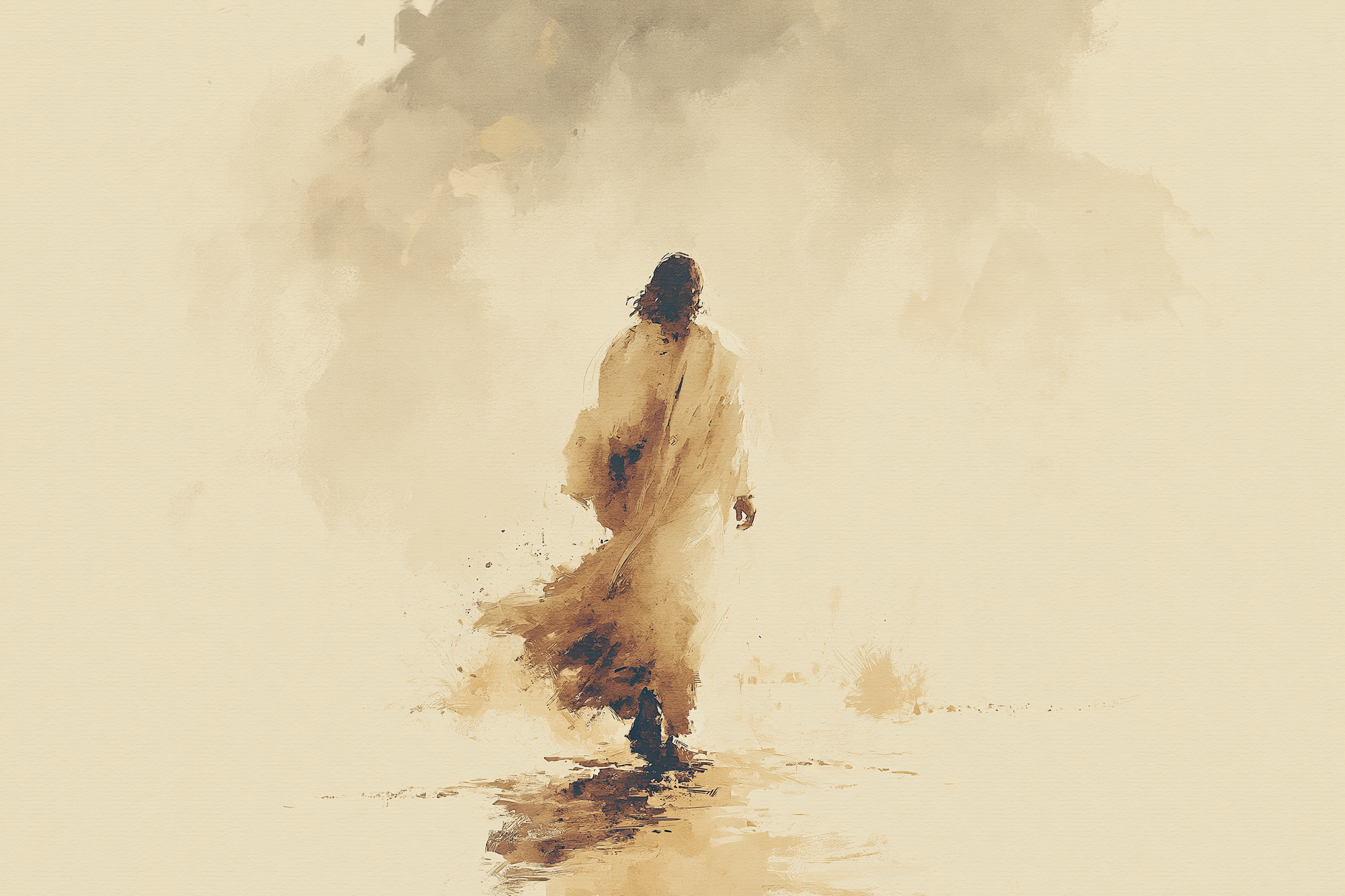
"And the Word became flesh, and dwelt among us, and we saw His glory, glory as of the only begotten from the Father, full of grace and truth."
— John 1:14 (NASB)
The Incarnation — from the Latin incarnatio ("enfleshment") — is the doctrine that the eternal Son of God, the second Person of the Trinity, took on a true, complete human nature without surrendering His divine nature. He did not merely appear to be human (as Gnosticism and Docetism taught), nor did He cease to be divine when He became human (as Arianism and Socinianism taught). Rather, in the person of Jesus of Nazareth, the one indivisible God the Son became fully and genuinely human while remaining fully and genuinely God.
The Incarnation is the pivot point of all of redemptive history. Without it, the atonement is impossible, the resurrection is meaningless, and the new covenant has no mediator. As John Stott writes: "It is the most dramatic event in the universe's history. The Author stepped into His own story" [1]. Every other theme of Scripture — creation, covenant, salvation, the Spirit, the church, and eschatology — finds its center and fulfillment in the Incarnation.
The Incarnation is also deeply rooted in the Hebrew Scriptures. The entire prophetic tradition anticipated a divine-human figure who would bring God's saving presence directly into human history. The Messiah was not merely to be God's representative but God Himself, clothed in humanity, dwelling among His people. The name Immanuel — עִמָּנוּאֵל (ʿimmānûʾēl, "God with us," BDB 769) — captures the essence of the doctrine before a single word of the New Testament was written.
The Eternal Word — John 1:1–5
"In the beginning was the Word, and the Word was with God, and the Word was God. He was in the beginning with God. All things came into being through Him, and apart from Him not even one thing came into being that has come into being. In Him was life, and the life was the Light of mankind. And the Light shines in the darkness, and the darkness did not grasp it."
Verse 1 — "In the beginning was the Word"
The Prologue of John (1:1–18) is one of the most theologically dense passages in all of Scripture. John opens with a deliberate echo of בְּרֵאשִׁית (bĕrēʾšît, "In the beginning," Genesis 1:1; Genesis 1:1), plunging the reader immediately into the pre-creation existence of the Logos. The imperfect verb ἦν (ēn, "was") — not ἐγένετο (egeneto, "came into being") — establishes continuous, uncreated existence. The Logos was already there when creation began. This directly contrasts with all created things, which "came into being" through Him (v. 3).
Ὁ Λόγος (ho Logos; BDAG 598), "the Word" — In Greek philosophy, the Logos was the rational principle underlying the cosmos (Heraclitus, 6th c. BC; Philo, 1st c. AD). In Hebrew theology, the דָּבָר יְהוָה (dabar YHWH, "Word of the LORD") was the creative, revelatory, active self-expression of God in history (Psalm 33:6; Isaiah 55:11). John deliberately selects this term because it speaks to both audiences — Jew and Greek — and then fills it with a meaning that transcends both: the Logos is not an abstract principle but a Person who became flesh.
"The Word was with God" — πρὸς τὸν θεόν (pros ton theon, BDAG 874) — the preposition pros with the accusative expresses dynamic, face-to-face relationship and distinction. The Son is not identical to the Father; He is with Him — a distinct person in eternal, intimate communion. This is not merely coexistence but relational presence, anticipating the language of John 17:5 where Jesus prays: "glorify Me together with Yourself, Father, with the glory which I had with You before the world was" (John 17:5).
"The Word was God" — θεὸς ἦν ὁ Λόγος (theos ēn ho Logos) — The predicate nominative theos without the article (the "Colwell's Rule" issue) denotes the nature of the Logos, not His identity as the only God. It teaches that the Son is fully divine in nature — not a lesser deity, not a demigod, not a created being — while being distinct from the Father. This is the clear teaching of Trinitarian theology.
Jehovah's Witnesses translate this verse as "the Word was a god" (NWT), inserting an indefinite article not present in the Greek and not warranted by grammar. This translation is theologically driven and linguistically unjustified. No credible Greek scholar — whether Christian, Jewish, agnostic, or otherwise — supports this rendering. Bruce Metzger writes definitively: "The absence of the article before theos does not mean that the Logos is 'a god' but rather that the Word fully shares in the divine being without being the totality of that divine being" [2].
The historical testimony of Pliny the Younger (c. 112 AD), Roman governor of Bithynia, in his letter to Emperor Trajan (Epistulae X.96), confirms that early Christians worshipped Christ "as to a god" (quasi deo), demonstrating that the divine status of Jesus was foundational to Christian identity from the very beginning — not a later doctrinal development. (Perseus Digital Library: Pliny, Letters)
Verses 2–3 — The Agent of Creation
The claim that "all things came into being through Him" situates the pre-incarnate Christ within the creation account. The term πάντα (panta, "all things") is absolute — no exceptions. This aligns with Colossians 1:16: "For by Him all things were created, both in the heavens and on earth, visible and invisible... all things have been created through Him and for Him" and Hebrews 1:2: "through whom also He made the world." The Son is not merely the deliverer of creation — He is its instrument and goal.
The qualification "apart from Him not even one thing came into being that has come into being" closes off every possible exception. This is not hyperbole but precision: the Son participated in the creation of every single thing that exists. This destroys the Arian position that the Son was Himself a created being — a being who created all things cannot itself be among those created things.
Verses 4–5 — Light and Life
ζωή (zōē; BDAG 430), "life" — In the New Testament, zōē frequently refers not to mere biological existence but to the divine life that God Himself possesses and that He communicates to humanity in salvation (John 5:26; John 10:10; 1 John 5:11). "In Him was life" means that the eternal zōē — uncreated, self-sustaining, indestructible — resided in the Logos before creation and was the source of all life in the created order.
φῶς (phōs; BDAG 1073), "light" — Light in both Hebrew and Greek literature is a metaphor for revelation, truth, holiness, and divine presence (cf. Psalm 36:9: "In Your light we see light"; 1 John 1:5: "God is Light, and in Him there is no darkness at all"). That the Logos is the Light of mankind means He is the source of all true knowledge of God and of humanity's moral and spiritual illumination.
The darkness "did not grasp it" — κατέλαβεν (katelaben; BDAG 519) — can mean either "did not overcome/extinguish it" or "did not comprehend/understand it." Both meanings are likely intended: the powers of darkness, sin, and death could not extinguish the light of Christ, and the spiritually darkened human mind could not naturally comprehend it (cf. 1 Corinthians 2:14).
Gary Burge (NIVAC) observes: "John's prologue is not primarily cosmological but soteriological. It announces that the light which created all things has re-entered a darkened creation to do the work of re-creation — making what was lost, new again" [3].
The Word Became Flesh — John 1:14–18
"And the Word became flesh, and dwelt among us, and we saw His glory, glory as of the only begotten from the Father, full of grace and truth. John testified about Him and cried out, saying, 'This was He of whom I said, "He who comes after me has a higher rank than I, for He existed before me."' For of His fullness we have all received, and grace upon grace. For the Law was given through Moses; grace and truth were realized through Jesus Christ. No one has seen God at any time; the only begotten God who is in the bosom of the Father, He has explained Him."
Verse 14 — "The Word Became Flesh"
This is the decisive statement of the Incarnation. σὰρξ ἐγένετο (sarx egeneto, "became flesh") — The verb γίνομαι (ginomai; BDAG 196), "to become, to come into being," marks a new state. The Logos, who had always simply been (ἦν), became something He had not previously been — without ceasing to be what He always was.
σάρξ (sarx; BDAG 914), "flesh" — This term is shockingly concrete. John does not say the Word took on a body, or appeared in a form, or simulated humanity. He says flesh — the full reality of human physical-biological existence with all its fragility, limitation, and vulnerability. This was a direct assault on Docetism (the heresy that Jesus only appeared to be human) and proto-Gnostic teaching that matter is evil and that God could not truly become physical. The Apostle John later warns: "every spirit that does not confess Jesus as Christ having come in the flesh is not from God" (1 John 4:2–3).
"Dwelt among us" — ἐσκήνωσεν ἐν ἡμῖν (eskēnōsen en hēmin) — The verb σκηνόω (skēnoō; BDAG 929), "to pitch a tent, to tabernacle," is a deliberate echo of the Tabernacle (Hebrew: מִשְׁכָּן, mishkān; BDB 1015) — the wilderness dwelling of God's glory-presence among Israel (Exodus 25:8: "Let them construct a sanctuary for Me, that I may dwell among them"). The Incarnation is the ultimate fulfillment of the Tabernacle and Temple — God dwelling literally in the midst of His people, not in a tent of goat-hair, but in a body of flesh. John O'Day writes: "The verb 'tabernacled' would evoke for Jewish readers the Tent of Meeting — the place of God's settled, covenantal presence. John is announcing that in Jesus, that covenantal presence has taken permanent and personal form" [4].
"We saw His glory" — ἐθεασάμεθα τὴν δόξαν αὐτοῦ (etheasametha tēn doxan autou) — The word δόξα (doxa; BDAG 256), "glory," in its OT usage translates כָּבוֹד (kāḇôḏ; BDB 458), the divine radiance and manifest presence of YHWH. What Israel could not behold except through a veil (Exodus 33:18–23) — the apostolic eyewitnesses now claim to have seen directly in the person of Jesus. The Transfiguration (Matthew 17:1–8) is the most dramatic unveiling of this glory during Jesus' earthly ministry.
"Only begotten" — μονογενής (monogenēs; BDAG 658), "unique, one of a kind" — This term does not mean the Son was generated (created) by the Father but rather that He is the unique, one-of-a-kind Son — of a category entirely His own. The same term is used in Hebrews 11:17 of Isaac, who was Abraham's "only begotten" in the sense of being uniquely set apart, though Abraham had other sons. Applied to Jesus, it means He is the uniquely divine Son — unlike all other beings, whether human or angelic.
"Full of grace and truth" — πλήρης χάριτος καὶ ἀληθείας (plērēs charitos kai alētheias) — This phrase resonates deeply with the Hebrew חֶסֶד וֶאֱמֶת (ḥesed weʾemet, "steadfast love and faithfulness," Exodus 34:6 LXX), the covenant attributes of YHWH proclaimed after the golden calf incident. That the Incarnate Son is described with YHWH's covenant character is another Johannine affirmation of His divine identity.
Verse 16 — "Grace Upon Grace"
χάριν ἀντὶ χάριτος (charin anti charitos) — "grace in place of grace" or "grace upon grace." The preposition ἀντί (anti) here likely means "grace succeeding grace" — an inexhaustible, sequential bestowal of divine favor. What the Law could not provide (the fullness of God's own life and saving presence) is now lavishly distributed through the Incarnate Son.
Verse 18 — "The Only Begotten God"
μονογενὴς θεός (monogenēs theos, "the only begotten God") — This is the reading of the best and earliest manuscripts (P66, P75, Sinaiticus, Vaticanus). The Son is described here as Himself God (θεός) — in the most intimate, face-to-face relationship with the Father ("in the bosom of the Father," εἰς τὸν κόλπον τοῦ πατρός). The phrase "he has explained Him" (ἐξηγήσατο, exēgēsato, BDAG 349, "to explain, to make fully known" — the root of our word "exegesis") declares that the Incarnate Son is the definitive, final, and complete revelation of the invisible God. No one has ever seen God directly (1 John 4:12); the Son has made Him fully known. Colossians 1:15 calls Him "the image of the invisible God."
The Prophetic Foundation — Isaiah 7:14
"Therefore the Lord Himself will give you a sign: Behold, the virgin will conceive and give birth to a son, and she will name Him Immanuel."
Overview and Context
Isaiah 7 is addressed to King Ahaz of Judah (c. 735 BC) during the Syro-Ephraimite crisis, when the kingdoms of Syria and Israel threatened Jerusalem. God offers Ahaz any sign he desires; Ahaz refuses (in false piety, refusing to test God). God then provides His own sign — one that spans both the immediate historical context and the eschatological horizon.
עַלְמָה (ʿalmāh; BDB 761; HALOT 834), "young woman, virgin" — This is the center of enormous interpretive controversy. The Hebrew term ʿalmāh refers to a young woman of marriageable age — in the OT cultural context, this assumes sexual purity and virginity (cf. Genesis 24:43; Exodus 2:8; Proverbs 30:19; Song of Solomon 1:3; Song of Solomon 6:8). It is not the most technically precise Hebrew term for "virgin" (which is בְּתוּלָה, bĕtûlāh; BDB 143), but the Septuagint (LXX) translators, writing 200+ years before Christ, translated ʿalmāh in Isaiah 7:14 as παρθένος (parthenos, "virgin"), a term that unambiguously denotes a woman who has not had sexual intercourse. This translation decision, made before any Christian interest could influence it, strongly supports the virginal conception reading.
עִמָּנוּאֵל (ʿimmānûʾēl, "God with us") — This name is not merely a theological description; it is a divine declaration. The God who created the cosmos will personally enter it. The Incarnation is the ultimate fulfillment of עִמָּנוּאֵל — not merely God helping His people, but God being with His people in the most intimate way possible: as one of them.
Historical Note: The Jewish scholar Rashi (Rabbi Shlomo Yitzchaki, 1040–1105 AD) and other medieval Jewish interpreters sought to limit Isaiah 7:14's fulfillment to the immediate historical context of Ahaz's time. However, the messianic interpretation was well-established in pre-Christian Jewish exegesis: the Targum Jonathan (the Aramaic paraphrase of the Prophets, ca. 1st c. BC–2nd c. AD) has a strongly messianic reading of Isaiah 9:5–6, the passage immediately following, demonstrating that Isaiah 7–9 was read as a messianic cluster. (Jewish Encyclopedia: "Messiah")
The Great Promise — Isaiah 9:6–7
"For a child will be born to us, a son will be given to us; And the government will rest on His shoulders; And His name will be called Wonderful Counselor, Mighty God, Eternal Father, Prince of Peace. There will be no end to the increase of His government or of peace on the throne of David and over his kingdom, to establish it and to uphold it with justice and righteousness from then on and forevermore. The zeal of the LORD of hosts will accomplish this."
Verse 6 — The Divine Names of the Child
The fourfold title given to this child-son is unprecedented in the Old Testament for any human king. Two of the four names are explicitly divine:
אֵל גִּבּוֹר (ʾēl gibbôr, "Mighty God") — This is not merely a description of a powerful human king. In Isaiah 10:21, the same phrase is used of YHWH Himself: "A remnant will return, the remnant of Jacob, to the mighty God" (ʾēl gibbôr). The use of an identical divine title for the promised child is an unmistakable declaration of His divine identity.
אֲבִי עַד (ʾăḇî ʿaḏ, "Eternal Father" or "Father of Eternity") — This title does not make the Son the same person as the Father within the Trinity (that would be the heresy of Modalism/Sabellianism), but rather describes His relationship to His people and to time: He is the eternal Source of enduring life and the One who transcends and encompasses all of time. He is the Father of the age to come — the One who brings the new age into being and sustains it forever.
שַׂר שָׁלוֹם (śar šālôm, "Prince of Peace") — שָׁלוֹם (šālôm; BDB 1022; HALOT 1538) encompasses not merely the absence of conflict but wholeness, completeness, flourishing, well-being in every dimension of life. The Prince of Peace is the one who establishes and embodies this total shalom — He who is "our peace" (Ephesians 2:14) and who through His cross reconciles "all things to Himself" (Colossians 1:20).
Verse 7 — The Davidic Throne
The child-son rules from "the throne of David" — explicitly grounding His identity within the covenantal promises to David (2 Samuel 7:12–16) while extending the reign to "forevermore" — a duration no human king could fulfill. This is the messianic king whose kingdom is eternal, whose justice is absolute, and whose peace is without end. Luke's Annunciation narrative (Luke 1:32–33) explicitly cites this promise as fulfilled in Jesus: "The Lord God will give Him the throne of His father David; and He will reign over the house of Jacob forever, and His kingdom will have no end."
Born in Bethlehem — Micah 5:2
"But as for you, Bethlehem Ephrathah, too little to be among the clans of Judah, from you One will go forth for Me to be ruler in Israel. His goings forth are from long ago, from the days of eternity."
Overview
Written ca. 735–700 BC, seven centuries before the birth of Jesus, this passage specifies both the location of the Messiah's birth and the nature of His origin.
"Bethlehem Ephrathah" — Bethlehem (bêt leḥem, "house of bread") was a village so small that it was not listed among the important towns of Judah. The specification of Ephrathah distinguishes it from another Bethlehem in Zebulun (Joshua 19:15). The humility of the birthplace underscores the theme of God working through the insignificant: the greatest King in history born in one of Judah's least notable villages.
"From you One will go forth for Me" — The phrase לִי יֵצֵא (lî yēṣēʾ, "will go forth for Me") — the Messiah is presented as God's own, sent for God's purposes. This anticipates the Johannine language of the Father sending the Son (John 3:17; John 17:18).
"His goings forth are from long ago, from the days of eternity" — מִקֶּדֶם מִימֵי עוֹלָם (miqqedem mîmê ʿôlām, "from ancient times, from the days of eternity") — The Messiah's origins are not only from Bethlehem historically; He pre-exists human history entirely. עוֹלָם (ʿôlām; BDB 761; HALOT 798) denotes not merely great antiquity but eternal existence. This verse is one of the clearest pre-Incarnation affirmations of the pre-existence of the Messiah in the Old Testament. The Jewish scribes quoted this very passage when Herod's scholars explained where the Messiah would be born (Matthew 2:5–6), demonstrating that the messianic reading was standard in first-century Judaism.
The Annunciation — Luke 1:26–38
"Now in the sixth month the angel Gabriel was sent from God to a city in Galilee called Nazareth, to a virgin engaged to a man whose name was Joseph, of the descendants of David; and the virgin's name was Mary. And coming in, he said to her, 'Greetings, favored one! The Lord is with you.' But she was very perplexed at this statement, and kept pondering what kind of greeting this was. The angel said to her, 'Do not be afraid, Mary; for you have found favor with God. And behold, you will conceive in your womb and give birth to a son, and you shall name Him Jesus. He will be great and will be called the Son of the Most High; and the Lord God will give Him the throne of His father David; and He will reign over the house of Jacob forever, and His kingdom will have no end.' Mary said to the angel, 'How can this be, since I am a virgin?' The angel answered and said to her, 'The Holy Spirit will come upon you, and the power of the Most High will overshadow you; and for that reason the holy Child will be called the Son of God... For nothing will be impossible with God.' And Mary said, 'Behold, the bond-servant of the Lord; may it be done to me according to your word.' And the angel departed from her."
Verse 27 — The Virgin
παρθένον (parthenon, accusative of παρθένος, parthenos; BDAG 777), "virgin" — Luke uses this term twice in one verse to emphasize unambiguously that Mary had not had sexual relations. This is not metaphor; it is medical and sociological precision. Mary herself confirms her virginal state in verse 34: "How can this be, since I am a virgin?" — ἄνδρα οὐ γινώσκω (andra ou ginōskō, "I have not known a man"), using the Hebrew idiom for sexual intercourse (Genesis 4:1).
Verses 32–33 — Son of the Most High, Throne of David
υἱὸς ὑψίστου (huios hypsistou, "Son of the Most High") — connects directly to אֵל עֶלְיוֹן (ʾēl ʿelyôn, "God Most High") from Genesis 14:18–20. Jesus is introduced as the Son of the very God who is Most High above all things. This title affirms His unique divine sonship while the Davidic throne promise connects His ministry to Israel's covenantal history. Both dimensions — divine and human, eternal and historical — are present in the Annunciation.
Verse 35 — The Mechanism of the Incarnation
"The Holy Spirit will come upon you, and the power of the Most High will overshadow you" — ἐπισκιάζω (episkiazō; BDAG 378), "to overshadow, to cover with shadow" — This term is used in the LXX of the cloud of divine glory overshadowing the Tabernacle (Exodus 40:35). The Incarnation is a new Tabernacling event: the divine presence descending and dwelling — this time not in a tent but in a human womb. The Holy Spirit is the divine agent of the conception, ensuring that the child born is genuinely the Son of God — not by natural generation but by divine creative action.
This verse is decisive for understanding the two natures of Christ: the Holy Spirit supplies the divine dimension; Mary supplies the human. The child is therefore fully divine (Son of God) and fully human (son of Mary) from the moment of conception.
"For nothing will be impossible with God" — This echoes the promise to Abraham and Sarah (Genesis 18:14: "Is anything too difficult for the LORD?"), connecting the Incarnation to the broader pattern of God's impossible acts of creation in redemptive history.
The Birth of Jesus — Matthew 1:18–25
"Now the birth of Jesus Christ was as follows: when His mother Mary had been betrothed to Joseph, before they came together she was found to be with child by the Holy Spirit... But when he had considered this, behold, an angel of the Lord appeared to him in a dream, saying, 'Joseph, son of David, do not be afraid to take Mary as your wife; for the Child who has been conceived in her is of the Holy Spirit. She will give birth to a Son; and you shall name Him Jesus, for He will save His people from their sins.' Now all this took place to fulfill what was spoken by the Lord through the prophet: 'Behold, the virgin shall conceive and give birth to a son, and they shall name Him Immanuel,' which translated means, 'God with us.'"
Verse 18 — The Source of the Conception
ἐκ πνεύματος ἁγίου (ek pneumatos hagiou, "by the Holy Spirit") — The preposition ἐκ (ek, "from, out of") indicates origin: the source of Mary's conception is the Holy Spirit. This is not poetic language for a natural conception but a claim about the supernatural origin of Jesus' human nature. Joseph's righteousness and bewilderment (v. 19) only make sense if the pregnancy was genuinely inexplicable by natural means.
Verse 21 — The Name Jesus
Ἰησοῦς (Iēsous; BDAG 467) — The Greek form of the Hebrew יֵשׁוּעַ (yēšûaʿ; BDB 221), a contracted form of יְהוֹשֻׁעַ (yĕhôšûaʿ, "Joshua"), meaning "YHWH is salvation" or "YHWH saves." The etymology is immediately explained in the text: "He will save His people from their sins." The name is a mission statement: the Incarnation does not merely bring divine presence but divine rescue from the greatest human problem — not political oppression (as many Jews expected) but sin itself.
The saving work of יֵשׁוּעַ (Yēšûaʿ) was anticipated in the commissioning of his namesake, Joshua (Yĕhôšûaʿ), who led Israel into the promised land — but that was only a shadow. The true Yeshua leads His people not into a geographic land but into the eschatological rest of God's own presence (cf. Hebrews 4:8–11).
Verse 23 — Immanuel Fulfilled
Matthew's quotation of Isaiah 7:14 uses the Septuagint's παρθένος (parthenos, "virgin"), confirming that the LXX reading (which predates the Christian era) was the intended fulfillment. The name Immanuel — "God with us" — is programmatic for Matthew's entire Gospel, which closes with Jesus' promise: "I am with you always, even to the end of the age" (Matthew 28:20). The Gospel begins and ends with Immanuel — the Incarnation is the basis of the permanent, unbreakable divine presence with His people.
Born of a Woman — Galatians 4:4–5
"But when the fullness of the time came, God sent forth His Son, born of a woman, born under the Law, so that He might redeem those who were under the Law, that we might receive the adoption as sons."
The Fullness of Time — τὸ πλήρωμα τοῦ χρόνου
πλήρωμα (plērōma; BDAG 828), "fullness, completion" — The Incarnation occurred not by historical accident but at God's appointed, perfect moment. First-century historians confirm a remarkable convergence: the Pax Romana (Roman Peace) enabled travel and communication; the Greek language (koinē) was the universal tongue enabling the Gospel to spread; the Roman road system connected the empire; Jewish diaspora synagogues throughout the Mediterranean provided ready audiences with a biblical framework. Classicist.
Born of a Woman — Full Humanity
γενόμενον ἐκ γυναικός (genomenon ek gunaikos, "born of a woman") — Paul's careful phrasing affirms the full humanity of the Son while conspicuously not naming Joseph as father. The grammatical parallelism:
- born of a woman → genuine humanity
- born under the Law → lived within the covenant community of Israel
ensures that Christ's humanity was not phantom or partial. He entered fully into the human condition, including its obligation to divine law.
"So that He might redeem those under the Law" — ἐξαγοράσῃ (exagorasē; BDAG 343), "to redeem by buying out" — The commercial imagery of purchase from slavery is central to Paul's soteriology (cf. 1 Corinthians 6:20: "you have been bought with a price"). The Incarnation is the prerequisite for redemption: only one who was Himself under the Law's demands could fulfill them; only one who was fully human could die the death that human sin incurred.
The Kenosis — Philippians 2:5–11
"Have this attitude in yourselves which was also in Christ Jesus, who, although He existed in the form of God, did not regard equality with God a thing to be grasped, but emptied Himself, taking the form of a bond-servant, and being made in the likeness of men. Being found in appearance as a man, He humbled Himself by becoming obedient to the point of death, even death on a cross. For this reason also God highly exalted Him, and bestowed on Him the name which is above every name, so that at the name of Jesus every knee will bow, of those who are in heaven and on earth and under the earth, and that every tongue will confess that Jesus Christ is Lord, to the glory of God the Father."
The Christ Hymn — Structure and Background
Philippians 2:6–11 is widely recognized as a pre-Pauline carmen Christi (hymn to Christ) that Paul quotes to illustrate humility. Whether it is poetic or prose, it is among the most theologically loaded passages in the NT regarding the Incarnation.
Verse 6 — Equality with God
ἐν μορφῇ θεοῦ ὑπάρχων (en morphē theou hyparchōn, "existing in the form of God") — μορφή (morphē; BDAG 659), "form, essential nature" — This is not external appearance (that would be σχῆμα, schēma, used in v. 8) but the inner reality and essential being. To exist in the morphē of God means to possess the essential attributes and reality of deity. This is a claim to genuine, ontological divinity — the Son's pre-incarnate state was one of being God in the fullest sense.
"Equality with God" — ἴσα θεῷ (isa theō) — This is not a position He aspired to (He already had it) but one He did not exploit for self-advantage. The word ἁρπαγμός (harpagmos; BDAG 133), traditionally rendered "something to be grasped," is better translated "something to be exploited or leveraged for advantage." The Son did not use His divine prerogatives as a means of avoiding the Incarnation.
The pre-existent Son was already in possession of all the divine attributes. The kenosis was not the subtraction of deity but the voluntary concealment and non-exercise of certain divine prerogatives for the purpose of becoming fully incarnate. He did not cease to be God; He chose not to function as God — in certain respects — while on earth.
Verse 7 — The Kenosis
ἐκένωσεν (ekenōsen; BDAG 539), "emptied Himself" — κενόω (kenoō) literally means "to empty." This is the origin of the theological term kenosis. The question is: what exactly did He empty Himself of? Three main views:
-
He emptied Himself of the independent use of divine attributes (most widely accepted non-Calvinistic view) — He retained all divine attributes but voluntarily chose not to exercise omniscience, omnipotence, etc. independently during His earthly ministry. He submitted to the Father's will in all things.
-
He emptied Himself of divine glory and status — He divested Himself of His heavenly splendor and took the status of a servant.
-
He emptied Himself of certain divine attributes (classical kenotic theology, Forsyth, Mackintosh) — More radical view rejected by most evangelical scholars.
The text itself defines the kenosis: "taking the form of a bond-servant, and being made in the likeness of men" — the emptying is defined as the taking on of human nature and servant status. He emptied Himself by filling Himself with humanity.
μορφὴν δούλου (morphēn doulou, Form of a servant/slave") — The same word morphē used for His divine form is now used for His servant form — showing that the Incarnation is real, not cosmetic. He truly took on the essential nature of a human servant. Peter O'Brien writes: *"The Incarnation is the most dramatic reversal in the history of the universe: the one who existed in the essential form of God took on the essential form of a slave. Not a disguise but a reality; not a temporary theater role but a genuine, permanent assumption of human nature.
Verses 9–11 — The Exaltation
ὑπερύψωσεν (hyperypsōsen; BDAG 1034), "exalted to the highest place" — The prefix ὑπερ- (hyper-) is a superlative intensifier: not merely "exalted" but "exalted above everything." The exaltation is the Father's vindication of the Son's voluntary humiliation. The "name above every name" is almost certainly YHWH / κύριος (kyrios, "Lord") — the divine covenant name — now given to the Incarnate-and-Risen Son. The citation of Isaiah 45:23 in verses 10–11 (where YHWH declares "to Me every knee will bow, every tongue will swear allegiance") — and its application to Jesus — is one of the most explicit NT identifications of Jesus with YHWH.
The Preeminence of the Incarnate Christ — Colossians 1:15–20
"He is the image of the invisible God, the firstborn of all creation: for by Him all things were created, both in the heavens and on earth, visible and invisible, whether thrones or dominions or rulers or authorities — all things have been created through Him and for Him. He is before all things, and in Him all things hold together. He is also the head of the body, the church; and He is the beginning, the firstborn from the dead, so that He Himself will come to have first place in everything. For it was the Father's good pleasure for all the fullness to dwell in Him, and through Him to reconcile all things to Himself, having made peace through the blood of His cross..."
Verse 15 — Image of the Invisible God
εἰκὼν τοῦ θεοῦ τοῦ ἀοράτου (eikōn tou theou tou aoratou, "image of the invisible God") — εἰκών (eikōn; BDAG 282), "image, likeness, representation" — In the ancient world, an eikōn was not merely a resemblance but a manifestation of the original's presence and authority (cf. Roman imperial coinage bearing the emperor's eikōn — it represented his presence and authority throughout the empire). To call Christ the image of the invisible God means He makes the invisible God visible — He is God's visible self-disclosure in human form. This takes the imago Dei language of Genesis 1:26–27 (Genesis 1:26) and declares it perfectly embodied in Christ — He is what humanity was meant to be as God's image-bearers, but infinitely more, since He is the original of which humanity is the copy.
"Firstborn of all creation" — πρωτότοκος πάσης κτίσεως (prōtotokos pasēs ktiseōs) — πρωτότοκος (prōtotokos; BDAG 894), "firstborn" — This does not mean the Son was the first thing created. The immediately following verse (v. 16) makes this impossible: "For by Him all things were created" — one cannot be both the creator of all things and also among the things created. Rather, prōtotokos is a title of rank and preeminence (cf. Psalm 89:27 where David is called "firstborn" as the greatest king, not as the literal oldest).
Jehovah's Witnesses and Arians cite this phrase to argue that Christ is the first created being. This interpretation collapses under v. 16 and the broader NT witness. The Nicene Creed (325 AD) was formulated explicitly to address this misreading, affirming Christ as "begotten, not made."
Verse 17 — The Sustainer
τὰ πάντα ἐν αὐτῷ συνέστηκεν (ta panta en autō synestēken, "in Him all things hold together") — συνίστημι (synistēmi; BDAG 971), "to hold together, to cohere" — The physical, moral, and spiritual coherence of the cosmos depends on the ongoing sustaining work of Christ. This is not a statement about creation's past origins but its present continuation. Remove Christ's sustaining power and reality dissolves. This passage is the clearest NT statement of what theologians call creatio continua — the continuous upholding of creation by the Son. Hebrews 1:3 states the same truth: He "upholds all things by the word of His power."
Verse 19 — The Fullness
πᾶν τὸ πλήρωμα (pan to plērōma, "all the fullness") — πλήρωμα (plērōma; BDAG 828) — The entire fullness of divine being — every divine attribute — dwells in Christ bodily (Colossians 2:9: "For in Him all the fullness of Deity dwells in bodily form"). This is the most direct NT refutation of any teaching that Jesus is a reduced, lesser, or secondary deity. He does not contain a portion of God; He contains all of God — πᾶν τὸ πλήρωμα τῆς θεότητος — in a bodily, incarnate form.
The Partaking of Flesh and Blood — Hebrews 2:14–18
"Therefore, since the children share in flesh and blood, He Himself likewise also partook of the same, so that through death He might destroy the one who has the power of death, that is, the devil, and free those who through fear of death were subject to slavery all their lives. For clearly He does not give help to angels, but He gives help to the descendant of Abraham. Therefore, He had to be made like His brethren in all things, so that He might become a merciful and faithful high priest in things pertaining to God, to make propitiation for the sins of the people. For since He Himself was tempted in that which He has suffered, He is able to come to the aid of those who are tempted."
Verse 14 — Sharing in Flesh and Blood
μετέσχεν (meteschen; from μετέχω, metechō; BDAG 643), "to partake of, to share in" — The Son voluntarily chose to participate in what belongs to human beings — flesh and blood. The verb is a perfect tense indicating a permanent, ongoing participation: the Incarnation is not temporary. The Risen and Ascended Christ remains human — a genuinely embodied being — for all eternity (cf. Luke 24:39; John 20:27; Acts 1:11).
The purpose of this sharing is stated immediately: "so that through death He might destroy the one who has the power of death" — only a being with genuine mortal humanity could die; and only a being with genuine divine power could conquer death through that dying. The Incarnation is the necessary prerequisite for the conquest of death.
Verse 17 — Made Like His Brethren in All Things
ὠφείλεν κατὰ πάντα τοῖς ἀδελφοῖς ὁμοιωθῆναι (ōpheilen kata panta tois adelphois homoiōthēnai, "had to be made like His brethren in all things") — ὀφείλω (opheilō; BDAG 743), "to be obligated, must, ought" — The Incarnation was not arbitrary. There was a moral and salvific necessity: to be our high priest, Jesus had to be truly human. A divine being who only appeared human could not represent humanity before God, could not sympathize with human weakness, and could not offer a genuinely human obedience.
"Merciful and faithful high priest" — ἐλεήμων (eleēmōn, "merciful") and πιστός (pistos, "faithful") — both descriptions of Christ's priestly character — are grounded in His Incarnation. He is merciful because He experienced what we experience; He is faithful because He endured without wavering what we routinely fail at. This is the pastoral heart of the Incarnation: God did not observe our suffering from a safe distance — He entered it, experienced it, and was shaped by it, "so that He might become a merciful and faithful high priest."
Verse 18 — Able to Aid the Tempted
The Greek πεπείρασται (pepeiraστai) — perfect passive of πειράζω (peirazō; BDAG 793), "to tempt, to test" — indicates that Christ's experience of temptation was real, genuine, and permanently consequential for His priestly ministry. His temptation was not theatrical but ontological: genuine solicitation to sin, genuinely resisted. He therefore understands the experience of temptation from the inside. Hebrews 4:15 adds that this was "in all things as we are, yet without sin" — the sinlessness does not reduce the reality of the temptation; it demonstrates the quality of His obedience.
The Mystery of Godliness — 1 Timothy 3:16
"By common confession, great is the mystery of godliness: He who was revealed in the flesh, was vindicated in the Spirit, seen by angels, proclaimed among the nations, believed on in the world, taken up in glory."
The Six-Line Hymn
Like Philippians 2:6–11, this passage appears to be a creedal hymn summarizing the full sweep of Christ's redemptive career. The phrase μυστήριον τῆς εὐσεβείας (mystērion tēs eusebeias, "mystery of godliness/religion") refers not to something hidden but to something now revealed in Jesus Christ — the divine truth once concealed but now openly disclosed through the Incarnation.
"Revealed in the flesh" — ἐφανερώθη ἐν σαρκί (ephanerōthē en sarki) — φανερόω (phaneroō; BDAG 1048), "to make visible, to manifest" — The eternal Son who was invisible became visible — manifested in a human body. This is the core of the Incarnation: the invisible became visible; the eternal entered time; the infinite became finite in the person of Jesus. 1 John 1:1–2 picks up this same language: "What was from the beginning, what we have heard, what we have seen with our eyes... and our hands have touched, concerning the Word of Life — and the life was manifested."
The Virgin Birth — Theological Necessity and Heretical Denials
The virgin birth (more precisely, the virginal conception) is not a peripheral doctrine but a theological necessity for at least three reasons:
1. The Sinlessness of Christ
Every human being descended from Adam through natural generation inherits the guilt and moral corruption of the Fall (Romans 5:12). If Jesus had been conceived through ordinary sexual union, He would have been a participant in Adamic humanity's fallen state. The virginal conception through the Holy Spirit bypassed the ordinary channel of transmission while ensuring genuine human nature — a genuinely human body and soul derived from Mary, but a nature not subject to the inherited guilt of Adam. J. Gresham Machen's classic work The Virgin Birth of Christ (1930, Harper & Row) remains the most exhaustive defense of this doctrine from critical scholarship: "The virgin birth is bound up with the entire supernatural origin of the Person of Christ. Deny it, and you inevitably begin to reduce the unique, supernatural Christ to merely a very good man."
2. The Fulfillment of Prophecy
As demonstrated above (Isaiah 7:14), the virginal conception was prophesied. Matthew's inspired citation of Isaiah 7:14 establishes the connection between prophecy and fulfillment. If the birth was ordinary, the prophecy is either inapplicable or non-specific — reducing the precision and reliability of OT prophecy as a whole.
3. The Two Natures
The virgin birth is the mechanism by which the eternal Son became genuinely human without ceasing to be genuinely divine. The Holy Spirit provides the divine agency; Mary provides the human nature. Without the virginal conception, the doctrine of the two natures lacks its historical and biological anchor.
Heretical Denials
| Heresy | Position | Error |
|---|---|---|
| Docetism (1st–2nd c.) | Jesus only appeared to be human | Denies genuine humanity; makes the cross a fiction |
| Gnosticism | Jesus was a divine spirit inhabiting a human body temporarily | Denies the Incarnation; separates Christ from Jesus |
| Arianism (4th c.) | Jesus was a created being, not truly divine | Denies the pre-existence and divine nature of the Son |
| Nestorianism | Two persons in Christ (divine and human) | Severs the unity of Christ's person |
| Eutychianism/Monophysitism | The two natures merged into one | Denies the permanence of both natures |
| Modern Liberalism | The virgin birth is myth or legend | Treats the Gospel accounts as historically unreliable |
| Islam | Jesus was a prophet but not divine; the Incarnation is blasphemy | Accepts the virgin birth (Quran 3:47; 19:20) but denies divinity, making Jesus merely human |
| Jehovah's Witnesses | Jesus was Michael the archangel made human; not God incarnate | Denies full divinity; reduces the Incarnation to angelic embodiment |
The Nicene-Constantinopolitan Creed (381 AD), the ecumenical standard shared by all major Christian traditions, summarizes the biblical witness: "We believe in one Lord Jesus Christ, the only Son of God, eternally begotten of the Father, God from God, Light from Light, true God from true God, begotten, not made, of one Being with the Father... For us and for our salvation he came down from heaven; by the power of the Holy Spirit he became incarnate from the Virgin Mary, and was made man." (Christian Classics Ethereal Library: Nicene Creed)
The Two Natures of Christ — Theological Summary (Chalcedonian Definition)
The Council of Chalcedon (451 AD) formulated the definitive orthodox statement on the Incarnation in response to various heretical extremes:
"We confess one and the same Son, our Lord Jesus Christ, the same perfect in Godhead and perfect in humanity, truly God and truly human... recognized in two natures, without confusion, without change, without division, without separation; the distinction of natures being in no way annulled by the union, but rather the characteristics of each nature being preserved and coming together to form one person and subsistence." (CCEL: Chalcedonian Definition)
The four negative adverbs capture the boundaries:
- Without confusion (ἀσυγχύτως) — against Eutychianism (the natures do not blend)
- Without change (ἀτρέπτως) — against Apollinarianism (neither nature is altered)
- Without division (ἀδιαιρέτως) — against Nestorianism (the person is not split)
- Without separation (ἀχωρίστως) — against Nestorianism (the natures cannot be separated)
This balanced formulation has stood as the ecumenical standard for 1,600 years — not because councils are infallible, but because it accurately summarizes what the biblical texts teach when examined holistically.
Pre-Existence of Christ — Biblical Evidence
The Incarnation presupposes the pre-existence of the Son. Key passages:
| Passage | Statement | Reference |
|---|---|---|
| John 1:1 | "In the beginning was the Word" | John 1:1 |
| John 1:15 | "He existed before me" (John the Baptist of Jesus) | John 1:15 |
| John 8:58 | "Before Abraham was born, I am" | John 8:58 |
| John 17:5 | "The glory which I had with You before the world was" | John 17:5 |
| John 17:24 | "You loved Me before the foundation of the world" | John 17:24 |
| Philippians 2:6 | "Although He existed in the form of God" | Philippians 2:6 |
| Colossians 1:17 | "He is before all things" | Colossians 1:17 |
| Hebrews 1:2 | "Through whom also He made the world" | Hebrews 1:2 |
| Micah 5:2 | "His goings forth are from... the days of eternity" | Micah 5:2 |
| Revelation 1:8 | "I am the Alpha and the Omega... the Almighty" | Revelation 1:8 |
The Communicatio Idiomatum and the Purpose of the Incarnation
Communicatio Idiomatum — "The Communication of Properties"
Because the one Person of Jesus Christ possesses two complete, unmixed natures (divine and human) in the Hypostatic Union described above, Scripture at times ascribes to the whole Person attributes or actions proper to only one of His natures. This is traditionally named the Communicatio Idiomatum (Latin, "the communication of properties" or "the exchange of properties") — the theological explanation for how Scripture can say, in the same breath, that Jesus grew weary (a property of His human nature, John 4:6) while also saying "all the fullness of Deity dwells in Him in bodily form" (Colossians 2:9). This principle answers questions such as "which nature died on the cross?" — it was Christ's human nature that experienced death, while His divine nature, incapable of death, remained undiminished; yet because both natures belong to a single Person, the death of the God-man carries infinite atoning value.
This same framework explains Jesus' references to having "a God" and to the Father's authority over Him (John 20:17; 1 Corinthians 11:3) — language that reflects His voluntary subjection in His humanity, not a denial of His eternal equality with the Father in His deity. As a man under the Law, He was rightly subject to it (Galatians 4:4), humbled Himself to a position lower than the angels (Hebrews 2:9), and cooperated fully with the limitations of His human nature (Philippians 2:5–8) in order to fulfill the Law and serve as the perfect High Priest and sacrifice for sin (Hebrews 5:8–10).
The Purpose of the Incarnation
Scripture gives a rich, cumulative answer to the question of why the Son took on human flesh. Among the purposes explicitly stated:
- To explain and reveal the Father — John 1:18
- To render the devil powerless and destroy his works — Hebrews 2:14
- To serve rather than be served — Matthew 20:28
- To preach the kingdom of God — Luke 4:43
- To do the will of the Father — John 6:38
- To deliver the Father's words to humanity — John 17:8
- To testify to the truth — John 18:37
- To fulfill the Law and the Prophets — Matthew 5:17
- To give life, and give it abundantly — John 10:10, 28
- To taste death for everyone — Hebrews 2:9
- To proclaim freedom for those held captive — Luke 4:18
Without the shedding of Christ's blood — possible only because the eternal Son assumed a genuine, mortal human nature — there could be no forgiveness of sins (Hebrews 9:22). The Incarnation is therefore not an end in itself but the necessary means to the cross: God the Son became flesh precisely so that, as a true man, He could stand as humanity's substitute and High Priest.
Summary
The Incarnation is the central event of redemptive history. Several overarching themes emerge:
1. The Incarnation as the Culmination of Covenant History
Every major covenant — Adamic, Noahic, Abrahamic, Mosaic, Davidic — pointed toward a divine-human mediator who would finally and perfectly represent both parties. Jesus is that mediator (1 Timothy 2:5: "For there is one God, and one mediator also between God and mankind, the man Christ Jesus").
2. The Incarnation as the Reversal of the Fall
Adam, as God's image-bearer, failed in obedience and brought death into the world. The Last Adam (1 Corinthians 15:45), as the perfect image of God in human form, succeeded in obedience and brought life. The Incarnation is the beginning of the reversal of the Fall — not merely its undoing but its surpassing. The new humanity in Christ will be more glorious than the original.
3. The Incarnation as the Basis of Effective Atonement
Only a being who was truly human could die the death that human sin deserved. Only a being who was truly divine could offer a sacrifice of infinite worth sufficient to atone for all sin. The Incarnation is the prerequisite for the Atonement: without the union of divine and human natures in one Person, there is no Savior.
4. The Incarnation as the Permanent Identification of God with Humanity
The Incarnation is irreversible. The Son did not take on human nature temporarily. The Risen, Ascended, and Glorified Christ is still the God-Man. The new creation is not a return to Eden (pre-Incarnation) but an advance to the New Jerusalem — where the Incarnate Lord dwells eternally with His people (Revelation 21:22–23).
5. The Incarnation as the Pattern for Human Flourishing
Because Christ is the perfect image of God in human form, to know Him is to know what true humanity looks like. The goal of the Christian life is to be conformed to His image (Romans 8:29: "conformed to the image of His Son"). The Incarnation sets the standard for human existence — not merely moral example but ontological template.
Author

Raised in a Christian home, I came to faith later in life. A family crisis in 2019 drove me to study Scripture deeply, and by 2021 I answered my calling to ministry and teaching God's Word.


