Is Purgatory Biblical?
Purgatory is not a third eternal destiny — that misunderstanding wrecks most Protestant objections before they start. Rome teaches a temporary purification of the already-saved, resting on a distinction between sin's eternal guilt and its temporal punishment.
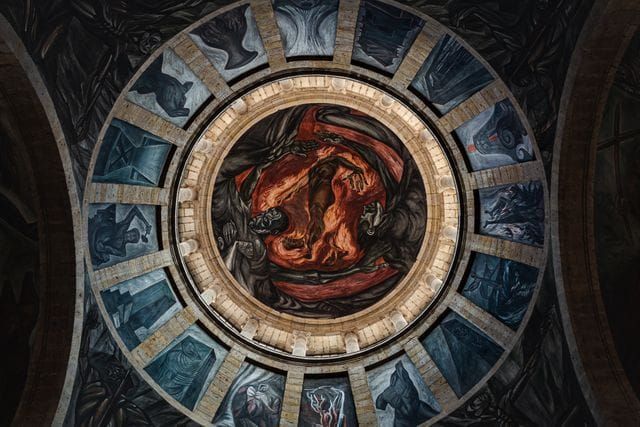
Purgatory is not, in Catholic teaching, a third eternal destiny. That misunderstanding wrecks most Protestant objections before they start. Rome teaches two final destinies — heaven and hell — and holds purgatory to be a temporary condition of purification through which some of the saved pass on their way to heaven. Everyone in purgatory is going to heaven; no one in purgatory is in danger of hell. Anyone arguing that Catholics believe in "three destinations" has not read the Catechism and will be corrected by the first Catholic who has.
The doctrine rests on a distinction that must be grasped before it can be evaluated: the difference between the eternal guilt of sin and its temporal punishment. Rome holds that Christ's death fully removes the eternal guilt and the liability to hell — no Catholic disputes this — but that a debt of temporal punishment remains attached to forgiven sins, and that this debt is discharged either through penance in this life or through purification after death. Purgatory is where that residual satisfaction is rendered. Indulgences remit it. The whole system is internally coherent, and it collapses only if the premise fails: that anything at all remains to be satisfied after Calvary.
That is the question this study takes up. Not "are Catholics saved," not "is purgatory a nice idea," but a single exegetical question with a determinate answer: does Scripture teach that a believer who dies still owes a satisfaction that must be worked off before entering God's presence? Every passage Rome cites is examined here on its own terms — 2 Maccabees 12, 1 Corinthians 3, Matthew 5 and 12, 1 Peter 3 — and the strongest form of the Catholic reading of each is stated before it is tested. Then the passages that bear against the doctrine are examined: Hebrews 9:27, Hebrews 10:10–14, John 19:30, 2 Corinthians 5:6–8, Luke 23:43, Philippians 1:23, and 1 John 1:7–9.
The conclusion argued below is that the doctrine fails at a specific point. The point is worth naming in advance so the reader can hold the argument accountable to it: the New Testament describes the atonement using a cluster of completion terms — perfect-tense verbs, "once for all" adverbs, commercial "paid in full" vocabulary — chosen precisely to exclude a remainder. A residual satisfaction is exactly the thing those words were selected to rule out. All Scripture is NASB95.
What the Catholic Church Actually Teaches
The doctrine's authoritative statement is short and should be quoted rather than paraphrased:
"All who die in God's grace and friendship, but still imperfectly purified, are indeed assured of their eternal salvation; but after death they undergo purification, so as to achieve the holiness necessary to enter the joy of heaven."[1]
"The Church gives the name Purgatory to this final purification of the elect, which is entirely different from the punishment of the damned. The Church formulated her doctrine of faith on Purgatory especially at the Councils of Florence and Trent. The tradition of the Church, by reference to certain texts of Scripture, speaks of a cleansing fire."[2]
"This teaching is also based on the practice of prayer for the dead, already mentioned in Sacred Scripture: 'Therefore [Judas Maccabeus] made atonement for the dead, that they might be delivered from their sin.' From the beginning the Church has honored the memory of the dead and offered prayers in suffrage for them... The Church also commends almsgiving, indulgences, and works of penance undertaken on behalf of the dead."[3]
The associated doctrine of indulgences follows directly:
"An indulgence is a remission before God of the temporal punishment due to sins whose guilt has already been forgiven."[4]
Three features of these paragraphs govern everything below. First, the Catechism's own citations for a "cleansing fire" are 1 Corinthians 3:15 and 1 Peter 1:7, and its citation for prayer for the dead is 2 Maccabees 12:46 — so the exegetical burden is concentrated in a very small number of texts, all of which are examined below. Second, the doctrine was "formulated" at Florence (1439) and Trent (1563) — Rome's own word, and a significant admission of timing. Third, the operative category is temporal punishment: something owed after guilt is forgiven. That is the hinge, and it is where the argument turns.
Key Passages: The Catholic Case Examined
2 Maccabees 12:39–46 — The Foundational Text
"He also took up a collection, man by man, to the amount of two thousand drachmas of silver, and sent it to Jerusalem to provide for a sin offering. In doing this he acted very well and honorably... Therefore he made atonement for the dead, that they might be delivered from their sin." — 2 Maccabees 12:43, 46, NRSVCE[5]
This is the only text in any canon that directly commends prayer and offering for the dead, and the Catechism cites it as such[3:1]. Its evidential weight for the doctrine is therefore very high — and its vulnerability is correspondingly high, because it is not in the Hebrew canon.
The canon argument is developed elsewhere, but the essential points bear directly here. Josephus, writing in the 90s, enumerated a twenty-two-book Hebrew canon and explicitly stated that writings after the reign of Artaxerxes were not held of equal authority, because "the exact succession of the prophets" had failed.[6] 1 Maccabees itself corroborates the point from the inside, lamenting that there was no prophet in Israel.[7] Jerome, the Vulgate's translator and the ancient church's foremost Hebraist, classified these books as libri ecclesiastici — profitable for edification, not for establishing doctrine — precisely the distinction that matters when a doctrine is being established.[8] Trent defined them as canonical in 1546, twenty-nine years after Wittenberg and roughly seventeen centuries after they were written.
But there is a second problem, independent of canonicity, and it is the more interesting one: the passage does not describe purgatory even if it is granted as Scripture. Read the context. The men Judas prays for died wearing "sacred tokens of the idols of Jamnia, which the law forbids the Jews to wear" (12:40) — they died in the act of idolatry. In Catholic theology, that is a mortal sin, and those who die in mortal sin do not go to purgatory; they go to hell, from which no offering delivers anyone. The prayer in 2 Maccabees is therefore offered for a class of people whom Catholic doctrine itself excludes from purgatory's benefit. The text proves either too much or nothing: if it works, it establishes that prayer can deliver the damned, which Rome denies. The historical narrative also carries no divine endorsement — the author records what Judas did and praises it, which is not the same as God commanding it.
1 Corinthians 3:10–15 — The Cleansing Fire
NASB95: "Now if any man builds on the foundation with gold, silver, precious stones, wood, hay, straw, each man's work will become evident; for the day will show it because it is to be revealed with fire, and the fire itself will test the quality of each man's work. If any man's work which he has built on it remains, he will receive a reward. If any man's work is burned up, he will suffer loss; but he himself will be saved, yet so as through fire."
This is the strongest text in the Catholic case, and it deserves a serious hearing rather than a dismissal. The Catholic reading is not absurd: here is a saved person, passing through fire, suffering loss, in a context of post-mortem judgment. That is structurally close to the doctrine. The Catechism cites it for exactly that reason.
The reading nonetheless fails on four grammatical and contextual grounds.
The subject of the burning is stated, and it is not the person. Paul says "if any man's work (ἔργον, ergon) is burned up." The fire's object is named four times in the passage and is the ergon in every instance — never the anthrōpos. The man is explicitly distinguished from what burns: "he himself will be saved" (αὐτὸς δὲ σωθήσεται), where the intensive pronoun autos is placed to contrast the person with his consumed work. Purgatory purifies persons. This fire consumes products.
The fire's function is diagnostic, not purgative. The verb is δοκιμάζω (dokimazō, Strong's G1381) — to test in order to determine genuineness, to assay (BDAG, 3rd ed., s.v. δοκιμάζω), a metallurgical and mercantile term for assaying metal or examining a coin. Paul uses it of examining oneself before the Table (1 Corinthians 11:28) and of testing what God's will is (Romans 12:2). An assay determines quality; it does not improve the sample. The Greek for the fire's action is dokimasei, "will test," not kathariei, "will cleanse" — and Scripture has perfectly good purification vocabulary (καθαρίζω, katharizō) which Paul does not use here.
The timing is the eschatological Day, not an interim state. Paul specifies ἡ ἡμέρα (hē hēmera), "the Day," with the article — his standard shorthand for the day of Christ's return and judgment (1 Corinthians 1:8; 5:5; Romans 2:16; Philippians 1:6). Purgatory, by definition, occurs between death and that Day. Paul locates this fire on it.
The context is ministry accountability, not personal sanctification. The passage runs from 3:5, where Paul and Apollos are described as συνεργοί (synergoi, "fellow workers") and the Corinthians as God's building. The whole unit addresses how church leaders build on the foundation others have laid — a warning to teachers about the durability of their ministry — which is why the parallel judgment text is 2 Corinthians 5:10, the bēma where believers receive recompense for deeds. What is at stake is μισθός (misthos, "wage, reward") and its forfeiture, not the removal of personal sin.
The preposition in the final clause confirms the direction. "Saved as through fire" is ὡς διὰ πυρός — dia with the genitive in a local sense, through as in passing across a space, the image of a man escaping a burning building with his life while the structure is lost behind him.[9] Not by means of fire. The fire is what he escapes, not what fixes him. Notably, this reading is not a Protestant invention: the passage's language of loss and reward is what the surrounding verses are about, and Paul's summary in v. 15 grants full salvation to the man whose work is entirely destroyed — which on a purgatorial reading would make the worst-performing believer's outcome identical to the best's, since both end saved.
Matthew 5:25–26 — The Prison Until the Last Cent
NASB95: "Make friends quickly with your opponent at law while you are with him on the way, so that your opponent may not hand you over to the judge, and the judge to the officer, and you be thrown into prison. Truly I say to you, you will not come out of there until you have paid up the last cent."
The Catholic reading takes the prison as purgatory and the payment of "the last cent" (κοδράντης, kodrantēs, the Roman quadrans, the smallest copper coin) as the satisfaction of temporal punishment — a place one leaves once the debt is discharged, which fits purgatory's temporary character.
Three problems. First, the passage is one of a series of Sermon on the Mount illustrations drawn from ordinary Galilean life — the setting is a debtor being taken to court by a creditor on the road, and the point is stated in v. 25: settle now, before you reach the judge. The genre is prudential exhortation about reconciliation, sitting inside the unit on anger and murder (vv. 21–26) that begins "everyone who is angry with his brother." Reading a doctrine of the afterlife out of it requires ignoring the argument it belongs to.
Second, if the prison is the afterlife, the imagery cuts against purgatory rather than for it. The debtor's release is contingent on full payment by the debtor himself — which describes a satisfaction model of salvation in which one pays one's own way out, not a grace model. Rome would not accept the implication.
Third, the parallel at Luke 12:58–59 sits in a context of readiness for judgment, and Matthew's own use of the identical debt-and-prison image at Matthew 18:34 ends with a debtor handed to the torturers "until he should repay all that was owed him" — a debt the parable has already established as unpayable ten thousand talents. In Matthew's usage, the "until you pay" formula signals permanence, not a temporary stay.
Matthew 12:32 — Forgiveness in the Age to Come
NASB95: "Whoever speaks a word against the Son of Man, it shall be forgiven him; but whoever speaks against the Holy Spirit, it shall not be forgiven him, either in this age or in the age to come."
Gregory the Great's inference, quoted approvingly in the Catechism,[10] is that since some sins are unforgivable in the age to come, others must be forgivable there — which requires a state in which post-mortem forgiveness occurs.
This is a logical inference from a rhetorical construction, and the construction will not carry it. "Neither in this age nor in the age to come" is a Semitic idiom of absolute totality — the same doubling that produces "neither height nor depth" (Romans 8:39) or "nor things present, nor things to come," which no one reads as implying separate categories with distinct properties. The idiom means never, under any circumstance. Mark's parallel makes this explicit by rendering the same saying without the two-age structure: "never has forgiveness, but is guilty of an eternal sin" (Mark 3:29). Mark understood Jesus to be saying "never," and wrote it that way.
The inference also fails logically. "This does not happen in X or Y" does not entail "the relevant thing does happen in Y for other cases." Neither the pilot nor the copilot may drink on duty does not imply that copilots may drink at other times.
1 Peter 3:18–20 and 4:6 — Preaching to the Spirits in Prison
NASB95: "...in which also He went and made proclamation to the spirits now in prison, who once were disobedient, when the patience of God kept waiting in the days of Noah."
Sometimes offered as evidence of a post-mortem intermediate condition where the dead may yet be affected. The text will not support purgatory for a simple reason: the spirits are identified as those "who once were disobedient... in the days of Noah" — the antediluvian generation destroyed in the flood, that is, the unrighteous dead. Purgatory contains only the saved. Further, the verb is κηρύσσω (kēryssō, Strong's G2784), to herald, to make a public proclamation — the announcement of a victory or a verdict — not εὐαγγελίζω (to preach good news) and not any word of purification. Whatever this difficult passage describes, it is not the purification of the elect.
Key Passages: The Case Against
Hebrews 9:27–28 — Death, Then Judgment
NASB95: "And inasmuch as it is appointed for men to die once and after this comes judgment, so Christ also, having been offered once to bear the sins of many, will appear a second time for salvation without reference to sin, to those who eagerly await Him."
The sequence is stated in two terms with nothing between them: ἅπαξ ἀποθανεῖν, μετὰ δὲ τοῦτο κρίσις — once to die, and after this, judgment. The writer is not making a passing remark; the human sequence is the premise of an analogy whose conclusion is Christ's own once-for-all offering. The parallel is exact and load-bearing: as men die once and then face judgment, so Christ was offered once and then appears again. If a purifying interval belongs in the first clause, the analogy's force in the second collapses, because the point of the comparison is the absence of repetition or remainder.
Notice also what v. 28 says Christ's second appearing is without: χωρὶς ἁμαρτίας (chōris hamartias), "without reference to sin" — the sin question having been closed at the first appearing. Luther's objection to prayers for the dead rested precisely here, and the point stands on the grammar: the text places judgment immediately after death and leaves no room for an intervening process of satisfaction.
Hebrews 10:10–14 — Perfected For All Time
NASB95: "By this will we have been sanctified through the offering of the body of Jesus Christ once for all... Every priest stands daily ministering and offering time after time the same sacrifices, which can never take away sins; but He, having offered one sacrifice for sins for all time, sat down at the right hand of God... For by one offering He has perfected for all time those who are sanctified."
This is the decisive passage, and its force is grammatical.
The verb in v. 14 is τετελείωκεν (teteleiōken, from τελειόω, Strong's G5048) — perfect active indicative, "He has perfected and the perfection stands." BDAG (s.v. τελειόω) gives the sense to complete an activity, bring to an end, accomplish; to bring to a state of completeness. The Greek perfect denotes an action completed in the past whose resulting state continues in force — which is to say the writer chose the one tense in Greek that specifically asserts an abiding completed result.
Stacked on top of it is εἰς τὸ διηνεκές (eis to diēnekes), "for all time, perpetually, without interruption" — a phrase the writer uses four times in this letter, twice in this very paragraph (vv. 12, 14), each time to assert unbroken permanence. And running through the whole unit is ἐφάπαξ (ephapax, Strong's G2178), "once for all" (v. 10), the intensified form of hapax, defined by BDAG (417) as once and never again, used at Romans 6:10 of Christ's death to sin. Three separate completion markers in five verses, from three different grammatical categories — perfect tense, perpetuity adverbial, once-for-all adverb — all pointed at the same claim.
Set that against the Catechism's own definition: those who die "imperfectly purified" must "undergo purification, so as to achieve the holiness necessary to enter the joy of heaven." Hebrews says the perfecting has already been achieved by one offering and stands achieved perpetually. The two propositions are describing the same object — the standing of the sanctified before God — and they cannot both be true. This is the point at which the doctrine fails, and it fails on the tense of a verb rather than on an inference.
The contrast the writer draws is also worth pressing. The reason Levitical priests stood was that there was no chair in the tabernacle: their work was never done. Christ sat down — the posture is the theology. A residual satisfaction after death would require Him to stand back up.
John 19:30 — Tetelestai
NASB95: "Therefore when Jesus had received the sour wine, He said, 'It is finished!' And He bowed His head and gave up His spirit."
One word: τετέλεσται (tetelestai, from τελέω, Strong's G5055), perfect passive indicative — "it has been completed and stands completed." The lexical background makes the choice striking. Papyri and ostraca from the Hellenistic and Roman periods show tetelestai written across receipts and tax documents with the sense paid in full — a receipt notation certifying that a debt has been discharged and cannot be reopened (Moulton and Milligan, The Vocabulary of the Greek Testament, s.v. τελέω). It also appears on completed contracts and finished commissions. Whether or not John consciously intended the commercial resonance, the tense carries the theology: a settled, standing completion.
A doctrine of residual temporal punishment requires that something remained unpaid at that moment. That is precisely the proposition tetelestai denies. Rome's reply is that the eternal debt was paid while the temporal debt remains — but that distinction is imported, not derived: neither this verse nor any other in the New Testament divides the satisfaction of Christ into an eternal portion applied at Calvary and a temporal portion left outstanding. The two-tier structure is the thing that needs proving, and it is assumed.
2 Corinthians 5:6–8 — Absent From the Body, Present With the Lord
NASB95: "Therefore, being always of good courage, and knowing that while we are at home in the body we are absent from the Lord — for we walk by faith, not by sight — we are of good courage, I say, and prefer rather to be absent from the body and to be at home with the Lord."
Paul frames the believer's state as a strict binary with no third option: ἐνδημοῦντες (endēmountes, "at home") in the body and away from the Lord, or ἐκδημῆσαι (ekdēmēsai, "away from home") from the body and at home with the Lord. The two verbs are built on the same root (dēmos, one's own people or country) and are set as exact opposites; being away from one is being at home in the other. There is no interval in the construction, because the construction is designed to have only two terms.
More telling is the emotional logic. Paul's inference from this arrangement is θαρροῦμεν — "we are of good courage" — and a preference, εὐδοκοῦμεν μᾶλλον, "we would rather" leave the body. If death delivered even a saved believer into a state of suffering satisfaction of indeterminate length, "we would rather" is an extraordinary thing to say, and "of good courage" stranger still. Paul is expressing eagerness for something he understands to be immediate gain.
He states it directly elsewhere: "having the desire to depart and be with Christ, for that is very much better" (Philippians 1:23) — where the Greek piles up a double comparative, πολλῷ μᾶλλον κρεῖσσον, "by far better," in a letter written from prison by a man weighing execution.
Luke 23:43 — Today, With Me
NASB95: "And He said to him, 'Truly I say to you, today you shall be with Me in Paradise.'"
This is the doctrine's hardest single case, because the test subject is ideal for it. Here is a man with no sacraments, no penance, no restitution, no good works, no time — a convicted criminal who by his own admission was "receiving what we deserve for our deeds" (Luke 23:41) — converted minutes before death with the maximum possible accumulation of temporal punishment and zero opportunity to satisfy any of it. If anyone required purification, this man did.
Jesus says σήμερον — today. The adverb is emphatic by position and unqualified. And the destination is παράδεισος (paradeisos, Strong's G3857), a Persian loanword for a walled royal garden, used in the Septuagint for Eden (Genesis 2:8) and in the New Testament for the place of God's presence — Paul's third heaven (2 Corinthians 12:4) and the location of the tree of life (Revelation 2:7). It is not a waiting room.
The attempt to relocate the comma — "Truly I say to you today, you shall be with Me in Paradise" — deserves a note, since it is occasionally raised (usually by parties other than Rome). It fails on Luke's own usage: he introduces this formula as ἀμὴν λέγω σοι, and across the Gospels the "truly I say to you" formula is never modified by a temporal adverb attached backward, because the phrase is already a complete asseverative unit. The today belongs to the promise.
Rome's response is that the thief received a special grace, which may well be true — but a doctrine that requires an exception for its clearest test case has conceded the principle. Nothing in the text signals an exception.
1 John 1:7–9 — Cleansing, Present Tense
NASB95: "...and the blood of Jesus His Son cleanses us from all sin... If we confess our sins, He is faithful and righteous to forgive us our sins and to cleanse us from all unrighteousness."
Two features answer the purgatorial premise directly. The verb καθαρίζει (katharizei, present active) in v. 7 is durative — the blood keeps on cleansing, continuously, now, in this life. And the scope in both verses is πάσης — "all sin," "all unrighteousness." If the cleansing is present-tense continuous and total in scope, the category of residual uncleanness that purgatory exists to address has no referent.
John also supplies the mechanism for dealing with post-conversion sin, and it is confession to God in the present, with immediate forgiveness on the ground of God's own faithfulness and righteousness — not a debt carried forward to be discharged after death. The adjective δίκαιος (dikaios) in v. 9 is doing real work: God forgives not merely because He is merciful but because He is just, the debt having been satisfied elsewhere.
The Sheep and the Goats — A Two-Way Sorting
NASB95: "These will go away into eternal punishment, but the righteous into eternal life."
Every scene of final judgment in Scripture sorts into two groups and only two. The Son of Man separates sheep from goats, right hand from left, with no third column. The wheat is gathered, and the tares burned (Matthew 13:30). The narrow gate leads to life and the wide to destruction (Matthew 7:13–14). At the great white throne, names are in the book, or they are not (Revelation 20:15). Lazarus is comforted and the rich man tormented, with a fixed χάσμα μέγα (chasma mega, "great chasm"; BDAG, s.v. χάσμα) between them that no one crosses in either direction (Luke 16:26) — a text that also, incidentally, refuses the rich man's request that something be done for the living from the other side.
This is not decisive against purgatory by itself, since Rome locates purgatory before the final judgment rather than at it, and would say these scenes describe the terminus rather than the route. But the consistency is worth weighing: across every genre — parable, apocalyptic, epistle — the intermediate state of the righteous dead is described as rest, comfort, and presence with the Lord, and never once as suffering.
Conclusion
Purgatory does not fail because it is unattractive or because its adherents are insincere. It fails at a definable point: it requires that something remain to be satisfied after Christ's death, and the New Testament's vocabulary for the atonement was selected to exclude exactly that. Tetelestai — a perfect-tense receipt notation. Ephapax — once and never again. Teteleiōken eis to diēnekes — perfected, and the perfection stands, perpetually. These are not incidental word choices. They are three different grammatical strategies from two different authors converging on one claim, and a residual temporal debt is the specific proposition they deny.
The positive case is no stronger than its texts. 2 Maccabees is outside the Hebrew canon and, more damagingly, describes intercession for men who died in idolatry — a category Catholic theology itself excludes from purgatory. 1 Corinthians 3 burns works rather than persons, assays rather than cleanses, and is dated to the Day of Christ rather than to an interim. Matthew 5 is a prudential illustration about settling with a creditor before court. Matthew 12 is a Semitic totality idiom that Mark renders simply "never." 1 Peter 3 concerns the disobedient of Noah's generation. Rome's own Catechism acknowledges that the doctrine was "formulated" at Florence in 1439 and Trent in 1563 — fourteen centuries after the apostles, and in Trent's case in direct response to the Reformation.
Against it stand texts that speak with unusual directness. Death, then judgment, with nothing named between (Hebrews 9:27). Absent from the body, at home with the Lord, as a binary Paul prefers (2 Corinthians 5:8). Departing is "very much better" (Philippians 1:23). Blood that cleanses from all sin in the present tense (1 John 1:7). And a dying criminal with a lifetime of unsatisfied temporal punishment told, without qualification, today.
Two final observations.[11] First, this is not an argument that sin has no consequences in this life. It plainly does — a man reaps what he sows (Galatians 6:7), and the way of the transgressor is hard (Proverbs 13:15). The claim is narrower: those consequences are not a debt owed to divine justice that Christ left unpaid. Second, the doctrine's pastoral cost is the reason it matters rather than being a curiosity. A believer who thinks a period of suffering stands between him and the presence of God cannot say with Paul that departing is "very much better," and cannot draw near "in full assurance of faith" (Hebrews 10:22) if the full assurance is contingent on a satisfaction he has not yet rendered. What Hebrews offers is a completed work that produces confidence at the throne now and at death.
Catechism of the Catholic Church, 2nd ed. (Libreria Editrice Vaticana, 1997), §1030. Vatican text. ↩︎
Catechism of the Catholic Church, §1031, citing the Council of Florence (1439), DS 1304; the Council of Trent (1563), DS 1820; and Benedict XII, Benedictus Deus (1336), DS 1000. Vatican text. ↩︎
Catechism of the Catholic Church, §1032, citing 2 Maccabees 12:46 and the Second Council of Lyons (1274), DS 856. Vatican text. ↩︎ ↩︎
Catechism of the Catholic Church, §§1471–1479, on indulgences and the treasury of merit; cf. Paul VI, Indulgentiarum Doctrina (1967). Vatican text. ↩︎
2 Maccabees 12:39–46, New Revised Standard Version Catholic Edition. 2 Maccabees 12:39–46. ↩︎
Josephus, Against Apion 1.8, enumerating a twenty-two-book Hebrew canon and denying equal authority to writings after Artaxerxes, "the exact succession of the prophets" having failed. Perseus Digital Library. ↩︎
1 Maccabees 9:27, lamenting that no prophet had appeared in Israel. 1 Maccabees 9:27. ↩︎
Jerome, Prologus Galeatus (Preface to Samuel and Kings), distinguishing the libri canonici from the libri ecclesiastici; cf. his prefaces to Tobit and Judith and the veritas hebraica principle underlying the Vulgate. ↩︎
Craig S. Keener, The IVP Bible Background Commentary: New Testament, 2nd ed. (Downers Grove: IVP Academic, 2014), on 1 Corinthians 3:10–15 and the imagery of a building consumed while its builder escapes. ↩︎
Gregory the Great, Dialogues 4.39 (PL 77, 396), quoted at Catechism of the Catholic Church §1031. Vatican text. ↩︎
Works consulted throughout: Norman L. Geisler and Ralph E. MacKenzie, Roman Catholics and Evangelicals: Agreements and Differences (Grand Rapids: Baker Books, 1995); James G. McCarthy, The Gospel According to Rome (Eugene: Harvest House, 1995); Ron Rhodes, Reasoning from the Scriptures with Catholics (Eugene: Harvest House, 2000); Millard J. Erickson, Christian Theology, on the intermediate state; Dutton and Martin, A Biblical Response to Catholicism, Session 3 of A Comparison of World Religions. ↩︎
Author

Raised in a Christian home, I came to faith later in life. A family crisis in 2019 drove me to study Scripture deeply, and by 2021 I answered my calling to ministry and teaching God's Word.