Angels and Spiritual Beings
The Bible's opening line states, "In the beginning God created the heavens and the earth," encompassing both physical and invisible creation. Colossians 1:16 clarifies that all things, visible and invisible, were created by Him, including the spiritual realm of angels and other beings.
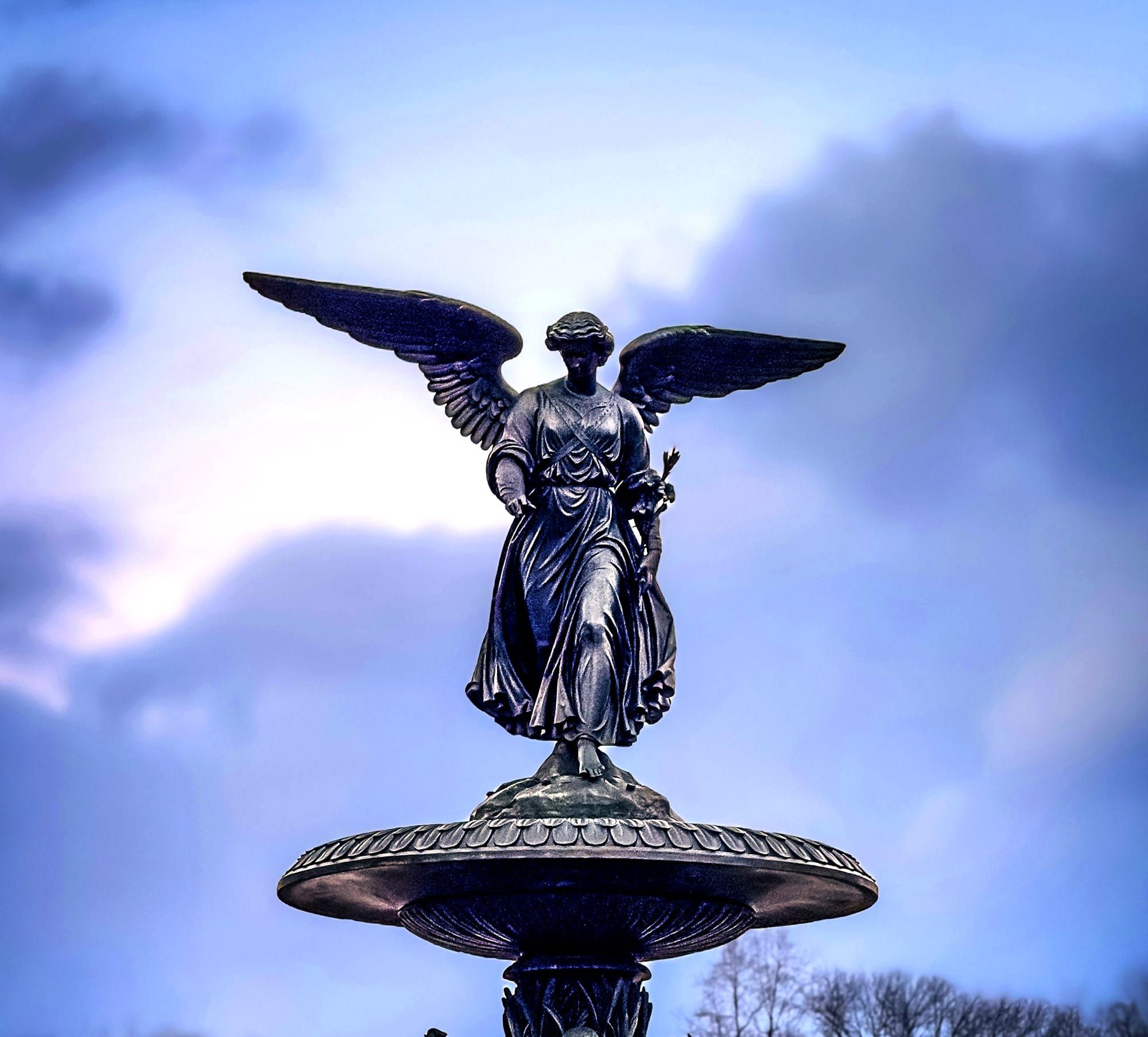
"Bless the LORD, you His angels, Mighty in strength, who perform His word, Obeying the voice of His word! Bless the LORD, all you His hosts, You who serve Him, doing His will."
— Psalm 103:20–21 (NASB)
The Invisible Creation
The Bible's opening declaration — "In the beginning God created the heavens and the earth" (Genesis 1:1) — encompasses not only the physical cosmos but the invisible creation as well. Colossians 1:16 makes this explicit: "For by Him all things were created, both in the heavens and on earth, visible and invisible, whether thrones or dominions or rulers or authorities." The invisible spiritual realm — angels, archangels, cherubim, seraphim, and other spiritual beings — is as much a part of God's creation as the galaxies and atoms of the physical world.
Angels are real, personal beings — not human projections, not allegories, not symbolic language for natural forces. They appear throughout Scripture with consistent characteristics: they are created (Psalm 148:2, 5), they possess intelligence and will, they exist in the presence of God, they serve as His messengers and ministers, and they are involved in the affairs of both heaven and earth.
What the Bible Tells Us About Angels
| Characteristic | Description | Key Texts |
|---|---|---|
| Created | Made by God, not eternal | Psalm 148:2, 5; Colossians 1:16 |
| Spirit beings | Without physical bodies by nature | Hebrews 1:14 |
| Numerous | Innumerable multitudes | Hebrews 12:22; Revelation 5:11 |
| Organized | Hierarchical ranks and orders | Colossians 1:16; Ephesians 1:21 |
| Holy | Morally pure (unfallen ones) | Matthew 25:31 |
| Powerful | "Mighty in strength" | Psalm 103:20; 2 Peter 2:11 |
| Personal | Have names, wills, voices | Daniel 9:21; Revelation 12:7 |
| Finite | Do not know all things | Matthew 24:36; 1 Peter 1:12 |
Historical and Theological Background
Dr. Martyn Lloyd-Jones (1899–1981), in Great Doctrines of the Bible, Vol. I: God the Father, God the Son (Crossway, 2003), outlines the logical order of doctrine: "before God made the world, or before He made anything in connection with men and women, He first of all brought into being those heavenly intelligences which are called angels... The first thing we learn about the angels is that they are created beings... Paul in Colossians 1:16 very definitely teaches that they were created by the Son" [1]. Lloyd-Jones also emphasizes that the cherubim hold the highest rank among angelic orders, their "special function is to worship God, and to present to Him the worship of the entire creation" [2].
Dr. Michael S. Heiser (1963–2023), biblical scholar and Logos Bible Software theologian, provides some of the most thorough academic treatments of the angelic host in his library books available in this collection. In Angels: What the Bible Really Says about God’s Heavenly Host (Lexham Press, 2018), Heiser argues that the Bible uses a range of terms beyond “angel” for heavenly beings — malʾāk (messenger), bĕnê hāʾĕlōhîm (sons of God), qĕdōšîm (holy ones), kōkĕbîm (stars), šamayim (heavenly ones), and ʾĕlōhîm (divine beings) — and that reducing them all to “angels” flattens the rich biblical picture of the unseen realm [3]. In The Unseen Realm: Recovering the Supernatural Worldview of the Bible (Lexham Press, 2015), Heiser shows that the ʾĕlōhîm of Psalm 82 are not idols but real divine beings who serve in God’s heavenly council — a finding that has profound implications for how we read Genesis 1:26, Deuteronomy 32:8-9, and the NT passages on spiritual powers.
Interest in angels and spiritual beings spans all of human history and virtually every culture. Josephus (37–100 AD) notes in Antiquities of the Jews I.3.1 that Moses teaches that the angels were among the first beings God made. (Sacred-texts: Josephus, Antiquities) Thomas Aquinas devoted his entire treatise on angels (Summa Theologica I, Q.50–64) to establishing their nature, hierarchy, knowledge, and will. (NewAdvent: Aquinas, Summa Theologica I Q.50) The Dead Sea Scrolls (discovered 1947–1956) contain extensive angelological material, particularly the War Scroll (1QM), which describes cosmic conflict between angels of light and darkness — illuminating the background of NT passages on spiritual warfare. (Leon Levy Dead Sea Scrolls Digital Library)
The Creation and Nature of Angels
When Were Angels Created?
Scripture does not give a specific moment for the creation of angels, but two passages are instructive:
-
Job 38:7 — "When the morning stars sang together and all the sons of God shouted for joy" at the laying of earth's foundation. This implies the angels ("sons of God") pre-existed the material creation and witnessed it with joy.
-
Genesis 1:1 — "In the beginning God created the heavens and the earth." The "heavens" (haššāmayim) may encompass both the physical heavens and the heavenly realm where angels dwell. If so, angels were part of the original creation of "the heavens."
Victor Hamilton writes: "The 'sons of God' in Job 38:7 are clearly angelic beings who witnessed creation. Their presence at earth's foundation implies they were created before or at the beginning of the physical cosmos — making them the first audience for God's creative work" [4].
Heiser provides additional support in The Unseen Realm [5]: "The sons of God who shouted for joy when God laid the earth's foundation were not humans — they were members of God's heavenly host, pre-existing the material creation. Their joyful praise at creation establishes their role as worshippers and witnesses to God's works from the very beginning." This aligns with Nehemiah 9:6 and Revelation 4:11 — the angelic host as perpetual worshippers of the Creator.
Angels as Personal Spiritual Beings
Angels are persons, not forces. They possess:
- Names — Michael (Daniel 12:1), Gabriel (Daniel 9:21; Luke 1:19), Lucifer/Satan (Isaiah 14:12)
- Intelligence — they understand God's commands and carry them out with skill (Psalm 103:20)
- Will — some chose to rebel (2 Peter 2:4; Jude 6)
- Emotions — they rejoice (Job 38:7; Luke 15:10)
- Speech — they communicate (Luke 1:26–38; Revelation 14:6–7)
Hebrews 1:14 defines their fundamental nature: "Are they not all ministering spirits, sent out to render service for the sake of those who will inherit salvation?" Angels are leitourgika pneumata (liturgical/ministering spirits) — their essential existence is oriented toward service to God and service to God's people.
Heiser introduces an important concept in Angels [6] that reshapes how we understand angelic identity: imaging God. He writes: "Imaging God is about representation — acting on God's behalf at his behest. Humans image God on earth. The heavenly host images God in the spiritual, non-terrestrial world. The two are connected by design." This is why Genesis 1:26 uses the plural “Let Us make man” — God is addressing His heavenly host, and the creation of humanity as image-bearers connects to the same imaging role the angels already fulfill in the heavenly realm. Humans and angels are both imagers — representatives of God in their respective domains. This insight unlocks the Christological conclusion: Christ, as the perfect image of God (Colossians 1:15), is simultaneously the perfect fulfillment of both the heavenly and earthly imaging mandate.
The Hierarchy of Angels
Scripture indicates that angels are organized in a hierarchy of ranks and orders (Colossians 1:16; Ephesians 1:21):
| Rank | Name | Key Texts |
|---|---|---|
| Archangels | Michael, Gabriel | Dan. 10:13; Luke 1:19; 1 Thess. 4:16; Jude 9 |
| Seraphim | Six-winged beings | Isaiah 6:2-6 |
| Cherubim | Four-faced living creatures | Gen. 3:24; Ezek. 1:10; Rev. 4:6-8 |
| Angels | General term (malʾāk/angelos) | Throughout Scripture |
| Principalities, Powers, Thrones, Dominions | Cosmic authorities | Col. 1:16; Eph. 1:21, 6:12 |
Pseudo-Dionysius the Areopagite (c. 500 AD), in The Celestial Hierarchy, proposed the most elaborate historical taxonomy of nine angelic orders in three triads, which was adopted by Aquinas and influenced medieval theology deeply. While this specific structure goes beyond Scripture, it reflects the genuine biblical data of hierarchical angelic organization. (CCEL: Dionysius, Celestial Hierarchy)
Psalm 103:20–21 — Angels as God's Servants
"Bless the LORD, you His angels, Mighty in strength, who perform His word, Obeying the voice of His word! Bless the LORD, all you His hosts, You who serve Him, doing His will."
"Mighty in Strength"
גִּבֹּרֵי כֹחַ (gibbôrê kōaḥ, "mighty in strength"; BDB 150, 470)
Angels are described as gibbōr (mighty warriors, heroes of strength) — a term used for the mightiest human warriors in the OT. Their power is vastly beyond human capacity: a single angel struck down 185,000 Assyrian soldiers in one night (2 Kings 19:35); one angel rolled away the stone from Christ's tomb (Matthew 28:2). Their strength is not self-derived but delegated — they are "mighty in strength" in the service of the One who created them.
"Who Perform His Word... Doing His Will"
עֹשֵׂי דְבָרוֹ (ʿōśê dĕbārô, "who perform His word") — the defining characteristic of the unfallen angels is immediate, complete obedience to God's word. There is no delay, no negotiation, no partial compliance. The angels are the model of the obedience Jesus teaches in the Lord's Prayer: "Your will be done, on earth as it is in heaven" (Matthew 6:10) — "as in heaven" refers to this angelic pattern of immediate, perfect obedience to God's will. Allen Ross writes: "Psalm 103:20-21 presents angels as the supreme example of creaturely obedience and worship. Before summoning humanity to bless the LORD, the psalmist summons the angelic host — their perfect worship is the standard toward which human worship aspires" [7].
Genesis 18:1–8 and 19:1–3 — Angels in Human Form
Genesis 18:1–8; Genesis 19:1–3
"Now the LORD appeared to him by the oaks of Mamre, while he was sitting at the tent door in the heat of the day. When he lifted up his eyes and looked, behold, three men were standing opposite him; and when he saw them, he ran from the tent door to meet them and bowed himself to the earth." (Genesis 18:1-2)
The Angel of the LORD and Two Angels
The appearance of three visitors to Abraham consists of the Angel of the LORD (often identified with the pre-incarnate Christ) and two angels who continue to Sodom (Genesis 19:1). This passage is one of the most important in Scripture for several theological themes:
- Angels can appear in human form — they were indistinguishable from human beings to Abraham (v. 2)
- Angels participate in God's mission of judgment and salvation — the two angels execute the rescue of Lot and the judgment on Sodom
- The Angel of the LORD is divine — "the LORD" speaks in Genesis 18, making this visitor distinct from and superior to the two who go on
כְּמַלְאָכִים — The word מַלְאָךְ (malʾāk; BDB 521; HALOT 585), translated "angel," means literally "messenger." In both Hebrew (malʾāk) and Greek (ἄγγελος, angelos), the primary meaning is sent one — one dispatched with a message or mission. Their identity is defined by function (messenger) more than by nature (spirit being). This is why Hebrews 13:2 can speak of entertaining "angels unawares" — the angelic mission is sometimes concealed within an apparently ordinary human encounter.
Kenneth Mathews writes: "The appearance of the three men to Abraham in Genesis 18 is a theophany — a divine manifestation in the form of human visitors. The passage reveals that God's angels can interact in fully human ways with the physical world when the divine mission requires it" [8].
Isaiah 6:1–7 — The Seraphim
"In the year of King Uzziah's death I saw the Lord sitting on a throne, lofty and exalted, with the train of His robe filling the temple. Seraphim stood above Him, each having six wings: with two each covered his face, and with two each covered his feet, and with two each flew. And one called out to another and said, 'Holy, Holy, Holy, is the LORD of hosts, The whole earth is full of His glory.'"
The Seraphim — "Burning Ones"
שְׂרָפִים (śĕrāpîm, "Seraphim"; BDB 977; HALOT 1327) — from the root שָׂרַף (śārap, "to burn"). The Seraphim are literally the "burning ones" or "fiery ones" — suggesting both the intensity of their nature and the consuming holiness of the divine presence they serve. They appear only here in Isaiah 6 and nowhere else in Scripture by this name, though the living creatures of Revelation 4 share similar characteristics.
Their six wings: Each seraph uses:
- Two wings to cover the face — in the overwhelming presence of God's holiness, even the most exalted angelic beings veil themselves. The seraph cannot look directly at the Holy One.
- Two wings to cover the feet — in reverence before the divine presence
- Two wings to fly — in readiness for immediate service
The posture of the seraphim is the theology of holiness in pictorial form: before the qādôš qādôš qādôš (Holy, Holy, Holy) God, even the most glorious creatures can only shield themselves and cry out in awe. Their worship is the model for all created worship: "Holy, Holy, Holy, is the LORD of hosts."
John Oswalt writes: "The seraphim in Isaiah 6 function as the celestial worship leaders — their cry of the Trisagion is not merely their own praise but the declaration that draws Isaiah into the vision and inaugurates his prophetic call. The spiritual beings around the throne are agents of revelation as well as ministers of worship" [9].
Ezekiel 1:4–28 — The Cherubim (Living Creatures)
"As I looked, behold, a storm wind was coming from the north, a great cloud with fire flashing forth continually and a bright light around it, and in its midst something like glowing metal in the midst of the fire. Within it there were figures resembling four living beings. And this was their appearance: they had human form. Each of them had four faces and four wings. Their legs were straight and their feet were like a calf's hoof, and they gleamed like burnished bronze. Under their wings on their four sides were human hands... And as for the faces, all four had the face of a man; all four had the face of a lion on the right; and all four had the face of a bull on the left; and all four had the face of an eagle."
The Most Complex Angelic Vision in Scripture
Ezekiel 1 records the most elaborate description of angelic beings in the entire Bible. The "four living beings" (ḥayyôt, BDB 312) are identified as Cherubim in Ezekiel 10:15 — the same class of beings that guarded the Garden of Eden (Genesis 3:24), flanked the Ark of the Covenant (Exodus 25:18–22), and appear in the heavenly throne room of Revelation (Revelation 4:6–8).
The Four Faces
The four faces of each cherub — man, lion, ox, eagle — have generated extensive theological reflection:
- Man — the highest of earthly creatures, rationality and dominion
- Lion — the king of wild beasts, power and sovereignty
- Ox (Bull) — the most powerful domestic animal, strength and service
- Eagle — the king of birds, speed and vision
Irenaeus of Lyon (c. 130–202 AD) in Against Heresies III.11.8 identified the four faces with the four Gospel writers — a tradition maintained by Athanasius and Jerome. While this specific application is typological rather than exegetical, it reflects the classic sense that the cherubim's four faces encompass the full range of earthly creation in service to God. (CCEL: Irenaeus, Against Heresies)
כְּרוּבִים (kĕrûbîm, "Cherubim"; BDB 500; HALOT 504)
The Cherubim in Scripture serve as:
- Guardians of sacred space (Genesis 3:24 — the Garden; Exodus 25 — the Ark)
- Throne-bearers of God (Psalm 18:10: "He rode on a cherub and flew"; Ezekiel 1, 10)
- Creatures of worship (Revelation 4:8 — "Day and night they do not cease to say, 'Holy, Holy, Holy'")
Their description in Ezekiel as having "the whole body, their backs, their hands, their wings, and the wheels full of eyes all around" (Ezekiel 10:12) speaks to the all-seeing quality of the divine attendants — they perceive everything in the presence of the omniscient God.
Daniel 10:12–14 — The Archangel Michael
"Then he said to me, 'Do not be afraid, Daniel, for from the first day that you set your heart on understanding this and on humbling yourself before your God, your words were heard, and I have come in response to your words. But the prince of the kingdom of Persia was withstanding me for twenty-one days; then behold, Michael, one of the chief princes, came to help me, for I had been left there with the kings of Persia. Now I have come to give you an understanding of what will happen to your people in the latter days, for the vision pertains to the days yet future.'"
The Cosmic Dimension of Spiritual Conflict
This passage — unique in Scripture for its detail about angelic conflict — reveals that the spiritual realm includes not merely benevolent angels but organized opposition. The "prince of the kingdom of Persia" (śar malkût pāras, v. 13) is not a human political leader but a supernatural being — a fallen angelic authority associated with the Persian Empire — who opposed the divine messenger for 21 days.
מִיכָאֵל (Mîkāʾēl, "Michael"; BDB 567) — the name means "Who is like God?" — a rhetorical question implying the answer "No one." Michael is identified as "one of the chief princes" (ʾaḥad haśśārîm hāriʾšōnîm, "one of the first princes") — a title suggesting that archangels form a distinct order among angelic beings. Michael appears in Daniel 12:1 as "the great prince who stands guard over your people" (Israel), in Jude 9 contending with Satan over Moses' body, and in Revelation 12:7 leading the heavenly armies against the dragon.
The Dead Sea Scrolls' War Scroll (1QM) presents an extended meditation on the cosmic war between the "Sons of Light" led by the Prince of Light (Michael) and the "Sons of Darkness" led by Belial (Satan). The scroll reads: "On the day when the Kittim fall, there shall be a battle and horrible carnage before the God of Israel, for this is the day determined by Him from old for the war of annihilation against the sons of darkness." (1QM I.9–10; Leon Levy Dead Sea Scrolls Digital Library) This Qumranic material illuminates the background of Paul's language in Ephesians 6:10-12 and Revelation 12.
John Walton and John Harvey Walton write: "Daniel 10 pulls back the curtain on the invisible dimension of history. Behind the rise and fall of empires there is a cosmic dimension — supernatural authorities attached to nations and kingdoms — that shapes the earthly drama. Human history is embedded in a larger spiritual conflict" [10].
Luke 2:8–14 — The Angelic Announcement
"In the same region there were some shepherds staying out in the fields and keeping watch over their flock by night. And an angel of the Lord suddenly stood before them, and the glory of the Lord shone around them; and they were terribly frightened. But the angel said to them, 'Do not be afraid; for behold, I bring you good news of great joy which will be for all the people; for today in the city of David there has been born for you a Savior, who is Christ the Lord... And suddenly there appeared with the angel a multitude of the heavenly host praising God and saying, 'Glory to God in the highest, and on earth peace among men with whom He is pleased.'"
Angels as Witnesses to the Incarnation
The angelic announcement at Bethlehem is one of the most theologically rich scenes in the NT. The entire angelic host bursts into praise at the moment of the Incarnation — the event that fulfills all the promises of the Creator toward His creation. This scene reveals several important truths about angels:
- Angels are deeply invested in human redemption — 1 Peter 1:12: "Things into which angels long to look"
- Angels proclaim the gospel — the first Gospel proclamation in Luke 2 comes from an angel
- The angelic host is vast — "a multitude of the heavenly host" (πλῆθος στρατιᾶς οὐρανίου, plēthos stratias ouraniou; BDAG 827) — an innumerable military host
στρατιά (stratia, "host/army"; BDAG 947) — the word is military: heavenly army. The angels are not merely a choir but a battle-ready force arrayed in praise. Their declaration — "Glory to God in the highest, and on earth peace" — is both worship and proclamation: the arrival of the Savior is the beginning of the restoration of the created order disrupted by sin.
Gerald Borchert writes: "The angelic host in Luke 2:13-14 represents the entire spiritual creation greeting the event that will restore the entire material creation. Their praise is not merely liturgical celebration — it is the recognition by the invisible creation that the visible creation is about to be transformed by the arrival of its Creator" [11].
Hebrews 1:14 — Angels as Ministering Spirits
"Are they not all ministering spirits, sent out to render service for the sake of those who will inherit salvation?"
The Definitive NT Description of Angels
This verse is the clearest and most concise definition of angels in the NT. The writer of Hebrews, having established the absolute supremacy of the Son over all angelic beings (1:5–13), offers this summary description:
λειτουργικὰ πνεύματα (leitourgika pneumata, "ministering spirits")
- Λειτουργικός (leitourgikos; BDAG 591) — "serving, ministering, liturgical" — the same root as leitourgia (liturgy, priestly service). Angels are priestly servants in the divine economy — their ministry is holy, ordered, and purposeful.
- Πνεύματα (pneumata, "spirits") — their nature is spiritual; they are spirit-beings.
ἀποστελλόμενα εἰς διακονίαν (apostellomena eis diakonian, "sent out to render service")
They are dispatched (apostellō, the same verb used for apostles — "sent ones") with a specific service mission. The service is "for the sake of those who will inherit salvation" — which means the primary beneficiaries of angelic ministry are believers. Angels serve the redemptive purposes of God on behalf of His people.
This verse is the NT ground for the doctrine of guardian angels — the assignment of angels to protect and serve believers (Psalm 91:11–12; Matthew 18:10: "their angels in heaven continually see the face of My Father"). David Allen writes: "Hebrews 1:14 is not merely a postscript to the author's Christological argument — it is a word of pastoral comfort. The same God who exalted His Son above all angels has dispatched those angels in service to those who belong to that Son" [12].
Hebrews 13:2 — Entertaining Angels Unawares
"Do not neglect to show hospitality to strangers, for by this some have entertained angels without knowing it."
ξενίας (xenias, "hospitality to strangers"; BDAG 684) — The ethical command is grounded in the precedent of Genesis 18 (Abraham) and Genesis 19 (Lot), both of whom unknowingly hosted angelic visitors. The theological implication is profound: the invisible spiritual realm intersects with ordinary human life in ways that are not always perceived. Hospitality practiced toward unknown strangers may, at any moment, be hospitality practiced toward divine messengers.
This verse also grounds a principle of human dignity: every stranger deserves generous treatment not only because they may be an angel but because every human person bears the image of God (James 3:9). The command to hospitality is the practical application of the imago Dei doctrine in social ethics.
Colossians 1:16 — All Spiritual Beings Created Through Christ
"He is the image of the invisible God, the firstborn of all creation. For by Him all things were created, both in the heavens and on earth, visible and invisible, whether thrones or dominions or rulers or authorities — all things have been created through Him and for Him."
Angels Are Part of the "All Things" Created Through Christ
This passage establishes decisively that all spiritual beings — including angels — were created through and for the Son. No angelic being is eternal or self-existent; all owe their existence to Christ. This has critical implications:
- Angels are not to be worshipped — they are creatures, not Creator. Paul directly addresses angel worship in Colossians 2:18, forbidding the "worship of angels."
- All angelic authorities are subordinate to Christ — including the most powerful spiritual beings ("thrones, dominions, rulers, authorities")
- The spiritual hierarchy serves Christ's redemptive purposes — the telos of all creation, including the spiritual creation, is Christ Himself ("for Him")
"Thrones or dominions or rulers or authorities" (thronoi ē kyriotētes ē archai ē exousiai) — this fourfold list represents the hierarchical ranks of the angelic order, both fallen and unfallen. All were created through Christ; all will ultimately submit to Him (Philippians 2:9–11). Richard Melick writes: "The catalogue of spiritual powers in Colossians 1:16 is comprehensive and deliberate. Paul is countering the incipient philosophy that assigned spiritual intermediaries a role in creation or salvation. Christ alone is Creator and Lord of all spiritual beings" [13].
Ephesians 6:10–12 — The Hierarchy of Spiritual Beings
"Finally, be strong in the Lord and in the strength of His might. Put on the full armor of God, so that you will be able to stand firm against the schemes of the devil. For our struggle is not against flesh and blood, but against the rulers, against the powers, against the world forces of this darkness, against the spiritual forces of wickedness in the heavenly places."
The Reality of Spiritual Warfare
This passage reveals that the spiritual creation includes both unfallen servants of God and fallen spiritual beings who oppose God and His people. The four-part catalog describes the organized hierarchy of demonic opposition:
- ἀρχάς (archas, "rulers") — from archē (beginning, first); high-ranking spiritual authorities
- ἐξουσίας (exousias, "powers") — legitimate authority-holders in the spiritual realm
- κοσμοκράτορας τοῦ σκότους (kosmokratoras tou skotous, "world forces of this darkness") — cosmic dominion-holders over the present age's darkness
- πνευματικὰ τῆς πονηρίας (pneumatika tēs ponērias, "spiritual forces of wickedness") — evil spiritual beings in general
These are not metaphors for social systems or psychological forces — they are real personal beings. Paul's command to put on the "full armor of God" (panoplian tou theou) makes no sense if the adversary is merely abstract. The armor is real spiritual equipment for real spiritual combat.
The Dead Sea Scrolls' Community Rule (1QS III.13–IV.26) describes humanity as divided between "the spirit of truth" and "the spirit of perversity," overseen by angelic princes — anticipating Paul's understanding of cosmic spiritual opposition. (Dead Sea Scrolls Digital Library)
Revelation 5:11–12 — The Angelic Host in Worship
"Then I looked, and I heard the voice of many angels around the throne and the living creatures and the elders; and the number of them was myriads of myriads, and thousands of thousands, saying with a loud voice, 'Worthy is the Lamb that was slaughtered to receive power and riches and wisdom and might and honor and glory and blessing.'"
"Myriads of Myriads, Thousands of Thousands"
μυριάδες μυριάδων καὶ χιλιάδες χιλιάδων (myriades myriadōn kai chiliades chiliadōn)
A myriad (myrias; BDAG 661) is 10,000 — the largest numerical term in ancient Greek. Myriads of myriads is the superlative: an uncountable number beyond human quantification. Hebrews 12:22 speaks of "myriads of angels" around the heavenly Jerusalem. Daniel 7:10 describes "thousands upon thousands... myriads upon myriads" standing before the Ancient of Days.
The angelic host is vast — orders of magnitude larger than the human population of earth across all history. The universe, with its estimated 200 billion trillion stars, may be the stage for a spiritual creation equally vast and magnificent.
The seven-fold doxology of Revelation 5:12 — "power and riches and wisdom and might and honor and glory and blessing" — is the fullest liturgical ascription of the entire Bible. And it comes from the lips of the angelic host, directed toward the "Lamb that was slaughtered." Angels worship Christ because Christ is their Creator — and because His redemptive work, which they "long to look into" (1 Peter 1:12), has accomplished the restoration of everything He made.
Summary
1. Angels Are Created, Personal Spiritual Beings
All angels — every rank and order — were created by God through Christ (Colossians 1:16; Psalm 148:2, 5). They are not eternal, not divine, not to be worshipped. They are personal beings with intelligence, will, and emotion, organized in a vast hierarchical creation that predates the physical universe.
2. Angels Serve God and His Redemptive Purposes
The essential definition of angels is ministering spirits sent out in service for those who will inherit salvation (Hebrews 1:14). Their primary orientation is not cosmic management but participation in God's redemptive mission on behalf of His people.
3. Angels Worship Constantly
From Job 38:7 (singing at creation) to Revelation 5:11-12 (the eternal doxology), angels are ceaseless worshippers. Their worship is the model for all creaturely worship: immediate, total, joyful, reverent. Human worship on earth participates in the worship that the angelic host never ceases.
4. The Spiritual Creation Is Hierarchically Organized
Scripture reveals a complex organization of spiritual beings — cherubim, seraphim, archangels, angelic orders, and spiritual authorities (Colossians 1:16; Ephesians 1:21; 6:12). This hierarchy encompasses both unfallen servants of God and fallen beings who oppose Him. The cosmic spiritual conflict is real, organized, and ultimately resolved in Christ's victory.
5. Christ Is Supreme Over All Spiritual Beings
Every spiritual being — from the most exalted seraph to the most powerful demonic authority — is subordinate to and will ultimately bow before Christ (Philippians 2:9-11; Colossians 1:16; Hebrews 1:4-14). The spiritual creation, like the physical creation, exists for Christ and will ultimately serve His eternal purposes.
pp. 124–125 ↩︎
p. 140 ↩︎
pp. 14–23 ↩︎
NICOT Genesis, Vol. 1, p. 45 ↩︎
p. 124 ↩︎
p. 9 ↩︎
Psalms 73–106, NAC, p. 382 ↩︎
Genesis 11:27–50:26, NAC, p. 209 ↩︎
The Book of Isaiah, Chapters 1–39, NICOT, p. 179 ↩︎
The Lost World of Daniel, IVP Academic, p. 118 ↩︎
John 1–11, NAC, p. 79, in an analogous Christological context ↩︎
Hebrews, NAC, p. 116 ↩︎
NAC Colossians, p. 219 ↩︎
Author

Raised in a Christian home, I came to faith later in life. A family crisis in 2019 drove me to study Scripture deeply, and by 2021 I answered my calling to ministry and teaching God's Word.